 뒤로
Animal Biodiversity: Structure, Function, and Evolution of Major Invertebrate Phyla
스터디 가이드 - 스마트 노트
 자료에 맞춘 맞춤형 노트, 핵심 정의, 예시, 맥락을 확장해 제공합니다.
Animal Biodiversity and Body Plans
Introduction to Animal Diversity
Animals are multicellular, heterotrophic organisms with complex body plans. Their evolutionary origins trace back to protists, and most animal phyla emerged 600–700 million years ago. Animal body plans are shaped by evolutionary adaptations, including symmetry, tissue organization, and the presence or absence of body cavities.
Key Features: Carbon-based, capable of metabolism, reproduction, and possess DNA/RNA.
Adaptations: Structural, biochemical, morphological, and physiological traits that enhance survival.
Grades of Organization: Cell, tissue, organ, organ system, organism.
Body Symmetry and Cephalization
Symmetry is a fundamental aspect of animal body plans, influencing movement and sensory organ placement.
Spherical Symmetry: Seen in unicellular organisms.
Radial Symmetry: Found in animals like hydra and medusa.
Bilateral Symmetry: Characteristic of most animals, with distinct anterior (front), posterior (back), dorsal (top), and ventral (bottom) sides.
Cephalization: Concentration of sensory organs at the front end.
Phylum Porifera (Sponges)
Structure and Function
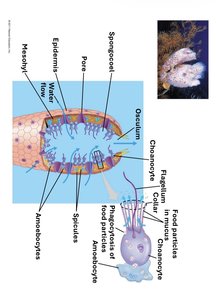
Sponges are simple, aquatic animals with a cell-aggregate body plan. They lack true tissues and organs but have specialized cells for feeding and structure.
Body Plan: Sessile, suspension feeders with a system of water canals and chambers.
Layers: Epithelium, mesohyl (gelatinous matrix with amoebocytes and spicules), gastrodermis/choanocyte layer.
Feeding: Water enters through pores, choanocytes create currents and filter food particles, amoebocytes distribute nutrients.
Reproduction: Both asexual (budding) and sexual (hermaphroditic).
Defense: Bad taste and warning colors deter predators.
Sponge Types
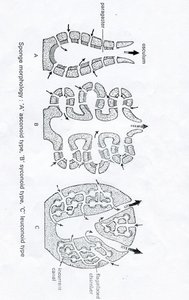
Sponges exhibit increasing complexity in their canal systems:
Asconoid: Simple, tube-like structure.
Syconoid: Folded walls increase surface area.
Leuconoid: Most complex, with extensive canal systems.
Phylum Cnidaria
Structure and Life Cycle
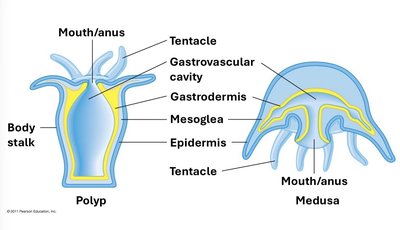
Cnidarians include hydra, jellyfish, anemones, and corals. They are diploblastic, with two body layers and a gelatinous mesoglea. Their body forms include polyp and medusa.
Polyp: Sessile, cylindrical body with tentacles.
Medusa: Free-floating, bell-shaped body.
Gastrovascular Cavity: Functions in digestion and circulation.
Cell Types and Mechanisms
Cnidarians possess specialized cells for movement, feeding, and defense.
Epidermis: Contains epithelio-muscular cells, interstitial cells, and cnidoblasts (stinging cells).
Mesoglea: Gelatinous layer with nerve cells for coordinated activity.
Gastrodermis: Nutritive-muscular cells for digestion.
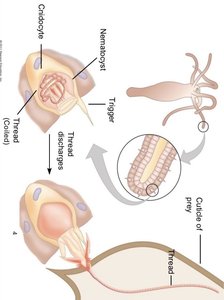
Cnidocytes: Specialized cells containing nematocysts for prey capture and defense.
Reproduction and Life Cycle
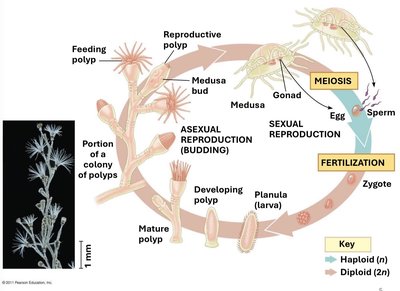
Cnidarians reproduce both sexually and asexually, with alternation between polyp and medusa stages.
Asexual: Budding in polyp stage.
Sexual: Gametes released into water, fertilization produces larvae that settle and develop into polyps.
Classes of Cnidaria
Hydrozoa: Polyp dominant, medusa reduced.
Scyphozoa: Medusa dominant.
Anthozoa: Only polyp stage, includes corals and anemones.
Phylum Platyhelminthes (Flatworms)
Structure and Adaptations
Flatworms are triploblastic, acoelomate animals with a tissue-organ level of organization. They exhibit bilateral symmetry and cephalization.
Body Plan: Flattened for efficient diffusion, blind-sac gut.
Movement: Cilia and muscles work antagonistically against a hydrostatic skeleton.
Feeding: Carnivorous, with evertable pharynx and branched gut.
Excretory System
Flatworms use flame cells (protonephridia) for excretion and osmoregulation.
Reproduction and Regeneration
Sexual: Hermaphroditic, copulation and internal fertilization.
Asexual: Regeneration from body fragments.
Parasitic Classes
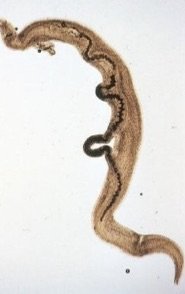
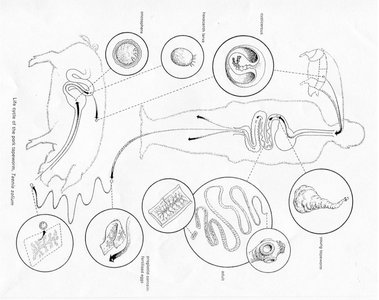
Trematoda (Flukes): Complex life cycles with multiple hosts, adapted for parasitism.
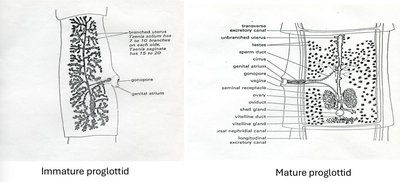
Cestoda (Tapeworms): Segmented, lack digestive system, reproduce via proglottids.
Phylum Nematoda (Roundworms)
Structure and Function
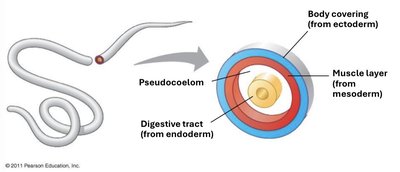
Nematodes are triploblastic, pseudocoelomate animals with a tube-within-a-tube body plan. They are found in diverse environments and include many parasitic species.
Body Plan: Tough cuticle, pseudocoelom acts as hydrostatic skeleton.
Locomotion: Undulatory movement via longitudinal muscles.
Digestive System: Complete gut with regional specialization.
Excretion: Simple excretory system with two cells forming longitudinal canals.
Phylum Annelida (Segmented Worms)
Structure and Segmentation
Annelids are coelomate, triploblastic animals with a segmented body plan (metamerism). Segmentation allows independent movement and specialization of body regions.
Body Plan: Bilateral symmetry, through-gut, hydrostatic skeleton, closed circulatory system.
Movement: Muscles in each segment contract independently, allowing complex locomotion.
Feeding: Evertable pharynx, digestion via muscular contractions (peristalsis).
Phylum Arthropoda
Structure and Success
Arthropods are the most successful animal phylum, characterized by a segmented body, jointed appendages, and a chitinous exoskeleton.
Exoskeleton: Provides structural support, waterproofing, and protection; must be molted for growth.
Segmentation: Allows specialization of body regions (head, thorax, abdomen).
Circulatory System: Open, with a dorsal heart and hemocoel.
Phylum Mollusca
Structure and Diversity
Molluscs are triploblastic, coelomate animals with a wide range of body forms, including snails, clams, and cephalopods. Most have a shell, a muscular foot, and a mantle.
Classes: Gastropoda (snails), Bivalvia (clams), Cephalopoda (squid, octopus).
Circulatory System: Mostly open, except cephalopods (closed).
Reproduction: Hermaphroditic or separate sexes, internal or external fertilization.
Phylum Echinodermata
Structure and Development
Echinoderms are deuterostomes with pentaradial symmetry, a water-vascular system, and an internal skeleton of calcareous plates. All are aquatic, mostly marine.
Water-Vascular System: Used for movement, feeding, and gas exchange.
Tube Feet: Extend and contract for locomotion and prey capture.
Regeneration: Many echinoderms can regenerate lost body parts.
Phylum Chordata
Chordate Characteristics
Chordates are defined by four key features: notochord, dorsal hollow nerve cord, pharyngeal slits, and post-anal tail. These features are present at some stage in the life cycle.
Notochord: Flexible rod providing support.
Dorsal Hollow Nerve Cord: Develops into the central nervous system.
Pharyngeal Slits: Used for filter feeding or respiration.
Post-Anal Tail: Muscular tail extending beyond the anus.
Subphyla and Classes
Urochordata: Tunicates, filter feeders.
Cephalochordata: Lancelets, retain chordate features throughout life.
Vertebrata: Vertebrates, including fish, amphibians, reptiles, birds, and mammals.
Mammalian Characteristics
Endothermic: Maintain constant body temperature.
Fur-bearing: Insulation and protection.
Four-chambered heart: Efficient circulation.
Large brain: Intelligence and complex behaviors.
Placental: Nourishment of young before birth.
Well-developed parental care: Learning and protection.
Theme: Parasitism
Definitions and Adaptations
Parasitism is a form of symbiosis where one organism benefits at the expense of another. Parasites are adapted for their lifestyle through specialized structures, reproductive strategies, and mechanisms to evade host defenses.
Ectoparasites: Live on the host's surface (e.g., ticks, lice).
Endoparasites: Live inside the host (e.g., tapeworms, malaria).
Adaptations: High reproductive output, complex life cycles, hermaphroditism, immune evasion.
Synthesis: Segmentation
Definition and Significance
Segmentation (metamerism) is the serial repetition of body segments. It allows independent functioning of muscles and organs, leading to evolutionary potential and specialization.
Examples: Annelida, Arthropoda, Chordata.
Function: Independent movement, sophisticated nervous control.
Evolutionary Significance: Modification of segments, complex body plans.
