 뒤로
Atoms and Elements: Foundations of Modern Chemistry
스터디 가이드 - 스마트 노트
 자료에 맞춘 맞춤형 노트, 핵심 정의, 예시, 맥락을 확장해 제공합니다.
Atoms and Elements
Introduction to Atoms and Elements
Atoms are the fundamental building blocks of matter, and elements are substances composed entirely of one type of atom. Understanding the structure and properties of atoms and elements is essential for connecting the macroscopic world we observe with the microscopic world of chemistry.
Atom: The smallest identifiable unit of an element.
Element: A pure substance consisting of only one type of atom.
There are about 91 naturally occurring elements and over 20 synthetic elements.
Atoms cannot be divided further and still retain the properties of the element.
Atoms link the macroscopic and microscopic worlds.

Elements vs. Compounds
Elements are pure substances, while compounds are made from two or more elements chemically combined.
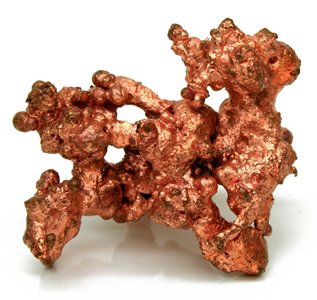
Example: Copper is an element, while salt (sodium chloride) is a compound made of sodium and chlorine.

Modern Atomic Theory and Laws
Laws Leading to Atomic Theory
Atomic theory was developed based on several key laws:
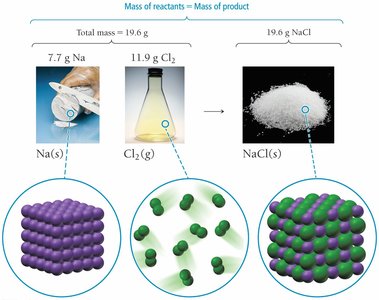
Law of Conservation of Mass: Matter is neither created nor destroyed in a chemical reaction. The total mass remains constant.
Law of Definite Proportions: All samples of a given compound have the same proportions of their constituent elements.
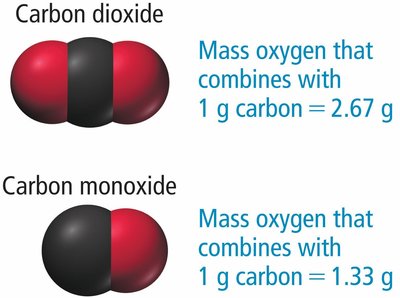
Law of Multiple Proportions: When two elements form more than one compound, the masses of one element that combine with a fixed mass of the other are in small whole-number ratios.
Law of Conservation of Mass
Formulated by Antoine Lavoisier, this law states that the mass of reactants equals the mass of products in a chemical reaction.
Example: Burning a log produces ash and gases; the total mass remains constant, though some matter becomes gaseous.
Law of Definite Proportions
Formulated by Joseph Proust, this law states that a compound always contains the same elements in the same proportion by mass.
Example: Water always decomposes into 16.0 g of oxygen and 2.0 g of hydrogen, an 8:1 mass ratio.
Ammonia (NH3) has a nitrogen-to-hydrogen mass ratio of 4.7:1.
Law of Multiple Proportions
Formulated by John Dalton, this law states that when two elements form different compounds, the mass ratios of the elements are simple whole numbers.
Example: Carbon dioxide (CO2) and carbon monoxide (CO) both contain carbon and oxygen, but the mass ratio of oxygen to carbon is 2.67:1 in CO2 and 1.33:1 in CO.
Dalton's Atomic Theory
Key Postulates
John Dalton's atomic theory provided explanations for the laws above:
Each element is composed of tiny, indestructible particles called atoms.
All atoms of a given element have the same mass and properties.
Atoms combine in simple, whole-number ratios to form compounds.
Atoms of one element cannot change into atoms of another element; they only rearrange during chemical reactions.
Structure of the Atom
Nucleus and Subatomic Particles
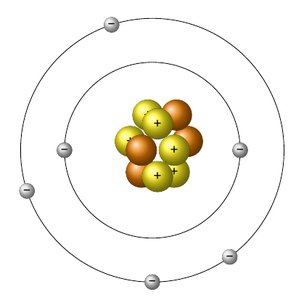
The atom consists of a nucleus (containing protons and neutrons) and electrons outside the nucleus.
Nucleus: Contains protons (positive charge) and neutrons (neutral); accounts for 99% of the atom's mass but is very small.
Electrons: Negatively charged, almost zero mass, responsible for chemical behavior.


Protons, Neutrons, and Electrons
Proton: Positive charge, inside the nucleus, mass ≈ 1 amu.
Neutron: Neutral charge, inside the nucleus, mass ≈ 1 amu.
Electron: Negative charge, outside the nucleus, mass ≈ 0.0005 amu.
The charge of the proton and electron are equal in magnitude but opposite in sign.
Elements and the Periodic Table
Atomic Number and Element Identity
The atomic number (Z) is the number of protons in the nucleus and defines the element.
Each element has a unique atomic number.
Atomic number is used to organize elements in the periodic table.
Chemical Symbols
Each element is represented by a unique chemical symbol, usually one or two letters.
First letter is capitalized; second letter is lowercase.
Symbols may derive from English, Latin, or Greek names (e.g., Au for gold from 'Aurum').
Isotopes
Definition and Properties
Isotopes are atoms of the same element with different numbers of neutrons.
All atoms of an element have the same number of protons, but may differ in neutrons.
Isotopes have slightly different masses.
Natural abundance refers to the relative percentage of each isotope in nature.
Isotope Table Example
Symbol | Number of Protons | Number of Neutrons | Mass Number (A) | Natural Abundance (%) |
|---|---|---|---|---|
Ne-20 | 10 | 10 | 20 | 90.48 |
Ne-21 | 10 | 11 | 21 | 0.27 |
Ne-22 | 10 | 12 | 22 | 9.25 |
Ions
Formation of Ions
Atoms can gain or lose electrons to form ions, which are charged particles.
Cation: Positively charged ion (loss of electrons).
Anion: Negatively charged ion (gain of electrons).
In a neutral atom, the number of electrons equals the number of protons.
The Periodic Table and Element Classification
Periodic Law and Table Organization
The periodic table organizes elements by increasing atomic number and recurring properties.
Elements are arranged in rows (periods) and columns (groups).
Groups contain elements with similar properties.
Periodic law: Properties recur periodically when elements are arranged by atomic number.
Classification of Elements
Metals: Good conductors, malleable, ductile, shiny, tend to lose electrons.
Nonmetals: Poor conductors, not malleable or ductile, tend to gain electrons.
Metalloids: Exhibit mixed properties, often semiconductors.
Groups and Periods
Vertical columns are called groups (or families).
Horizontal rows are called periods.
Main-group elements: Groups 1, 2, and 13–18.
Transition elements: Groups 3–12.
Special Groups
Noble Gases (Group 8A): Unreactive, stable.
Alkali Metals (Group 1A): Highly reactive metals.
Alkaline Earth Metals (Group 2A): Fairly reactive metals.
Halogens (Group 7A): Very reactive nonmetals.
Ions and the Periodic Table
Predicting Ion Charges
Main-group metals lose electrons to form cations with charges equal to their group number.
Main-group nonmetals gain electrons to form anions with charges equal to their group number minus 8.
Transition elements can form multiple ions with different charges.
Atomic Mass
Average Atomic Mass Calculation
The atomic mass of an element is the weighted average of the masses of its isotopes, based on their natural abundance.
Formula:
Example: Chlorine has two isotopes: Cl-35 (75.77%, 34.97 amu) and Cl-37 (24.23%, 36.97 amu). The atomic mass is calculated as:
Application
The atomic mass listed in the periodic table reflects this weighted average.
For elements with one dominant isotope, the atomic mass is close to the mass of that isotope.
Additional info: These notes cover the foundational concepts of atomic structure, element classification, isotopes, ions, and the periodic table, as outlined in introductory chemistry courses.
