 뒤로
Biochemistry: The Chemical Basis of Life
스터디 가이드 - 스마트 노트
 자료에 맞춘 맞춤형 노트, 핵심 정의, 예시, 맥락을 확장해 제공합니다.
The Human Genome Project and Biochemistry
Introduction to the Human Genome Project
The Human Genome Project was a landmark 15-year scientific effort to map the entire genetic material of humans. This project was made possible by advances in biochemistry, which is the study of the chemical substances and processes in living organisms. The project revealed that humans have approximately 20,000–25,000 genes, and understanding genetic variation helps identify disease susceptibility and enables the design of targeted drugs.

The Cell and Its Main Chemical Components
Structure of the Cell
The cell is the fundamental structural unit of life, capable of independent existence or functioning as part of a multicellular organism. Cells contain a nucleus (where genetic material is stored), a cell membrane (which encloses the cell), and cytoplasm (the region between the nucleus and membrane containing specialized structures).
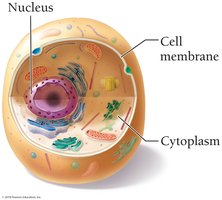
Main Chemical Components of Cells
Carbohydrates: Short-term energy storage and structural components in plants.
Lipids: Long-term energy storage, insulation, and cell membrane structure.
Proteins: Catalysts, structural components, transporters, antibodies, and hormones.
Nucleic acids: Store and transmit genetic information.
Carbohydrates: Sugar, Starch, and Fiber
Monosaccharides
Monosaccharides are the simplest carbohydrates and cannot be broken down into smaller sugars. They have the general formula (CH2O)n and are either aldehydes or ketones with multiple hydroxyl (—OH) groups. Glucose, fructose, and galactose are common hexose (six-carbon) monosaccharides.
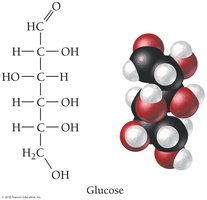
Ring Structures of Monosaccharides
In aqueous solution, monosaccharides like glucose rearrange to form ring structures, which are more stable and prevalent in biological systems.
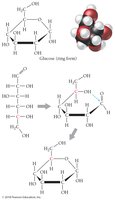
Isomerism in Monosaccharides
Fructose and galactose are isomers of glucose, sharing the same molecular formula but differing in structure and properties.
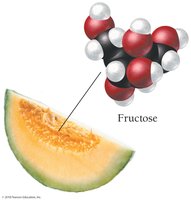
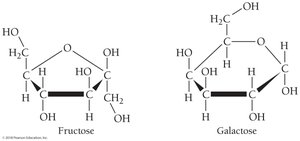
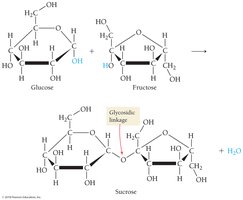
Disaccharides and Glycosidic Linkages
Two monosaccharides can combine via a dehydration reaction to form a disaccharide, linked by a glycosidic bond. Sucrose (table sugar) is formed from glucose and fructose.
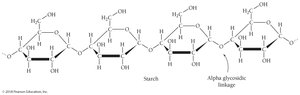
Polysaccharides: Starch, Cellulose, and Glycogen
Polysaccharides are long chains of monosaccharide units. Starch and cellulose are both polymers of glucose but differ in the type of glycosidic linkage, resulting in different properties and digestibility. Glycogen is a highly branched glucose polymer used for energy storage in animals.
Lipids
Fatty Acids
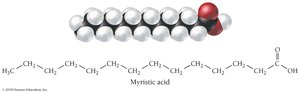
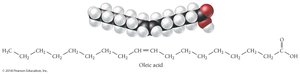
Fatty acids are carboxylic acids with long hydrocarbon tails. They can be saturated (no double bonds) or unsaturated (one or more double bonds). The general structure is:
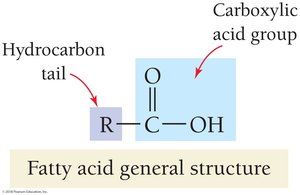
Saturated vs. Unsaturated Fatty Acids
Saturated fatty acids (e.g., myristic acid) have no double bonds and are typically solid at room temperature. Unsaturated fatty acids (e.g., oleic acid) have one or more double bonds and are usually liquid at room temperature.
Classification of Fatty Acids
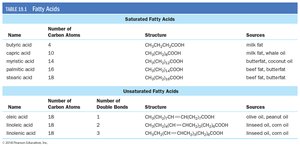
Name | Number of Carbon Atoms | Number of Double Bonds | Structure | Sources |
|---|---|---|---|---|
Butyric acid | 4 | 0 | CH3CH2CH2COOH | Milk fat, whale oil |
Myristic acid | 14 | 0 | CH3(CH2)12COOH | Butterfat, coconut oil |
Oleic acid | 18 | 1 | CH3(CH2)7CH:CH(CH2)7COOH | Olive oil, peanut oil |
Linoleic acid | 18 | 2 | CH3(CH2)4CH:CHCH2CH:CH(CH2)7COOH | Linseed oil, corn oil |
Triglycerides: Fats and Oils
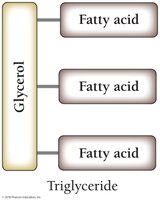
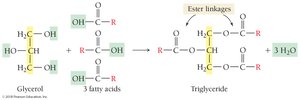
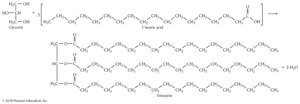
Triglycerides are formed by the esterification of glycerol with three fatty acids. They serve as long-term energy storage molecules. Saturated triglycerides are fats (solid), while unsaturated ones are oils (liquid).
Phospholipids and Cell Membranes
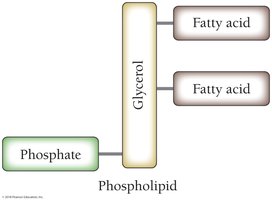
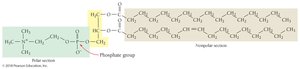
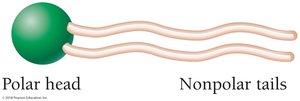
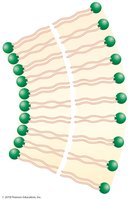
Phospholipids are similar to triglycerides but have a phosphate group replacing one fatty acid. This gives the molecule both polar (hydrophilic) and nonpolar (hydrophobic) regions, making them ideal for forming cell membranes.
Steroids
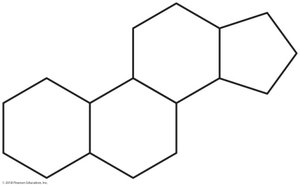
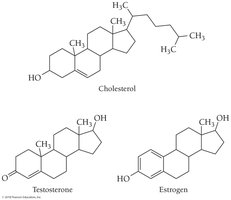
Steroids are lipids with a characteristic four-ring structure. Cholesterol, testosterone, and estrogen are important steroids involved in cell membrane structure and hormone signaling.
Proteins
Amino Acids: Building Blocks of Proteins
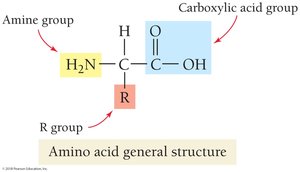
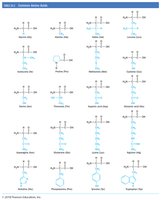
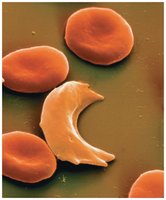
Proteins are polymers of amino acids, which contain an amine group, a carboxylic acid group, and a variable R group. The sequence and nature of R groups determine protein structure and function.
Levels of Protein Structure
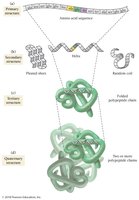
Primary structure: Linear sequence of amino acids, held by peptide bonds.
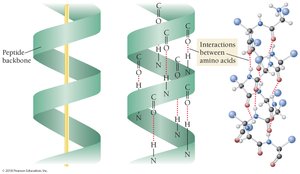
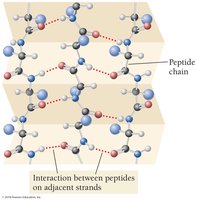
Secondary structure: Local folding patterns (alpha-helix, beta-pleated sheet) stabilized by hydrogen bonds.
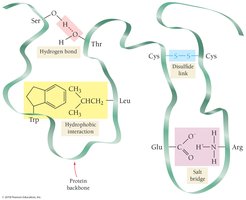
Tertiary structure: Overall 3D folding due to interactions among R groups (hydrogen bonds, disulfide bridges, hydrophobic interactions, salt bridges).
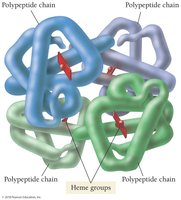
Quaternary structure: Arrangement of multiple polypeptide chains (subunits).


Nucleic Acids: DNA and RNA
Nucleotides and Nucleic Acid Structure
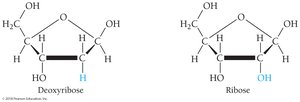
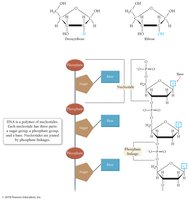
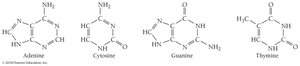
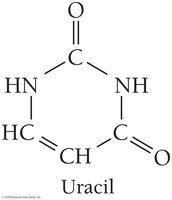
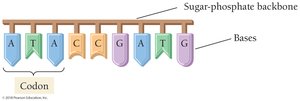
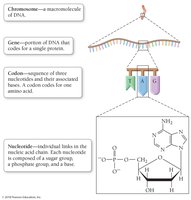
Nucleic acids are polymers of nucleotides, each consisting of a phosphate group, a sugar (deoxyribose in DNA, ribose in RNA), and a nitrogenous base. DNA contains adenine (A), cytosine (C), guanine (G), and thymine (T); RNA contains uracil (U) instead of thymine.
The Genetic Code and Codons
The sequence of bases in DNA encodes genetic information. A codon is a sequence of three nucleotides that specifies one amino acid. Genes are sequences of codons that code for proteins. Chromosomes are DNA molecules containing many genes.
DNA Structure and Replication
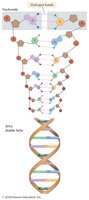
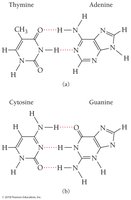
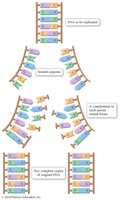
DNA is a double helix with complementary base pairing: A pairs with T, and C pairs with G, via hydrogen bonds. During replication, the two strands separate and serve as templates for new complementary strands, ensuring genetic information is accurately copied.
Protein Synthesis: From DNA to Protein
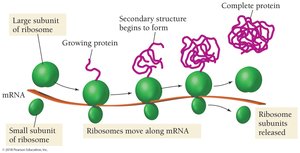
Protein synthesis involves two main steps: transcription and translation. In transcription, a gene's DNA sequence is copied into messenger RNA (mRNA). In translation, the mRNA is read by ribosomes, and the corresponding amino acids are assembled into a protein according to the genetic code.
Summary Table: Key Biochemical Molecules
Class | Monomer/Unit | Function | Example |
|---|---|---|---|
Carbohydrates | Monosaccharide | Energy storage, structure | Glucose, starch, cellulose |
Lipids | Fatty acid, glycerol | Energy storage, membranes, hormones | Triglycerides, phospholipids, steroids |
Proteins | Amino acid | Catalysis, structure, transport, defense | Enzymes, keratin, hemoglobin |
Nucleic acids | Nucleotide | Genetic information storage and transfer | DNA, RNA |
