 뒤로
Chapter 14: Acids and Bases – Study Notes for Introductory Chemistry
스터디 가이드 - 스마트 노트
 자료에 맞춘 맞춤형 노트, 핵심 정의, 예시, 맥락을 확장해 제공합니다.
Acids and Bases: Properties and Examples
Introduction to Acids and Bases
Acids and bases are two fundamental categories of compounds in chemistry, each with distinct properties and behaviors. Understanding their characteristics is essential for studying chemical reactions, biological processes, and industrial applications.
Properties of Acids
Sour taste: Many acids taste sour, as experienced with citric acid in lemons.
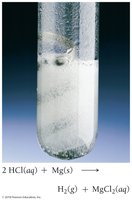
Reaction with metals: Acids can dissolve many metals, producing hydrogen gas.
Litmus test: Acids turn blue litmus paper red.

Examples of Acids
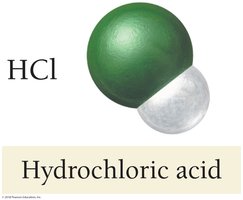
Hydrochloric acid (HCl): Found in stomach acid and used in industry for cleaning metals and processing foods.
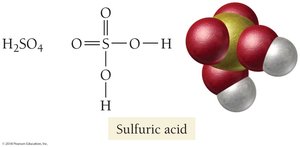
Sulfuric acid (H2SO4): Widely used in fertilizer and battery production.
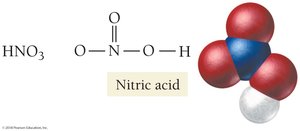
Nitric acid (HNO3): Used in explosives and dyes.
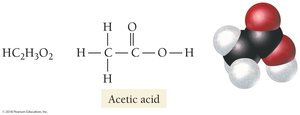
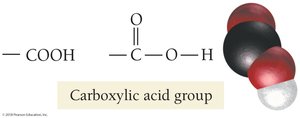
Acetic acid (CH3COOH): Main component of vinegar; a carboxylic acid.
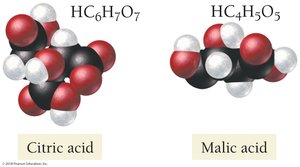
Citric acid and malic acid: Found in fruits such as lemons, limes, and apples.
Properties of Bases
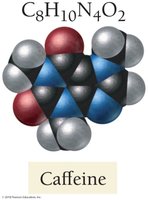
Bitter taste: Bases often taste bitter (e.g., caffeine in coffee).
Slippery feel: Bases feel slippery because they react with oils on the skin to form soap-like substances.
Litmus test: Bases turn red litmus paper blue.

Examples of Bases
Sodium hydroxide (NaOH): Used in drain cleaners and soap manufacturing.
Potassium hydroxide (KOH): Used in industrial processes.
Sodium bicarbonate (NaHCO3): Commonly known as baking soda; used as an antacid.
Definitions of Acids and Bases
Arrhenius Definition
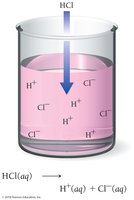
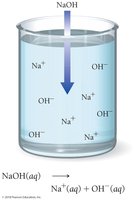
Acid: Produces H+ ions in aqueous solution.
Base: Produces OH− ions in aqueous solution.
Brønsted–Lowry Definition
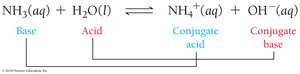
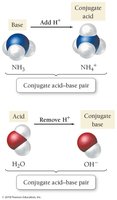
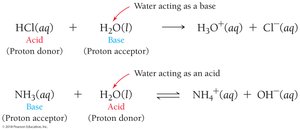
Acid: Proton donor (gives H+).
Base: Proton acceptor (receives H+).
This definition is broader and includes more substances than the Arrhenius definition.

Amphoteric Substances and Conjugate Acid–Base Pairs
Amphoteric: Substances like water that can act as either an acid or a base.
Conjugate acid–base pair: Two substances related by the gain or loss of a proton.

Reactions of Acids and Bases
Neutralization Reactions
When an acid reacts with a base, the H+ from the acid combines with the OH− from the base to form water. The other ions form a salt.
General equation:
Acid Reactions with Metals and Metal Oxides
Acids + Metals: Produce hydrogen gas and a salt.
Acids + Metal Oxides: Produce water and a salt.
Acid–Base Titration
Quantifying Acid or Base Concentration
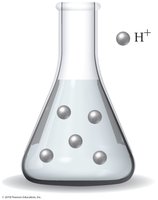
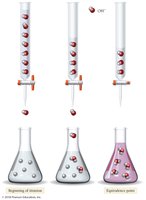
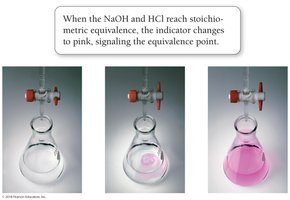
Titration is a laboratory technique used to determine the concentration of an unknown acid or base by reacting it with a solution of known concentration. The equivalence point is reached when the amount of acid equals the amount of base, as indicated by a color change from an indicator.
Strong and Weak Acids and Bases
Strong Acids and Bases
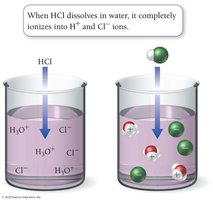
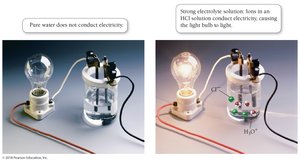
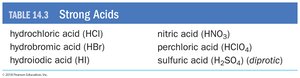
Strong acids: Completely ionize in solution (e.g., HCl, HNO3, H2SO4).
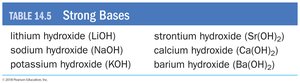
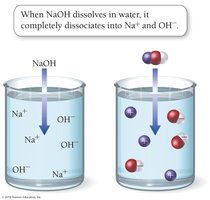
Strong bases: Completely dissociate in solution (e.g., NaOH, KOH).
Weak Acids and Bases
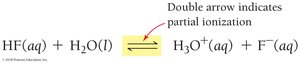
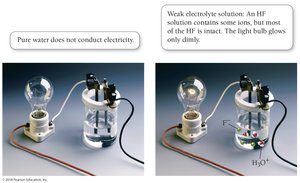
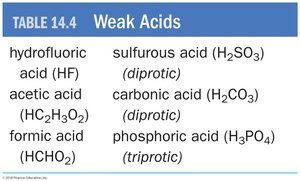
Weak acids: Only partially ionize in solution (e.g., HF, acetic acid).
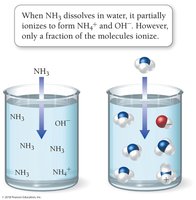
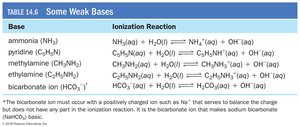
Weak bases: Only partially react with water to produce OH− (e.g., NH3).
Water: Acid and Base in One
Self-Ionization of Water
Water is amphoteric and can self-ionize to form equal concentrations of H3O+ and OH− ions. The ion product constant for water at 25°C is:
The pH and pOH Scales
Measuring Acidity and Basicity
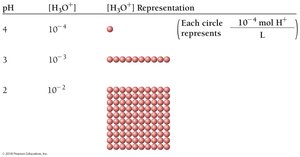
pH:
pOH:
At 25°C: pH + pOH = 14
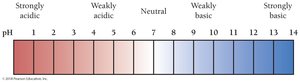
pH < 7: acidic; pH > 7: basic; pH = 7: neutral
Buffers: Solutions That Resist pH Change
Buffers are solutions containing significant amounts of both a weak acid and its conjugate base. They resist changes in pH when small amounts of acid or base are added. Human blood is an example of a natural buffer system.
Summary Table: Strong Acids and Bases
Strong Acids | Strong Bases |
|---|---|
Hydrochloric acid (HCl) | Lithium hydroxide (LiOH) |
Hydrobromic acid (HBr) | Sodium hydroxide (NaOH) |
Hydroiodic acid (HI) | Potassium hydroxide (KOH) |
Nitric acid (HNO3) | Strontium hydroxide (Sr(OH)2) |
Perchloric acid (HClO4) | Calcium hydroxide (Ca(OH)2) |
Sulfuric acid (H2SO4) (diprotic) | Barium hydroxide (Ba(OH)2) |
Key Equations and Concepts
Neutralization:
Ion product of water:
pH calculation:
pOH calculation:
Relationship:
Learning Objectives
Identify common acids and bases and describe their key characteristics.
Distinguish between Arrhenius and Brønsted–Lowry definitions of acids and bases.
Write equations for neutralization and acid–base reactions.
Use titration data to determine the concentration of an unknown solution.
Calculate [H3O+] and [OH−] in solutions and relate them to pH and pOH.
Identify strong and weak acids and bases.
Explain the function and importance of buffers.
