 뒤로
뒤로Chapter 7: Chemical Reactions – Study Notes for Introductory Chemistry
스터디 가이드 - 스마트 노트
 자료에 맞춘 맞춤형 노트, 핵심 정의, 예시, 맥락을 확장해 제공합니다.
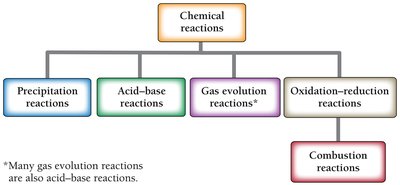
Chemical Reactions
Introduction to Chemical Reactions
Chemical reactions are processes in which substances (reactants) are transformed into new substances (products) with different properties. These reactions are fundamental to both everyday life and industrial processes. For example, the classic grade school volcano uses a reaction between sodium bicarbonate (baking soda) and acetic acid (vinegar) to produce carbon dioxide gas, water, and sodium acetate, resulting in visible bubbling and foaming.
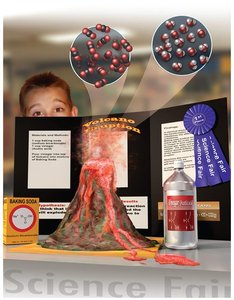
Gas-evolution reactions produce a gas as a product, often observed as bubbling or fizzing.
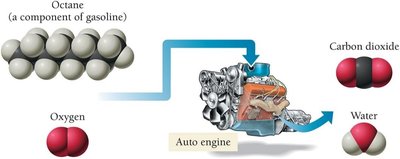
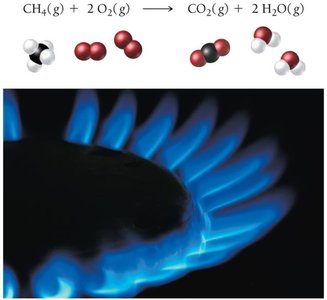
Combustion reactions involve the reaction of a substance with oxygen, producing heat, light, and new products such as carbon dioxide and water.
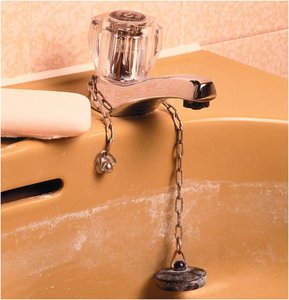
Other reactions, such as those involving laundry detergents, demonstrate precipitation reactions, where dissolved ions form an insoluble solid (precipitate).
Evidence of a Chemical Reaction
Macroscopic and Molecular Evidence
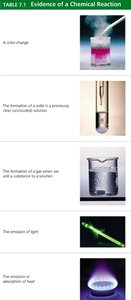
Although we cannot see atoms and molecules directly, chemical reactions often produce observable changes:
A color change
Formation of a solid in a previously clear solution
Formation of a gas (bubbling or fizzing)
Emission of light
Emission or absorption of heat
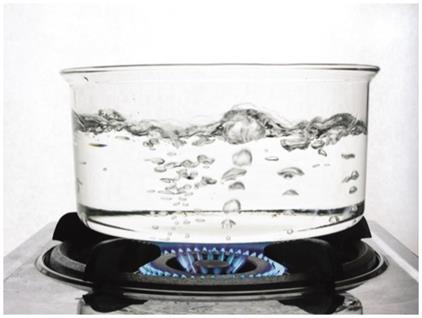
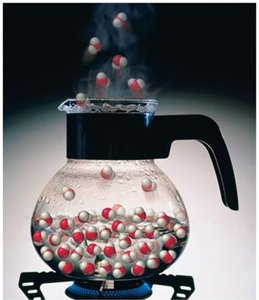
It is important to distinguish chemical changes from physical changes. For example, boiling water produces bubbles, but this is a physical change (liquid to gas) and not a chemical reaction, as the molecules remain H2O.
The Chemical Equation
Representing Chemical Reactions
Chemical equations use formulas to represent reactants and products. The substances on the left are reactants, and those on the right are products. States of matter are indicated in parentheses: (s) for solid, (l) for liquid, (g) for gas, and (aq) for aqueous (dissolved in water).
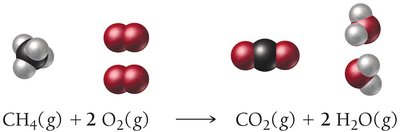
Example (combustion of methane):
Unbalanced:
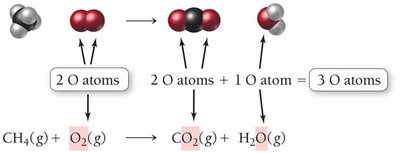
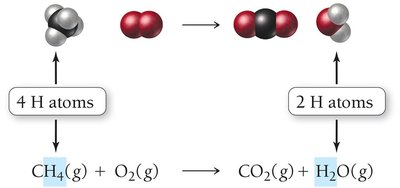
Balancing equations ensures the law of conservation of mass is obeyed—atoms are neither created nor destroyed.
Steps for Balancing Chemical Equations
Write correct formulas for all reactants and products.
Balance elements that appear in only one reactant and one product first.
Balance free elements last.
If necessary, multiply coefficients to eliminate fractions.
Check that all atoms are balanced; only change coefficients, not subscripts.
Example: Aluminum and Sulfuric Acid
Balance the reaction:
Balance sulfate ions as a unit.
Final balanced equation:
Aqueous Solutions and Solubility
Solubility and Electrolytes
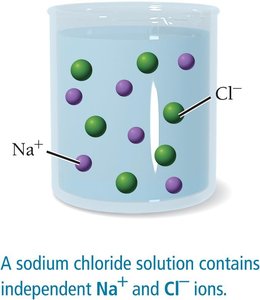
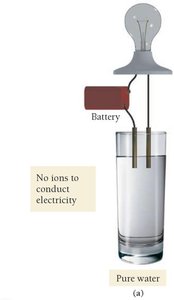
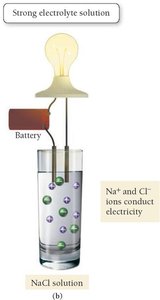
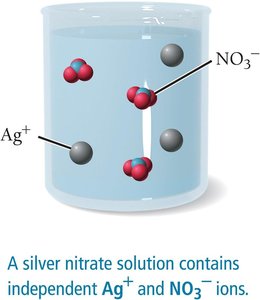
A compound is soluble if it dissolves in a liquid, and insoluble if it does not. An aqueous solution is a homogeneous mixture with water as the solvent. Ionic compounds that dissolve in water usually dissociate into ions, making the solution conductive.
Solubility Rules
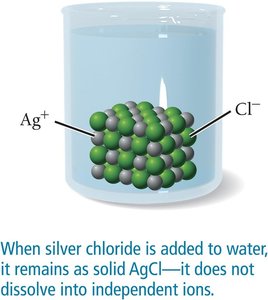
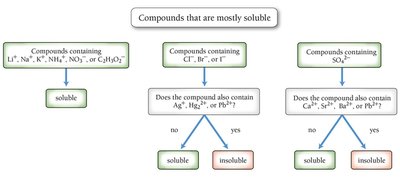
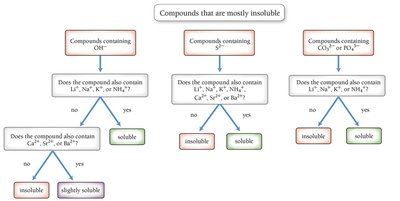
Solubility rules help predict whether an ionic compound will dissolve in water. For example, compounds containing Li+, Na+, K+, NH4+, NO3-, or C2H3O2- are generally soluble. Exceptions exist for certain ions, such as Ag+, Pb2+, and Hg22+ with halides.
Precipitation Reactions
Formation of a Precipitate
When two aqueous solutions are mixed and an insoluble solid forms, the reaction is called a precipitation reaction. The solid formed is the precipitate. Only insoluble compounds form precipitates.
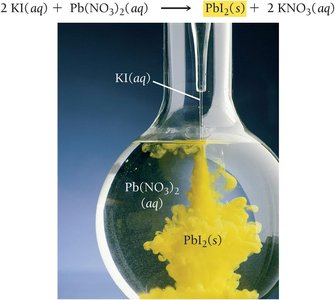
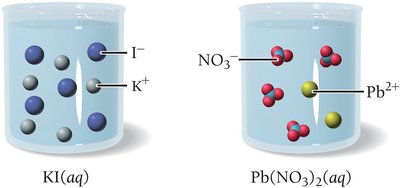
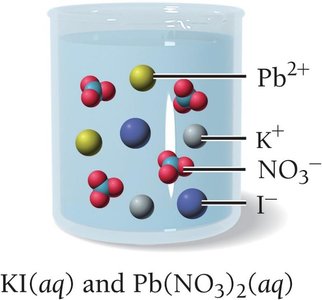
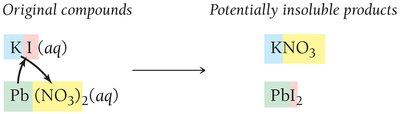
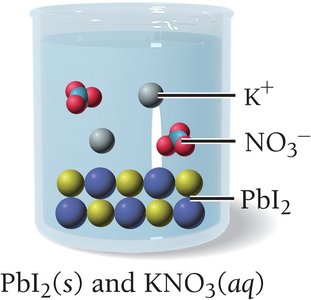
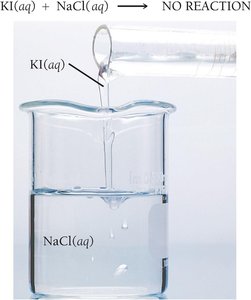
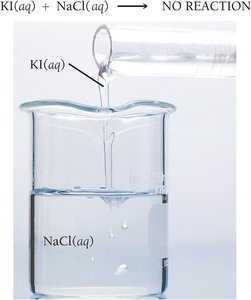
If all products are soluble, no reaction occurs.
Predicting Precipitation Reactions
Write correct formulas for reactants.
Exchange ions to predict possible products.
Use solubility rules to determine if a precipitate forms.
Write the balanced equation, indicating states.
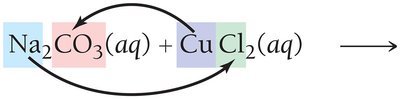
Molecular, Complete, and Net Ionic Equations
Types of Equations
Molecular equation: Shows all compounds as neutral formulas.
Complete ionic equation: Shows all strong electrolytes as ions.
Net ionic equation: Shows only the species that actually participate in the reaction (omits spectator ions).

Acid–Base Reactions
Neutralization and Salt Formation
Acid–base reactions (neutralization reactions) occur when an acid reacts with a base to form water and an ionic compound (salt). The net ionic equation for many acid–base reactions is:

Common acids include HCl, HNO3, H2SO4; common bases include NaOH, KOH, Ca(OH)2.
Gas-Evolution Reactions
Formation of Gaseous Products
Some reactions in aqueous solution produce a gas, either directly or through decomposition of an unstable intermediate. For example:
Oxidation–Reduction (Redox) Reactions
Electron Transfer Processes
Redox reactions involve the transfer of electrons between substances. Oxidation is the loss of electrons, and reduction is the gain of electrons. These reactions are responsible for processes such as rusting, combustion, and battery operation.
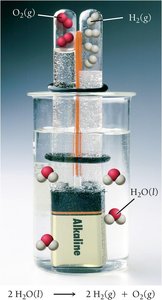
Mnemonic: OIL RIG – Oxidation Is Loss, Reduction Is Gain (of electrons).
Redox reactions include:
Reaction with elemental oxygen
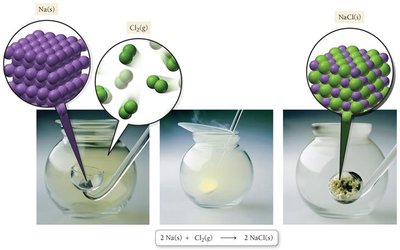
Reaction between a metal and a nonmetal
General electron transfer between substances
Combustion Reactions
Exothermic Redox Reactions
Combustion reactions are a type of redox reaction where a substance reacts with oxygen to form one or more oxygen-containing compounds, often releasing heat and light. For example, the combustion of methyl alcohol:
Unbalanced:
Balanced:
Classifying Chemical Reactions
Types of Reactions by Atomic Changes
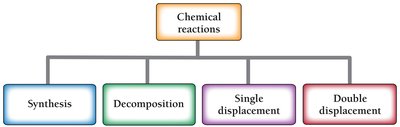
Synthesis (Combination): Two or more substances combine to form one compound.
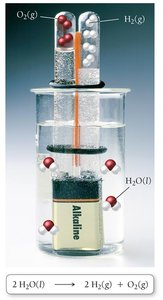
Decomposition: One compound breaks down into two or more simpler substances.
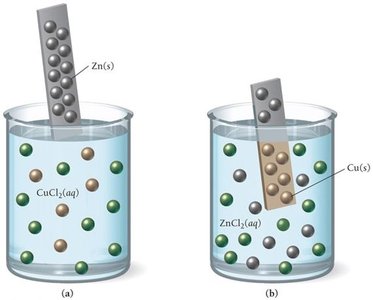
Single-Displacement: One element replaces another in a compound.
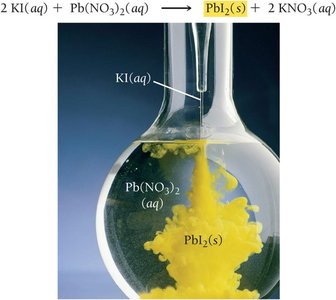
Double-Displacement: Elements in two compounds exchange places.
Summary Table: Types of Chemical Reactions
Type | General Equation | Description |
|---|---|---|
Synthesis | A + B → AB | Two or more substances combine to form one compound. |
Decomposition | AB → A + B | One compound breaks down into simpler substances. |
Single-Displacement | A + BC → AC + B | One element replaces another in a compound. |
Double-Displacement | AB + CD → AD + CB | Elements in two compounds exchange places. |
Combustion | Fuel + O2 → CO2 + H2O | Substance reacts with oxygen, releasing energy. |
Learning Objectives
Identify evidence of a chemical reaction.
Write and balance chemical equations.
Determine solubility of compounds and predict precipitation reactions.
Write molecular, complete ionic, and net ionic equations.
Identify and write equations for acid–base, gas-evolution, redox, and combustion reactions.
Classify chemical reactions by type.
