 뒤로
CHEM 280 Midterm Review: Introduction to Chemistry Study Guide
스터디 가이드 - 스마트 노트
 자료에 맞춘 맞춤형 노트, 핵심 정의, 예시, 맥락을 확장해 제공합니다.
The Chemical World
Introduction to Chemistry
Chemistry is the study of matter, focusing on its composition, structure, properties, and reactions. - Composition: Identifies the types of atoms and molecules present in a substance. - Structure: Describes how atoms and molecules are organized. - Properties: Refers to the characteristics of substances, such as color, density, and reactivity. - Reactions: Explains how substances interact and transform with other substances. 
Measurement and Problem Solving
Significant Figures and Scientific Notation
Accurate measurement and reporting are fundamental in chemistry. Significant figures reflect the precision of a measurement. - Rules for Counting Significant Digits: - All non-zero digits and zeros between them count. - Leading zeros do not count. - Trailing zeros count if there is a decimal point. - Trailing zeros may or may not count if there is no decimal point; use the most conservative answer. 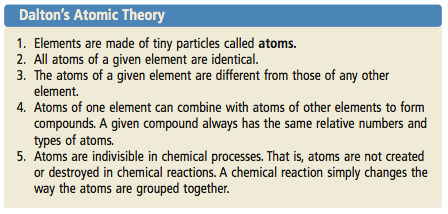 Example Table:
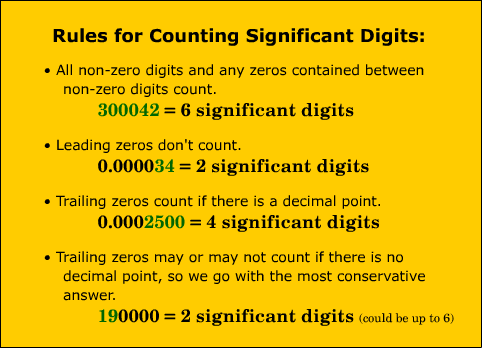
Quantity | Significant Figures |
|---|---|
24 days | 2 |
5.6 × 10⁻¹² s | 3 |
3.14 m | 3 |
0.00383 g | 5 |
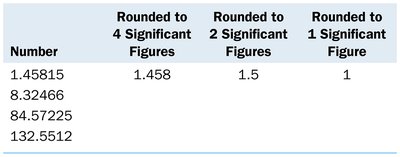
 Rounding Numbers:
Number | Rounded to 4 SF | Rounded to 2 SF | Rounded to 1 SF |
|---|---|---|---|
1.45815 | 1.458 | 1.5 | 1 |
8.32466 | 8.325 | 8.3 | 8 |
84.57225 | 84.57 | 85 | 80 |
132.5512 | 132.6 | 130 | 100 |
SI Units and Prefixes
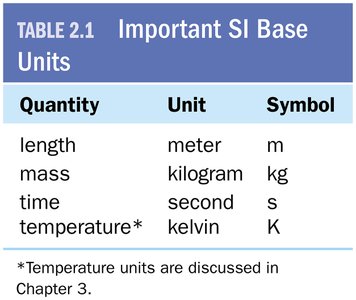
Chemistry uses the International System of Units (SI) for measurement. Important SI Base Units:
Quantity | Unit | Symbol |
|---|---|---|
length | meter | m |
mass | kilogram | kg |
time | second | s |
temperature | kelvin | K |
 SI Prefix Multipliers:
Prefix | Symbol | Meaning | Multiplier |
|---|---|---|---|
kilo | k | thousand | 1000 (103) |
centi | c | hundredth | 0.01 (10-2) |
milli | m | thousandth | 0.001 (10-3) |
micro | μ | millionth | 0.000001 (10-6) |
nano | n | billionth | 0.000000001 (10-9) |
Unit Conversions
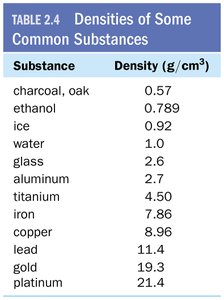
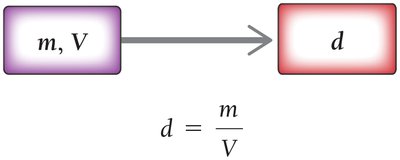
Unit conversions are essential for solving chemistry problems. - Example: Converting mass units (mg to kg to g to lb) and volume units (g to mL to L). 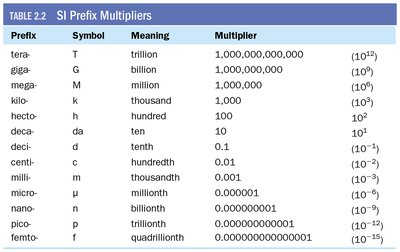
Matter and Energy
Classification of Matter
Matter can be classified as pure substances (elements and compounds) or mixtures (homogeneous and heterogeneous). - Elements: Pure substances consisting of only one type of atom. - Compounds: Pure substances composed of two or more types of atoms chemically combined. - Homogeneous Mixtures: Uniform composition throughout (e.g., tea). - Heterogeneous Mixtures: Non-uniform composition (e.g., oil and water). 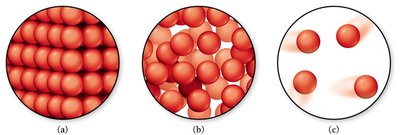
States of Matter
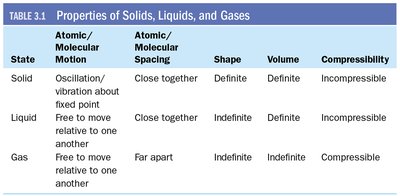
Matter exists in three primary states: solid, liquid, and gas.
State | Atomic/Molecular Motion | Spacing | Shape | Volume | Compressibility |
|---|---|---|---|---|---|
Solid | Oscillation/vibration about fixed point | Close together | Definite | Definite | Incompressible |
Liquid | Free to move relative to one another | Close together | Indefinite | Definite | Incompressible |
Gas | Free to move relative to one another | Far apart | Indefinite | Indefinite | Compressible |
Physical and Chemical Properties
- Physical Properties: Characteristics that can be observed without changing the substance's identity (e.g., color, mass, density, melting point). - Chemical Properties: Characteristics that describe a substance's ability to change into different substances (e.g., reactivity, flammability, tendency to corrode).
Energy and Its Conversion
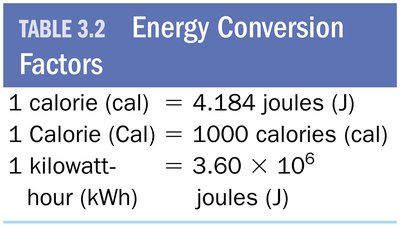
Energy is the capacity to do work or produce heat. - Energy Conversion Factors:
Unit | Equivalent |
|---|---|
1 calorie (cal) | 4.184 joules (J) |
1 Calorie (Cal) | 1000 calories (cal) |
1 kilowatt-hour (kWh) | 3.60 × 10⁶ joules (J) |
Atoms and Elements
Dalton's Atomic Theory
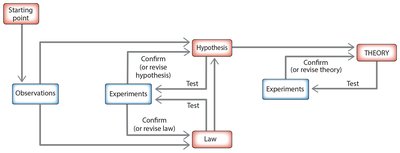
Dalton's atomic theory forms the foundation of modern chemistry.
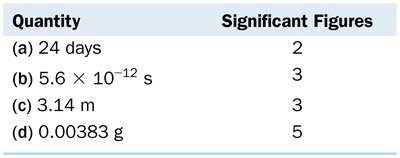
Elements are made of tiny particles called atoms.
All atoms of a given element are identical.
Atoms of different elements are different.
Atoms combine to form compounds in fixed ratios.
Atoms are indivisible in chemical processes; they are not created or destroyed, only rearranged.
Models of the Atom
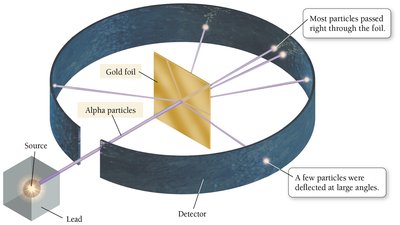
- Thomson's Plum-Pudding Model: Atoms are composed of electrons embedded in a sphere of positive charge. 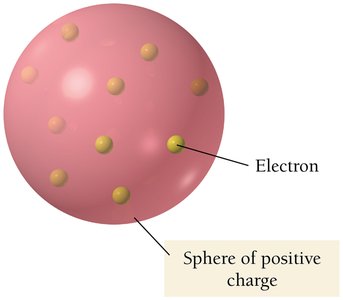 - Rutherford's Model: Atoms have a small, dense nucleus containing protons and neutrons, with electrons orbiting in mostly empty space.
Law of Conservation of Mass
Antoine Lavoisier established that mass is conserved in chemical reactions. - Law of Conservation of Mass: The total mass of reactants equals the total mass of products in a chemical reaction. 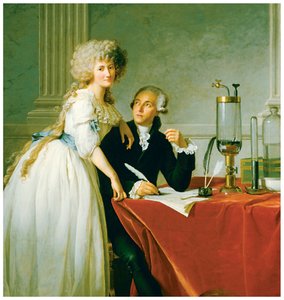
Molecules and Compounds
Ionic and Molecular Compounds
- Ionic Compounds: Formed from metals and nonmetals; consist of ions. - Molecular Compounds: Formed from two or more nonmetals; consist of molecules, not ions.
Writing Formulas for Ionic Compounds
- Example: Aluminum (Al3+) and Oxygen (O2–) combine to form Al2O3.
Chemical Reactions
Balancing Chemical Equations
Balancing equations ensures the law of conservation of mass is obeyed. - Write the unbalanced equation using chemical formulas. - Balance elements that appear in only one compound on each side first. - Balance metals before nonmetals. - Balance free elements last. - For combustion reactions, balance C, H, O in that order.
Solubility Rules
- Compounds containing Br– are usually soluble, except with Ag+. - Compounds containing Cl– are usually soluble, except with certain cations. - Compounds containing NO3– are always soluble. - Compounds containing SO42– are usually soluble, except with Pb2+.
Redox Reactions
- Oxidation: Loss of electrons. - Reduction: Gain of electrons. - Redox Reaction: Involves transfer of electrons between substances.
Quantities in Chemical Reactions
Limiting Reactant, Theoretical Yield, Actual Yield, and Percent Yield
- Limiting Reactant: The reactant that is completely consumed in a reaction. - Theoretical Yield: The maximum amount of product that can be formed from the limiting reactant. - Actual Yield: The amount of product actually obtained. - Percent Yield:
Example Calculation
- If 20.0 g of NH3 are obtained and the theoretical yield is 26.0 g: Additional info: These notes cover the foundational topics for an introductory college chemistry course, including measurement, matter, atomic theory, chemical reactions, and stoichiometry. Images and tables are included only where they directly reinforce the explanation.
