 뒤로
뒤로Chemical Bonding I: Lewis Structures, Molecular Shapes, and Bond Properties
스터디 가이드 - 스마트 노트
 자료에 맞춘 맞춤형 노트, 핵심 정의, 예시, 맥락을 확장해 제공합니다.
Chemical Bonding I: Lewis Structures and Molecular Shapes
Introduction
This chapter introduces the foundational concepts of chemical bonding, focusing on how atoms combine to form molecules, how to represent these molecules using Lewis structures, and how to predict their shapes and properties. Understanding these principles is essential for predicting molecular behavior and reactivity in chemistry.
Electronegativity and Bond Polarity
Electronegativity
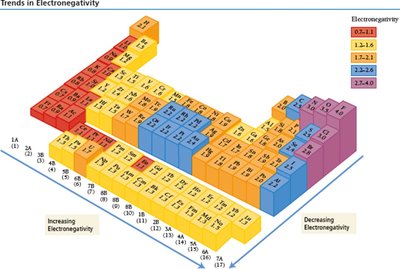
Electronegativity is the ability of an atom to attract electrons to itself in a chemical bond. It increases across a period (left to right) and decreases down a group (top to bottom) in the periodic table. Fluorine is the most electronegative element, while francium is the least. Noble gases are not assigned electronegativity values.
Trend: Opposite of atomic size trend.
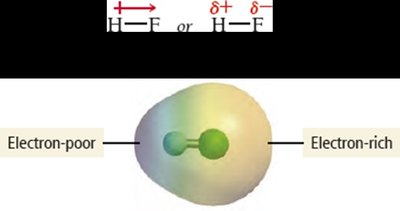
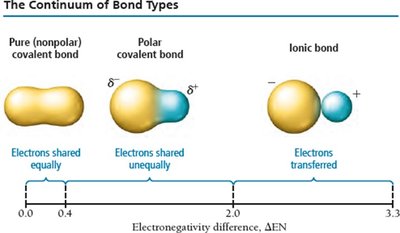
Bond Polarity: The larger the difference in electronegativity (ΔEN), the more polar the bond.
Bond Types:
Non-Polar Covalent: Equal sharing of electrons (e.g., C–C, S–H, C–H).
Polar Covalent: Unequal sharing of electrons.
Ionic Bond: Electron transfer between a metal and a nonmetal.
Lewis Structures: Representation and Construction
Lewis Theory and Electron Dot Structures
Lewis theory predicts the distribution of valence electrons in molecules and polyatomic ions. Lewis structures use dots to represent valence electrons around atomic symbols, showing both bonding and nonbonding electrons. Atoms achieve stability by sharing electrons to complete their octet (eight valence electrons), except for hydrogen, which follows the duet rule.
Single Bond: Two electrons (one pair) shared, represented by a single line.
Double Bond: Four electrons (two pairs) shared, represented by two lines.
Triple Bond: Six electrons (three pairs) shared, represented by three lines.

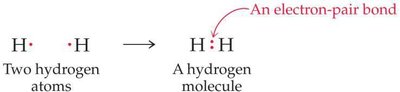

Steps for Drawing Lewis Structures
Find the sum of valence electrons for all atoms in the molecule or ion. Add one electron for each negative charge (anion), subtract one for each positive charge (cation).
Select the central atom (usually the least electronegative, not hydrogen). Connect outer atoms to it with single bonds.
Fill the octets of the outer atoms with remaining electrons.
Fill the octet of the central atom.
If the central atom lacks an octet, form multiple bonds as needed.
Calculate the formal charge for each atom to check the structure's validity.

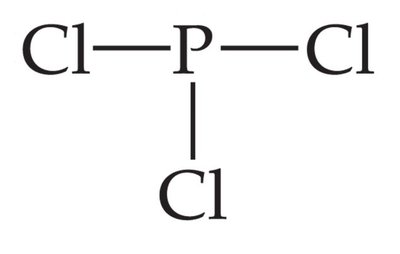
Formal Charge Calculation
The formal charge (FC) helps determine the most stable Lewis structure. It is calculated as:
The sum of all formal charges should equal the overall charge of the molecule or ion.
Exceptions to the Octet Rule
Expanded Octets
Elements in period 3 and beyond (e.g., phosphorus, sulfur, chlorine, bromine, iodine, xenon, selenium) can have more than eight electrons around them, forming expanded octets.
Incomplete Octets
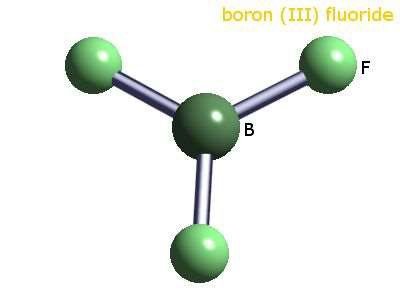
Some elements (e.g., hydrogen, boron, aluminum) are stable with fewer than eight electrons. Hydrogen follows the duet rule (2 electrons), while boron and aluminum often have six electrons.
Free Radicals
Free radicals are molecules or ions with an odd number of electrons, making them highly reactive and not fully described by the octet rule (e.g., NO).
Resonance and Formal Charge
Resonance Structures
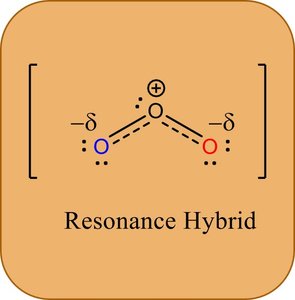
Some molecules can be represented by two or more valid Lewis structures, called resonance structures. The actual structure is a resonance hybrid, with electrons delocalized over the molecule. Resonance is indicated by a double-headed arrow between structures.
All resonance structures must have the same arrangement of atoms and total number of electrons.
The best resonance structure has the fewest formal charges and places negative charges on the most electronegative atoms.

Bond Energies and Bond Lengths
Bond Order, Strength, and Length
Bond order is the number of chemical bonds between a pair of atoms. Higher bond order means stronger and shorter bonds. The bond order can be calculated as:
Stronger bonds are shorter and require more energy to break.
Bond strength increases with bond order and electronegativity difference.
Molecular Geometry: VSEPR Theory
Valence Shell Electron Pair Repulsion (VSEPR) Model
The VSEPR model predicts molecular shapes based on the repulsion between regions of electron density (bonds and lone pairs) around a central atom. Electron groups arrange themselves as far apart as possible to minimize repulsion.
Common Geometries: Linear, trigonal planar, tetrahedral, trigonal bipyramidal, octahedral.
Effect of Lone Pairs: Lone pairs occupy more space and decrease bond angles.
Example: In H2O, the electron geometry is tetrahedral, but the molecular shape is bent due to two lone pairs on oxygen.
Molecular Polarity
Determining Molecular Polarity
A molecule is polar if it contains polar bonds and the distribution of these bonds is nonuniform, resulting in a net dipole moment (μ). The dipole moment is measured in debyes (D).
If all atoms around the central atom are identical and there are no lone pairs, the molecule is usually nonpolar.
If there are lone pairs or different atoms, the molecule is likely polar.
Polarity affects physical properties such as solubility: "like dissolves like" (polar dissolves polar).
Summary Table: Bond Types and Polarity
Bond Type | Electronegativity Difference (ΔEN) | Electron Distribution | Example |
|---|---|---|---|
Nonpolar Covalent | 0.0–0.4 | Electrons shared equally | H2, Cl2 |
Polar Covalent | 0.5–2.0 | Electrons shared unequally | H2O, HF |
Ionic | >2.0 | Electrons transferred | NaCl |
Practice and Application
Draw Lewis structures for CH2Cl2, PCl3, HCN, SCN-, H3O+.
Calculate formal charges for each atom in the structure.
Predict molecular geometry and polarity for molecules such as PBr3, HBr, Br2, SiBr4.
