 뒤로
뒤로Introduction to Chemistry: Matter, Properties, History, and Nomenclature
스터디 가이드 - 스마트 노트
 자료에 맞춘 맞춤형 노트, 핵심 정의, 예시, 맥락을 확장해 제공합니다.
Introduction to Chemistry
Definition of Chemistry
Chemistry is the study of matter and its properties, the changes that matter undergoes, and the energy associated with those changes. It is a central science that connects physics with other natural sciences such as biology and geology.
Matter: The physical material of the universe; anything that occupies space and has mass. Matter can be classified as pure substances or mixtures.
Matter and Its Classification
Pure Substances and Mixtures
Matter can be divided into pure substances and mixtures based on composition and properties.
Pure Substances: Have a fixed composition and distinct properties. They contain only one kind of matter, with unique physical and chemical properties.
Mixtures: Contain more than one kind of matter and can be separated by physical means. Mixtures can be homogeneous (uniform throughout) or heterogeneous (not uniform).
Physical and Chemical Properties
Physical Properties: Can be measured without changing the identity of the substance (e.g., color, melting point, boiling point).
Chemical Properties: Describe how a substance may change or react to form another substance (e.g., flammability, reactivity).
Physical States of Matter
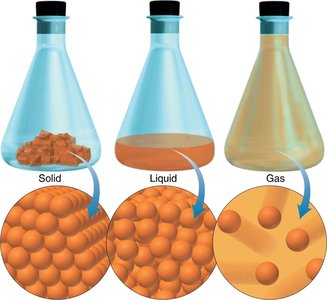
Matter exists in different physical states, each with distinct characteristics:
Solid: Fixed volume and shape; particles are closely packed in a regular arrangement.
Liquid: Fixed volume but no fixed shape; particles are close but can move past each other.
Gas: No fixed volume or shape; particles are far apart and move freely.
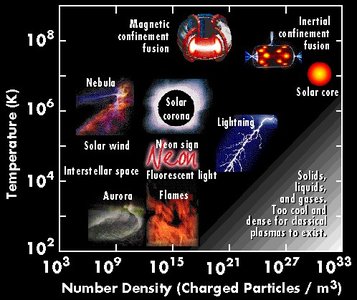
Plasma: The fourth state of matter, consisting of freely moving charged particles (electrons and ions), formed at high temperatures.
Plasma and Its Properties
Plasma is formed at high temperatures when electrons are stripped from neutral atoms. It is found in stars, lightning, and neon signs. Plasma densities and temperatures vary widely.
Physical and Chemical Changes
Physical Changes: Changes in physical appearance without changing the basic identity of the substance (e.g., melting, freezing, evaporation).
Chemical Changes: Changes where a substance is transformed into a chemically different substance (e.g., burning, rusting).
Examples:
Frost forming: Physical change
Cornstalk growing: Chemical change
Dynamite exploding: Chemical change
Perspiration evaporating: Physical change
Silver fork tarnishing: Chemical change
Intensive and Extensive Properties
Intensive Properties: Do not depend on the amount of material (e.g., color, taste, melting point, boiling point, flammability).
Extensive Properties: Depend on the amount of material (e.g., mass, volume, energy, entropy).
History of Chemistry
Early Theories and Alchemy
Greek Civilization: Proposed that all matter consists of tiny, invisible entities called atoms. Believed in four elements: air, earth, water, and fire.
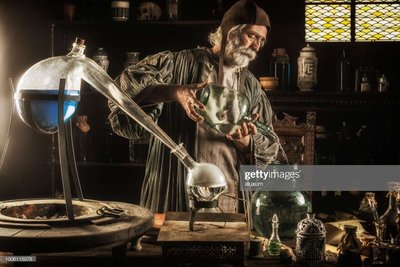
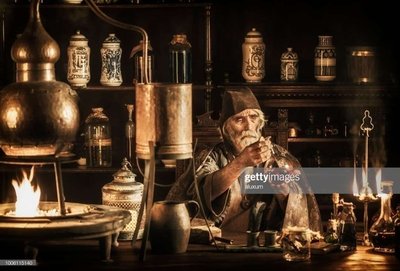
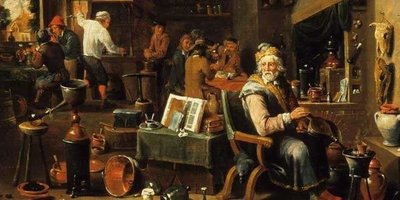
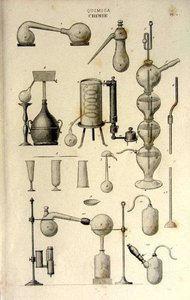
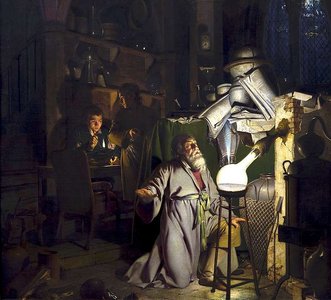
Alchemists: Practiced laboratory-based attempts to transform substances, such as making gold from lead. Sought the "Philosopher’s Stone."
Latrochemistry: Focused on the relationship between medicine and alchemy, including medicinal chemistry and various potions.
The Birth of Modern Chemistry
Robert Boyle: First modern chemist, emphasized experimentation.
Antoine Lavoisier: "Father of Chemistry," formulated the law of conservation of mass and oxidation theory.
Joseph Priestly: Discovered oxygen.
Henry Cavendish: Quantitative analysis, determined percentage of oxygen in air.
John Dalton: Devised the first comprehensive atomic theory.
Development of the Periodic Table
Johann Döbereiner: Classified elements in triads based on similar properties.
John Newlands: Proposed the law of octaves, noting periodicity in element properties.
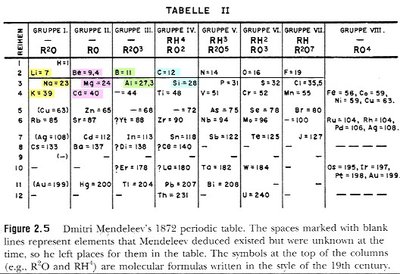
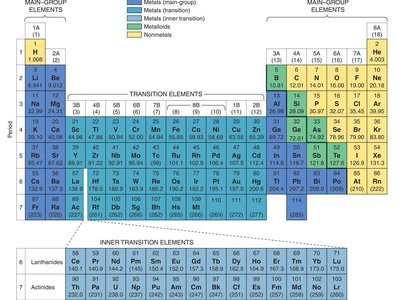
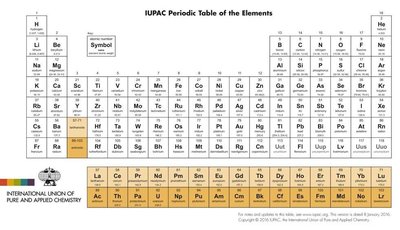
Dmitri Mendeleev: Created the first periodic table in 1869, arranging elements by increasing atomic mass and grouping those with similar properties.
Language of Chemistry: Nomenclature
Common Ions and Their Names
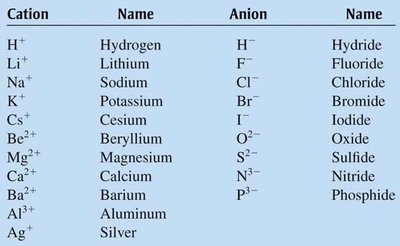
Chemical nomenclature involves naming compounds based on their constituent ions. Memorizing common cations and anions is essential for understanding chemical formulas and reactions.
Cation | Name | Anion | Name |
|---|---|---|---|
H+ | Hydrogen | H- | Hydride |
Li+ | Lithium | F- | Fluoride |
Na+ | Sodium | Cl- | Chloride |
K+ | Potassium | Br- | Bromide |
Cs+ | Cesium | I- | Iodide |
Be2+ | Beryllium | O2- | Oxide |
Mg2+ | Magnesium | S2- | Sulfide |
Ca2+ | Calcium | N3- | Nitride |
Ba2+ | Barium | P3- | Phosphide |
Al3+ | Aluminum | ||
Ag+ | Silver |
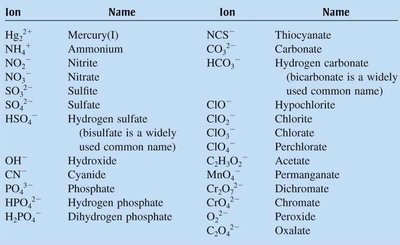
Ion | Name | Ion | Name |
|---|---|---|---|
Hg22+ | Mercury(I) | NCS- | Thiocyanate |
NH4+ | Ammonium | CO32- | Carbonate |
NO2- | Nitrite | HCO3- | Hydrogen carbonate |
NO3- | Nitrate | ClO- | Hypochlorite |
SO42- | Sulfate | ClO2- | Chlorite |
HSO4- | Hydrogen sulfate | ClO3- | Chlorate |
OH- | Hydroxide | ClO4- | Perchlorate |
CN- | Cyanide | CH3COO- | Acetate |
PO43- | Phosphate | MnO4- | Permanganate |
HPO42- | Hydrogen phosphate | CrO42- | Chromate |
H2PO4- | Dihydrogen phosphate | Cr2O72- | Dichromate |
C2O42- | Oxalate |
Writing Chemical Formulas
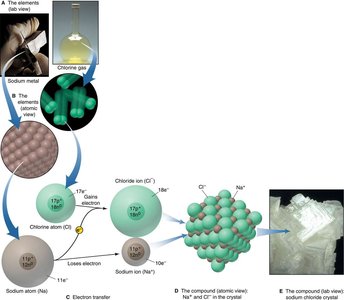
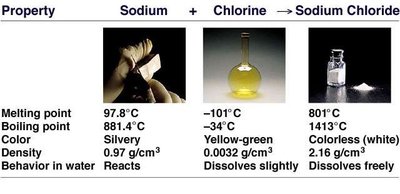
Formulas for ionic compounds are written to ensure electrical neutrality. For example, sodium chloride (NaCl) forms in a 1:1 ratio because Na+ and Cl- combine to balance charges.
For compounds with polyatomic ions, the ratio is determined by the charges of the ions. For example, magnesium phosphate, Mg3(PO4)2, forms in a 3:2 ratio to balance the charges of Mg2+ and PO43-.
Naming Covalent Compounds
Covalent compounds are named using prefixes to indicate the number of each atom present:
SF6: sulfur hexafluoride
N2O3: dinitrogen trioxide
Cl2O7: dichlorine heptoxide
P4O6: tetraphosphorus hexoxide
Naming Ionic Compounds with Variable Oxidation States
Some metals can have more than one ionic charge (oxidation number). The charge is indicated in parentheses using Roman numerals:
Fe2S3: iron(III) sulfide
CuSe: copper(II) selenide
GaN: gallium(III) nitride
CrCl3: chromium(III) chloride
Ti2(SO4)3: titanium(III) sulfate
The Mole Concept and Chemical Calculations
The Mole and Avogadro's Number
The mole is a fundamental unit in chemistry representing 6.022 × 10²³ entities (Avogadro's number). It allows chemists to count atoms, ions, or molecules by weighing them.
1 mole of Mg3(PO4)2 contains 6.022 × 10²³ molecules.
It contains 3 × 6.022 × 1023 magnesium ions, 2 × 6.022 × 1023 phosphate ions, etc.
Solutions and Concentration
Molarity
Molarity (M) is the most common unit for expressing solution concentration. It is defined as the number of moles of solute per liter of solution:
Alternatively, moles can be calculated as:
Sample Calculations
Calculating Molarity: If 455 mL of solution contains 1.80 mol of HBr, the molarity is .
Calculating Moles: 100.0 mL of a 0.200 M NaCl solution contains mol NaCl.
Calculating Mass: To find the mass of solute in a given volume, multiply moles by molar mass.
Dilution of Solutions
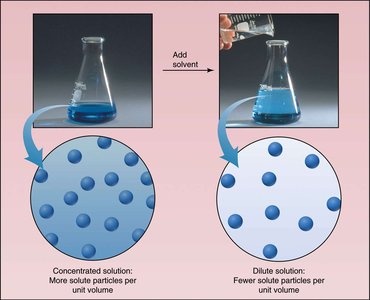
Dilution is the process of adding solvent to decrease the concentration of a solution. The number of moles of solute remains constant before and after dilution:
Example: To prepare 0.80 L of 0.15 M NaCl from a 6.0 M stock solution:
Calculate moles needed: mol
Volume of stock solution needed: L = 20 mL
Summary
Chemistry studies matter, its properties, and changes.
Matter is classified as pure substances or mixtures, and exists in different states.
Physical and chemical properties and changes are fundamental concepts.
The history of chemistry includes early theories, alchemy, and the development of the periodic table.
Nomenclature is essential for naming compounds and understanding chemical formulas.
The mole concept and solution calculations are foundational for quantitative chemistry.
