 뒤로
뒤로Introduction to Chemistry: The Chemical World and Scientific Method
스터디 가이드 - 스마트 노트
 자료에 맞춘 맞춤형 노트, 핵심 정의, 예시, 맥락을 확장해 제공합니다.
The Chemical World
What Is Matter?
Chemistry is the scientific discipline concerned with the characteristics, composition, and transformations (reactions) of matter. Matter is defined as anything that has mass and occupies space. Matter includes both visible and invisible substances, as well as living and nonliving materials.
Matter: Anything that has mass and takes up space.
Chemistry: The study of matter's properties, composition, and the changes it undergoes.
Examples: Air, water, rocks, living organisms, and even invisible gases.


Measurement and Problem Solving
Mass and Weight
Understanding the difference between mass and weight is fundamental in chemistry. Mass is a measure of the amount of matter in an object, while weight is the force exerted by gravity on that mass.
Mass: The measure of the quantity of matter in an object. It is independent of location and is measured in kilograms (kg) or grams (g).
Weight: The measure of the gravitational force acting on an object's mass. It depends on the object's location (e.g., Earth vs. Moon) and is measured in newtons (N).
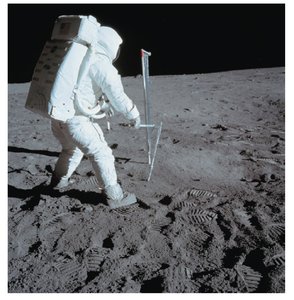
Example: An astronaut's mass remains the same on the Moon as on Earth, but their weight is less on the Moon due to lower gravity.
The Chemical World in Everyday Life
Chemistry in Daily Scenarios
Chemistry is involved in many aspects of daily life, from the food we eat to the air we breathe. Atoms compose all matter, and mixtures of substances are common. The flavor and color of foods depend on the identity and shape of molecules, while phenomena like fizz in soda are determined by gas pressure and solubility. Temperature is related to molecular motion.
Atoms: Fundamental units that compose all matter.
Molecules: Groups of atoms bonded together, determining properties like flavor and color.
Mixtures: Combinations of substances, such as the ingredients in a soda.
Gas Pressure and Solubility: Responsible for the fizz in carbonated drinks.
Temperature: A measure of molecular motion.

The Scientific Method
How Chemists Think
The scientific method is a systematic approach used by chemists to investigate the natural world. It involves making observations, forming hypotheses, conducting experiments, and developing theories and laws. This process ensures that scientific knowledge is based on evidence and can be tested.
Observation: Gathering information using the senses or instruments.
Hypothesis: A tentative explanation that can be tested.
Experiment: Controlled procedures to test hypotheses.
Theory: A well-established explanation based on evidence.
Law: A statement summarizing consistent observations.
Steps of the Scientific Method
The scientific method consists of several steps that guide scientific inquiry:
Ask a question
Construct a hypothesis
Test with experiments
Analyze the results
Formulate a conclusion
Observation, Hypothesis, Law, and Theory
Observation
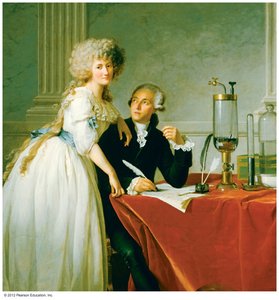
Observations can be made with the naked eye or with sensitive instruments. They usually involve measurement or description of some aspect of the physical world. For example, Lavoisier observed that the mass of a container and its contents did not change during combustion.
Hypothesis
A hypothesis is a tentative explanation that can be tested through experimentation. A good hypothesis is falsifiable, meaning it can be proven wrong by further testing. Experiments are highly controlled observations designed to validate or invalidate hypotheses.
Law
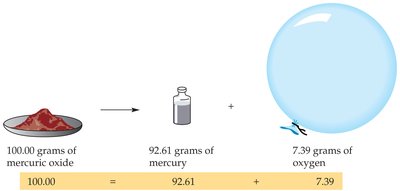
A scientific law is a brief statement that synthesizes past observations and predicts future ones. For example, Lavoisier developed the Law of Conservation of Mass, which states that in a chemical reaction, matter is neither created nor destroyed.
Law of Conservation of Mass: During a chemical change, matter is neither created nor destroyed.
Theory
A theory is a well-established hypothesis that explains and gives the underlying reasons for observations and laws. Theories are models that help us understand the natural world.
Atoms and Elements
Dalton's Atomic Theory
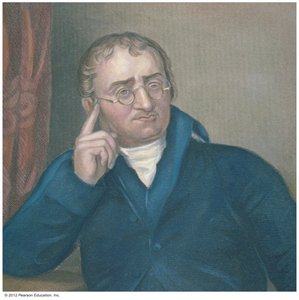
Dalton explained the law of conservation of mass by proposing that all matter is composed of small, indestructible particles called atoms. This concept forms the basis of modern chemistry.
Atoms: Small, indestructible particles that make up all matter.
Dalton's Theory: Matter is composed of atoms, which explains the conservation of mass in chemical reactions.
Classifying Scientific Statements
Observation, Law, or Theory?
Scientific statements can be classified as observations, laws, or theories:
Observation: Directly measured or described phenomena (e.g., mass does not change when burning metal in a closed container).
Law: General statement summarizing consistent observations (e.g., matter is conserved in chemical reactions).
Theory: Explanation of why phenomena occur (e.g., matter is made of atoms).
Example of a Scientific Law
Among the following, the statement "In a chemical reaction, matter is neither created nor destroyed" is an example of a scientific law.
Summary Table: Scientific Method Terms
Term | Definition | Example |
|---|---|---|
Observation | Measurement or description of the physical world | Mass does not change during combustion |
Hypothesis | Tentative explanation tested by experiments | Combustion does not create or destroy matter |
Law | Statement summarizing consistent observations | Law of Conservation of Mass |
Theory | Model explaining underlying reasons for laws | Dalton's Atomic Theory |
Key Equation
The Law of Conservation of Mass can be expressed as:
For example, in the decomposition of mercuric oxide:
