 뒤로
Introduction to Organic Chemistry: Structure, Nomenclature, and Functional Groups
스터디 가이드 - 스마트 노트
 자료에 맞춘 맞춤형 노트, 핵심 정의, 예시, 맥락을 확장해 제공합니다.
Organic Chemistry: The Chemical World of Carbon
What Do I Smell? The Role of Organic Molecules in Odors
Many of the scents we encounter daily are due to organic compounds—molecules containing carbon and other elements. For example, the sweet smell of jasmine is produced by benzyl acetate, an organic compound. When inhaled, these molecules interact with receptors in our nose, sending signals to the brain that we interpret as specific smells.
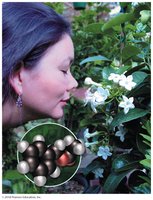
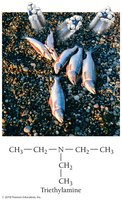
Organic molecules are responsible for a wide variety of odors, including pleasant scents (like vanilla and cinnamon) and unpleasant ones (such as the smell of dead fish, caused by triethylamine).
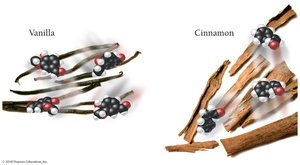
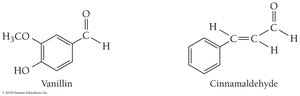
Vanilla beans and cinnamon sticks owe their characteristic aromas to specific organic molecules: vanillin and cinnamaldehyde, respectively.
Vitalism and the Difference Between Organic and Inorganic Compounds
Historical Perspective: Organic vs. Inorganic Compounds
By the late 18th century, chemists classified compounds as either organic (from living things) or inorganic (from nonliving sources). For example, sugar (from plants) was considered organic, while salt (from mines or the ocean) was considered inorganic.
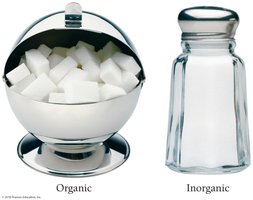
Organic compounds are typically easier to decompose and were once thought to be impossible to synthesize outside living organisms.
Vitalism was the belief that a mystical 'vital force' in living things was necessary to produce organic compounds.
Laboratory Synthesis of Urea: The End of Vitalism
In 1828, Friedrich Wöhler synthesized urea (an organic compound) from ammonium cyanate (an inorganic compound), disproving vitalism and showing that organic compounds could be created in the laboratory.

This experiment demonstrated that the chemistry of life follows the same scientific laws as inorganic chemistry.
Carbon: The Versatile Atom
Why Is Carbon So Special?
Carbon forms more compounds than all other elements combined due to its ability to form four covalent bonds (it has four valence electrons). This allows for a vast array of molecular structures.
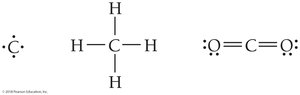
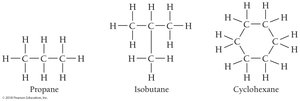
Carbon atoms can bond to each other, forming chains, branches, and rings, which leads to the diversity of organic molecules.
Molecular Geometry of Carbon Compounds
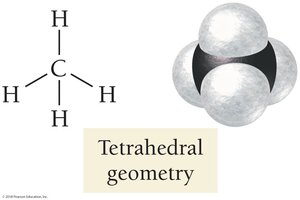
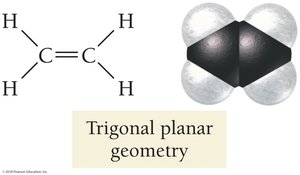
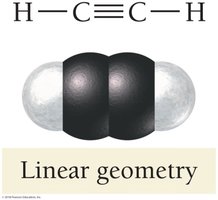
The geometry around a carbon atom depends on the types of bonds it forms:
Tetrahedral geometry (four single bonds): 109.5° bond angles.
Trigonal planar geometry (one double bond): 120° bond angles.
Linear geometry (one triple bond or two double bonds): 180° bond angles.
Hydrocarbons: The Simplest Organic Compounds
Types of Hydrocarbons
Hydrocarbons are compounds containing only carbon and hydrogen. They are classified into four main types:
Alkanes: Saturated hydrocarbons (single bonds only), general formula
Alkenes: Unsaturated hydrocarbons (at least one double bond), general formula
Alkynes: Unsaturated hydrocarbons (at least one triple bond), general formula
Aromatic hydrocarbons: Contain benzene rings
Alkanes: Structure and Properties
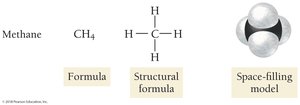
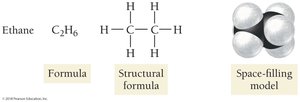
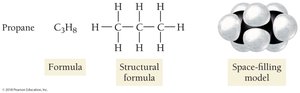
The simplest alkane is methane (), followed by ethane (), propane (), and butane (). Alkanes can be represented by molecular, structural, or space-filling models.
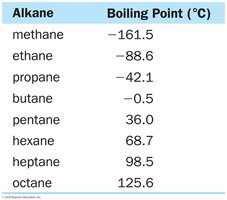
As the number of carbon atoms increases, the boiling point of alkanes increases.
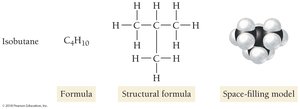
Branched Alkanes and Isomerism
Alkanes can have straight chains (n-alkanes) or branched chains. Isomers are compounds with the same molecular formula but different structures, leading to different properties.
Naming Alkanes (IUPAC System)
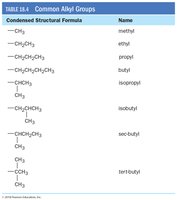
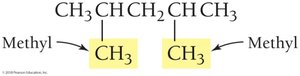
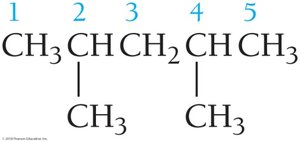
The systematic naming of alkanes involves identifying the longest carbon chain, naming substituents, and assigning numbers to indicate their positions.
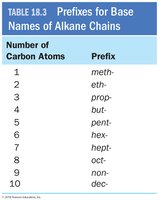
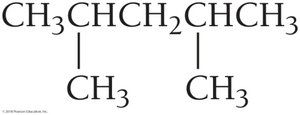
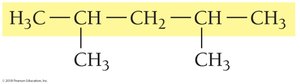
Multiple identical substituents are indicated with prefixes (di-, tri-, tetra-).
Alkenes and Alkynes: Unsaturated Hydrocarbons
Structure and Nomenclature
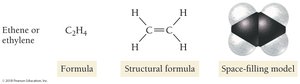
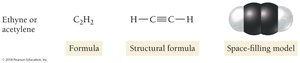
Alkenes contain at least one carbon-carbon double bond, while alkynes contain at least one carbon-carbon triple bond. They are named similarly to alkanes, but the base name ends in -ene (alkenes) or -yne (alkynes), and the position of the multiple bond is indicated by a number.
Aromatic Hydrocarbons: Benzene and Its Derivatives
Benzene Structure and Resonance
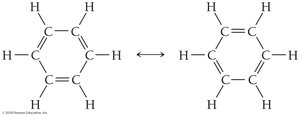
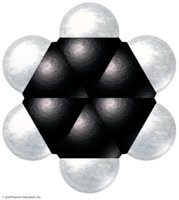
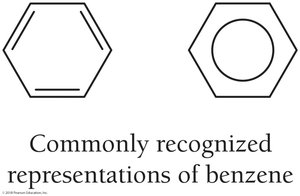
Benzene () is a stable aromatic hydrocarbon with a ring structure. All carbon-carbon bonds in benzene are equivalent, and the structure is best represented by resonance forms.
Naming Aromatic Compounds
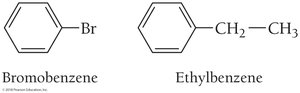
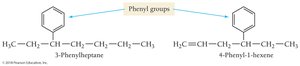
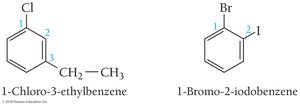
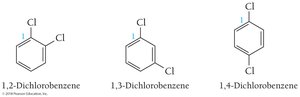
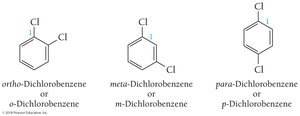
Monosubstituted benzenes are named as derivatives of benzene (e.g., bromobenzene, ethylbenzene). Disubstituted benzenes are named by numbering the ring to give the lowest possible numbers to the substituents, or by using the prefixes ortho- (1,2-), meta- (1,3-), and para- (1,4-).

Functional Groups: The Chemistry of Substituted Hydrocarbons
Definition and Importance
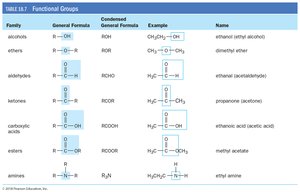
A functional group is a characteristic atom or group of atoms inserted into a hydrocarbon, giving the molecule specific chemical properties. The letter R represents a hydrocarbon group, and G represents a functional group.

Alcohols
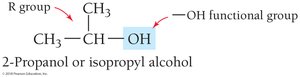
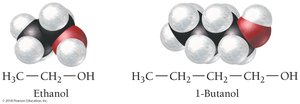
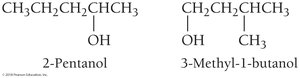
Alcohols contain the —OH functional group and have the general formula R—OH. They are named by replacing the -e ending of the parent alkane with -ol and numbering the chain to give the —OH group the lowest possible number.

Ethers
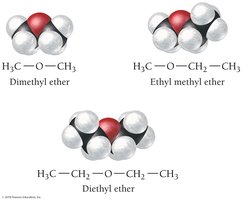
Ethers have the general formula R—O—R. They are commonly named by listing the two R groups (in alphabetical order) followed by the word 'ether.' If both R groups are the same, the prefix di- is used.
Aldehydes and Ketones
Both contain a carbonyl group (C=O). Aldehydes have the general formula RCHO (carbonyl at the end of the chain), while ketones have the formula RCOR (carbonyl within the chain). Aldehydes are named with the suffix -al, and ketones with -one.
Carboxylic Acids and Esters
Carboxylic acids have the general formula RCOOH and act as weak acids. Esters have the formula RCOOR and are known for their pleasant, fruity odors. Carboxylic acids are named with the suffix -oic acid, and esters are named by changing the acid's -ic to -ate and naming the alkyl group attached to the oxygen.
Amines
Amines are derivatives of ammonia (NH3) in which one or more hydrogen atoms are replaced by alkyl groups. They are named by listing the alkyl groups attached to the nitrogen followed by -amine.
Polymers: Large Molecules from Small Units
Types of Polymers
Polymers are long, chainlike molecules made from repeating units called monomers. Addition polymers form by linking monomers without eliminating atoms, while condensation polymers form by eliminating a small molecule (often water) during polymerization.
Examples: Polyethylene (addition polymer), Nylon and Kevlar (condensation polymers).
Summary Table: Main Functional Groups in Organic Chemistry
Family | General Formula | Example | Name |
|---|---|---|---|
Alcohols | R—OH | CH3CH2OH | Ethanol |
Ethers | R—O—R | CH3OCH3 | Dimethyl ether |
Aldehydes | RCHO | CH3CHO | Acetaldehyde |
Ketones | RCOR | CH3COCH3 | Acetone |
Carboxylic acids | RCOOH | CH3COOH | Acetic acid |
Esters | RCOOR | CH3COOCH3 | Methyl acetate |
Amines | R3N | CH3NH2 | Methylamine |
Key Learning Objectives
Differentiate between alkanes, alkenes, and alkynes based on molecular formulas.
Write structural formulas for hydrocarbon isomers.
Name alkanes, alkenes, alkynes, and aromatic compounds using IUPAC rules.
Identify and name common functional groups in organic molecules.
