 뒤로
뒤로Ch 8; Quantities in Chemical Reactions: Stoichiometry, Limiting Reactants, and Enthalpy
스터디 가이드 - 스마트 노트
 자료에 맞춘 맞춤형 노트, 핵심 정의, 예시, 맥락을 확장해 제공합니다.
ch 8; Quantities in Chemical Reactions
Introduction
This chapter explores the quantitative relationships in chemical reactions, focusing on stoichiometry, limiting reactants, theoretical and percent yield, and the enthalpy of reactions. These concepts are foundational for predicting the outcomes of chemical processes and understanding energy changes in reactions.
Stoichiometry: Relationships Between Ingredients
Definition and Importance
Stoichiometry is the numerical relationship between chemical quantities in a balanced chemical equation.
It allows prediction of the amounts of products formed from given reactants and vice versa.
Stoichiometry is essential for determining the proportions of substances required or produced in chemical reactions.
Example: Combustion of Octane
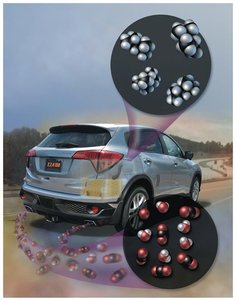
The combustion of octane (C8H18), a component of gasoline, produces water and carbon dioxide:
For every 2 mol of octane burned, 16 mol of CO2 are produced.
The Greenhouse Effect and Combustion
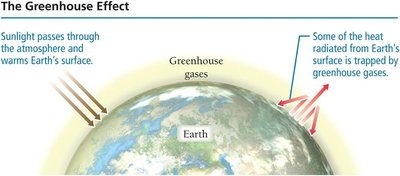
CO2 is a greenhouse gas that traps heat in the atmosphere, contributing to global warming.
Since 1880, atmospheric CO2 levels have risen by 38%, increasing Earth's average temperature by about 1.9°F.
Stoichiometry: Mole-to-Mole Conversions
Understanding Mole Ratios
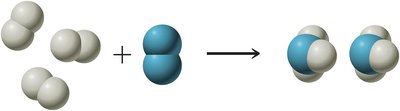
A balanced chemical equation provides the "recipe" for how reactants combine to form products.
Example: Synthesis of ammonia:
The ratio is 1 mol N2 : 3 mol H2 : 2 mol NH3.
Example Calculation
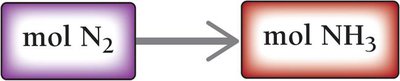
If you have 3 mol of N2 and excess H2, how much NH3 can be made?
Solution:
Stoichiometry: Mass-to-Mass Conversions
General Approach
Convert mass of reactant A to moles using molar mass.
Use the mole ratio from the balanced equation to find moles of product B.
Convert moles of product B to mass using its molar mass.

Example: Combustion of Octane
What mass of CO2 is emitted by burning g of pure octane?
Solution steps:
Convert grams of octane to moles.
Use the mole ratio (2 mol C8H18 : 16 mol CO2).
Convert moles of CO2 to grams.
Final answer: g CO2
Limiting Reactant, Theoretical Yield, and Percent Yield
Concepts and Definitions
Limiting reactant: The reactant that is completely consumed first, limiting the amount of product formed.
Theoretical yield: The maximum amount of product that can be formed from the limiting reactant.
Actual yield: The amount of product actually obtained from a reaction (usually less than theoretical yield).
Percent yield: The ratio of actual yield to theoretical yield, expressed as a percentage.
Percent yield formula:
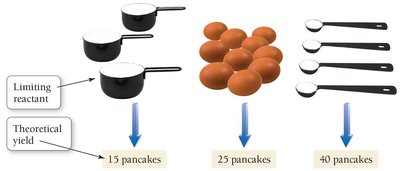
Analogy: Pancake Recipe
Given ingredients for pancakes, the ingredient that runs out first limits the number of pancakes (product) you can make.
For example, if flour allows for 15 pancakes, eggs for 25, and baking powder for 40, flour is the limiting reactant and 15 is the theoretical yield.
Limiting Reactant Problems: Moles
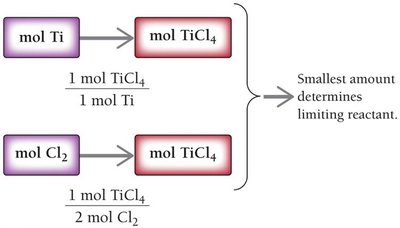
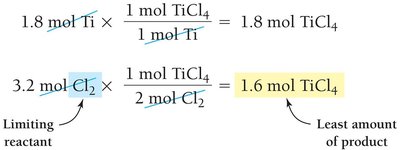
Given initial moles of reactants, use the balanced equation to determine which reactant produces the least amount of product.
The reactant that produces the least product is the limiting reactant.
Limiting Reactant Problems: Mass
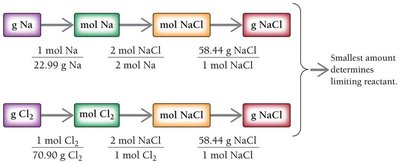
Convert masses of reactants to moles, use the balanced equation to find the limiting reactant, and calculate the theoretical yield.
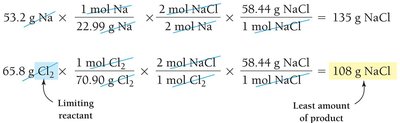
Percent Yield Example
If the actual yield is 86.4 g NaCl and the theoretical yield is 108 g NaCl:
Complex Example: Copper Extraction
Given masses of Cu2O and C, determine the limiting reactant, theoretical yield, and percent yield for the reaction:
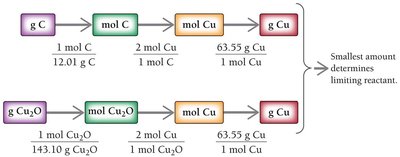
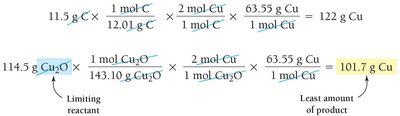
If the actual yield is 87.4 g Cu and the theoretical yield is 101.7 g Cu:
Enthalpy: Heat in Chemical Reactions
Definition and Significance
Enthalpy of reaction () is the heat emitted or absorbed during a chemical reaction at constant pressure.
Exothermic reactions emit heat ( is negative).
Endothermic reactions absorb heat ( is positive).
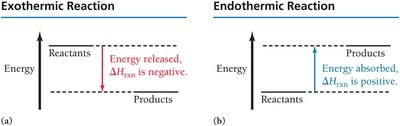
Examples
Combustion of methane (exothermic):
Formation of nitrogen monoxide (endothermic):
Stoichiometry of Enthalpy Changes
Relating Heat to Amounts of Reactants
The amount of heat emitted or absorbed depends on the actual quantities of reactants used.
Use the balanced equation and as a conversion factor.
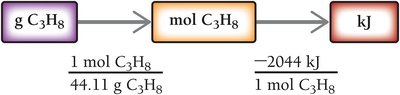
Example: Combustion of Propane
For the combustion of propane:
Calculate the heat released by burning g of propane:
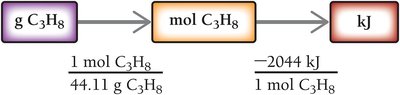
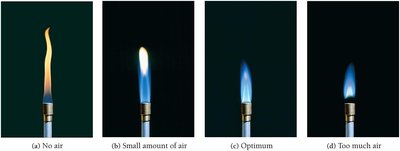
Everyday Chemistry: Bunsen Burners
Flame Characteristics and Air Adjustment
Bunsen burners allow adjustment of air (oxygen) intake, affecting flame color and temperature.
No air: yellow, smoky, cooler flame.
Optimum air: blue, hot, clean flame (suitable for laboratory use).
Too much air: flame cools and may extinguish.
Summary Table: Key Stoichiometric Terms
Term | Definition |
|---|---|
Limiting Reactant | The reactant that is completely consumed first, limiting the amount of product formed. |
Theoretical Yield | The maximum amount of product that can be formed from the limiting reactant. |
Actual Yield | The amount of product actually obtained from a reaction. |
Percent Yield | The ratio of actual yield to theoretical yield, expressed as a percentage. |
Enthalpy of Reaction () | The heat released or absorbed during a chemical reaction at constant pressure. |
Learning Objectives
Recognize the numerical relationship between chemical quantities in a balanced equation.
Carry out mole-to-mole and mass-to-mass conversions.
Calculate limiting reactant, theoretical yield, and percent yield.
Calculate the amount of thermal energy emitted or absorbed by a chemical reaction.
