 뒤로
뒤로The Chemical Context of Life: Atoms, Elements, and Chemical Bonds
스터디 가이드 - 스마트 노트
 자료에 맞춘 맞춤형 노트, 핵심 정의, 예시, 맥락을 확장해 제공합니다.
Chapter 2: The Chemical Context of Life (Chemical Bonds)
Introduction to Chemistry and Biochemistry
This chapter introduces the foundational concepts of chemistry as they relate to biological systems. Understanding the structure of atoms, the nature of chemical bonds, and the behavior of elements is essential for comprehending the molecular basis of life.
Atoms are the basic units of matter, forming all substances.
Chemical bonds are the forces that hold atoms together in molecules and compounds.
These bonds are created and broken during chemical reactions.
Elements and Atoms
What are Elements?
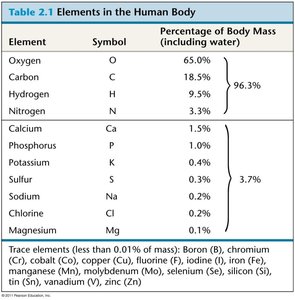
Elements are pure substances that cannot be broken down into simpler substances by chemical reactions. Organisms are composed of a variety of elements, but only a subset are essential for life.
Essential elements for life include CHNOPS: Carbon (C), Hydrogen (H), Nitrogen (N), Oxygen (O), Phosphorus (P), and Sulfur (S).
Trace elements are required in very small amounts but are vital for proper biological function.
Classification of Matter
Matter can be classified based on its composition and the nature of its components:
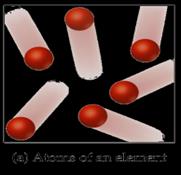
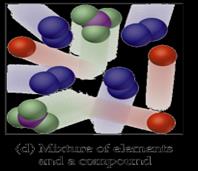
Element: A substance composed of only one type of atom.
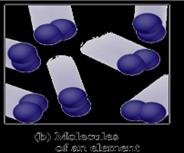
Molecule: Two or more atoms joined together by chemical bonds.
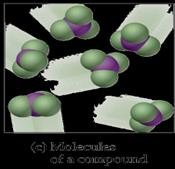
Compound: A substance composed of two or more different elements joined by chemical bonds.
Mixture: A combination of two or more substances that are not chemically bonded (e.g., sugar mixed with salt).
Atomic Structure
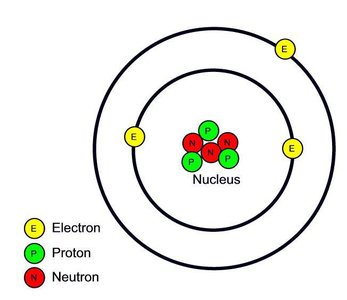
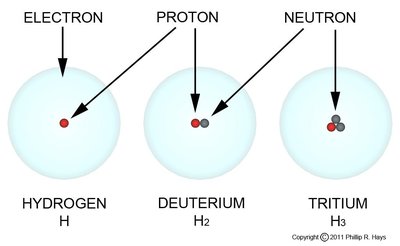
Atoms are the smallest units of matter that retain the properties of an element. They are composed of subatomic particles:
Protons: Positively charged particles found in the nucleus.
Neutrons: Neutral particles found in the nucleus.
Electrons: Negatively charged particles that orbit the nucleus in electron shells.
Decoding the Periodic Table
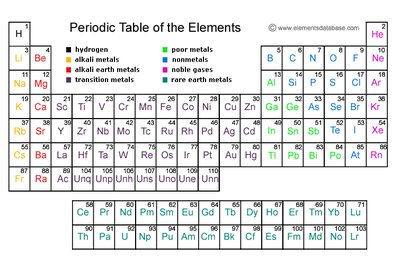
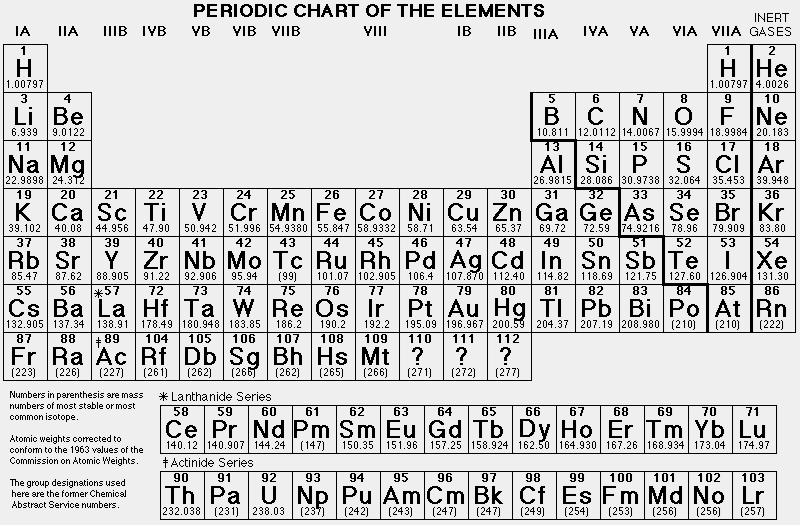
The periodic table organizes elements by their atomic number and properties:
Atomic Number: The number of protons in the nucleus (also equals the number of electrons in a neutral atom).
Atomic Mass: The average mass of an atom, primarily determined by the sum of protons and neutrons.
Isotopes
Isotopes are atoms of the same element that differ in the number of neutrons. They have identical chemical properties but may differ in stability.
Radioactive isotopes have unstable nuclei that decay, emitting particles and energy.
Chemical Bonds
Valence Electrons and Bonding
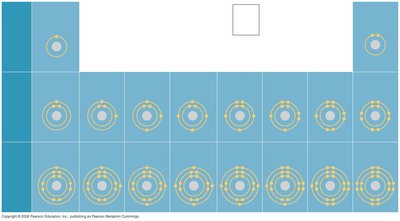
The chemical behavior of an atom is largely determined by the arrangement of electrons, especially those in the outermost shell (valence electrons). Atoms with incomplete valence shells tend to form bonds to achieve stability.
Octet Rule: Atoms are most stable when they have eight electrons in their valence shell (except for hydrogen and helium).
Types of Chemical Bonds
Atoms can form different types of bonds depending on how they achieve a full valence shell:
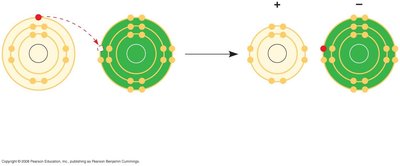
Ionic Bonds: Formed when one atom transfers electrons to another, resulting in oppositely charged ions that attract each other (e.g., NaCl).
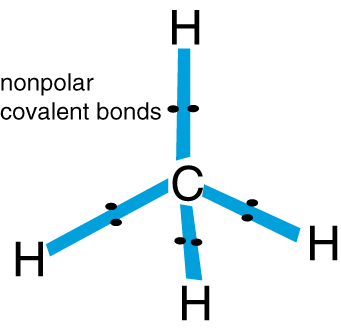
Covalent Bonds: Formed when two atoms share one or more pairs of electrons. If electrons are shared equally, the bond is nonpolar; if unequally, the bond is polar.
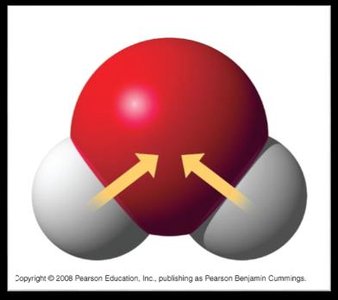
Electronegativity
Electronegativity is an atom's ability to attract electrons in a covalent bond. Differences in electronegativity determine whether a bond is nonpolar or polar.
Nonpolar covalent bonds: Electrons are shared equally (e.g., H2, O2).
Polar covalent bonds: Electrons are shared unequally, creating partial charges (e.g., H2O).
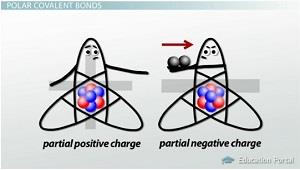
Hydrogen Bonds
A hydrogen bond forms when a hydrogen atom covalently bonded to one electronegative atom is attracted to another electronegative atom. These bonds are weaker than covalent or ionic bonds but are crucial in biological molecules like DNA and water.
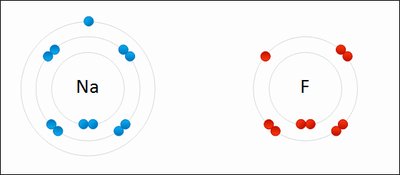
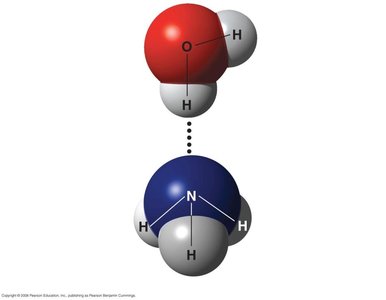
Van der Waals Interactions
Van der Waals interactions are weak attractions between molecules or atoms that result from transient local partial charges. These interactions are significant when many such forces act together, as in the structure of biological macromolecules.
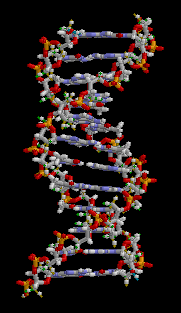
Chemical Reactions
Making and Breaking Bonds
Chemical reactions involve the making and breaking of chemical bonds, transforming reactants into products. The law of conservation of matter states that matter is neither created nor destroyed in a chemical reaction.
Reactants: Substances that start a chemical reaction.
Products: Substances formed as a result of a chemical reaction.
Example: Formation of water from hydrogen and oxygen:
Summary Table: Elements in the Human Body
Element | Symbol | Percentage of Body Mass (including water) |
|---|---|---|
Oxygen | O | 65.0% |
Carbon | C | 18.5% |
Hydrogen | H | 9.5% |
Nitrogen | N | 3.3% |
Calcium | Ca | 1.5% |
Phosphorus | P | 1.0% |
Potassium | K | 0.4% |
Sulfur | S | 0.3% |
Sodium | Na | 0.2% |
Chlorine | Cl | 0.2% |
Magnesium | Mg | 0.1% |
Trace elements (less than 0.01% of mass): Boron (B), Chromium (Cr), Cobalt (Co), Copper (Cu), Fluorine (F), Iodine (I), Iron (Fe), Manganese (Mn), Molybdenum (Mo), Selenium (Se), Silicon (Si), Tin (Sn), Vanadium (V), Zinc (Zn).
Key Takeaways
Atoms are the fundamental units of matter, composed of protons, neutrons, and electrons.
Valence electrons determine the chemical bonding behavior of atoms.
Chemical bonds (ionic, covalent, hydrogen, van der Waals) vary in strength and biological importance.
Chemical reactions involve the rearrangement of atoms and the making/breaking of bonds, following the law of conservation of matter.
