 뒤로
뒤로Units of Measurement and Physical & Chemical Change: Introduction to Chemistry Study Notes
스터디 가이드 - 스마트 노트
 자료에 맞춘 맞춤형 노트, 핵심 정의, 예시, 맥락을 확장해 제공합니다.
Units of Measurement for Physical and Chemical Change
Chemistry and Observation
Chemistry is the science that seeks to understand the properties and behavior of matter by studying the properties and behavior of atoms and molecules. Observations in chemistry are fundamental to identifying and describing changes in matter.
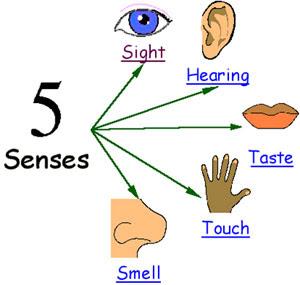
Qualitative Observations: Descriptive observations made using the senses (sight, hearing, taste, touch, smell).
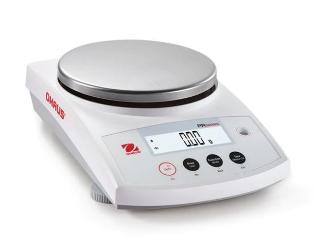
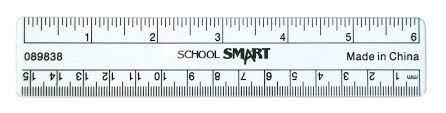
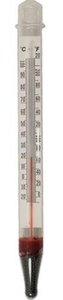
Quantitative Observations: Numerical, measurable observations made with instruments such as rulers, balances, graduated cylinders, beakers, and thermometers.

Atoms and Molecules: The Chemical Alphabet
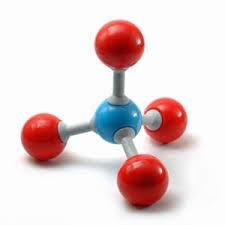
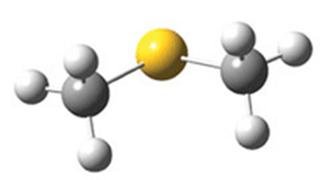
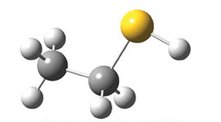
Atoms are the fundamental building blocks of all matter. Molecules are formed when two or more atoms are bonded together in specific geometric arrangements, resulting in different shapes and patterns.
Atoms: Submicroscopic particles that make up all matter.
Molecules: Groups of atoms bonded together; their composition and structure determine the chemical and physical properties of substances.
Physical and Chemical Properties
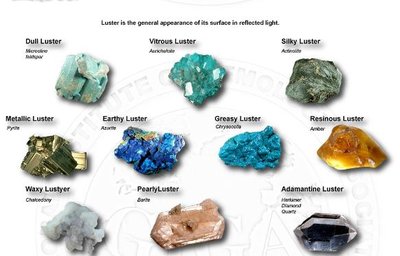
Properties of matter are classified as physical or chemical. Physical properties can be determined without altering the chemical composition, while chemical properties describe how matter behaves in the presence of other substances.
Physical Properties: State, color, odor, taste, density, texture, luster, melting point, boiling point, freezing point, electrical conductivity, etc.
Chemical Properties: Ability to react with oxygen (combustibility), acids/bases, toxicity, acidity, corrosiveness, flammability.

Physical and Chemical Changes
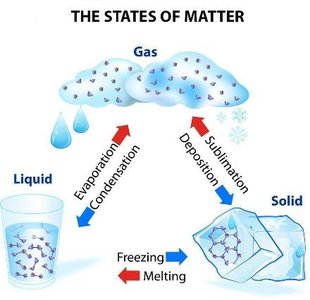
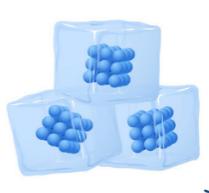
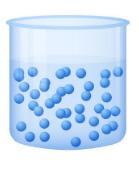
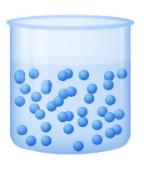
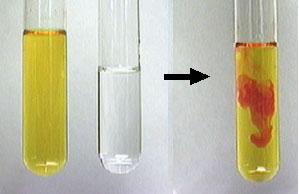
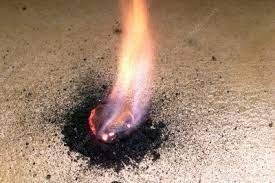
Changes in matter are classified as physical or chemical. Physical changes alter the form of matter without changing its chemical identity, while chemical changes result in the formation of new substances.
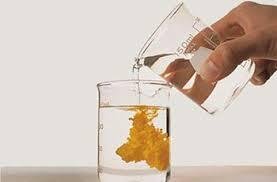
Physical Change: Changes in shape, size, state (melting, freezing, vaporization, condensation, sublimation, deposition, dissolving).
Chemical Change: Transformation of matter into new substances (rusting, burning, energy release).
Signs of Chemical Change: Gas bubbles, precipitate formation, unexpected color change, energy change, change in conductivity, change in melting/boiling point, change in odor/taste.


Energy and Matter
Energy Changes in Physical and Chemical Processes
Physical and chemical changes are usually accompanied by energy changes. Energy is classified as kinetic or potential, and the total energy of an object is the sum of these forms.
Kinetic Energy: Energy associated with motion ().
Thermal Energy: Energy associated with temperature, resulting from atomic and molecular motion.
Potential Energy: Energy associated with position or composition ( or ).
Chemical Energy: Energy associated with the relative positions of electrons and nuclei in atoms/molecules.
Law of Conservation of Energy: Energy can neither be created nor destroyed, but it can be transferred between objects or systems. The total amount of energy remains constant.
Systems tend to change in ways that lower their potential energy.
Measurement and Units
International System of Units (SI)
Quantitative observations in chemistry require standardized units. The International System of Units (SI) is used in science, and is a subsystem of the metric system.
Quantity | Unit | Symbol |
|---|---|---|
Length | Meter | m |
Mass | Kilogram | kg |
Time | Second | s |
Temperature | Kelvin | K |
Amount of Substance | Mole | mol |
Length: Measure of two-dimensional distance; SI unit is meter.
Mass: Measure of the quantity of matter; SI unit is kilogram. Weight is the force of gravity on an object and is measured in newtons.
Time: Duration of an event; SI unit is second.
Temperature: Measure of the average kinetic energy of atoms and molecules; SI unit is kelvin.
Temperature Scales
Fahrenheit (°F):
Celsius (°C):
Kelvin (K):
Scientific Notation and Prefix Multipliers
Scientific notation is used to express very large or very small numbers. Prefix multipliers are used in the metric system to indicate multiples or fractions of units.
Scientific Notation: where is a number between 1 and 10, and is an integer.
Prefix Multipliers: Examples include kilo (k, ), milli (m, ), micro (μ, ), nano (n, ).
Prefix | Symbol | Multiplier |
|---|---|---|
Giga | G | |
Mega | M | |
Kilo | k | |
Milli | m | |
Micro | μ | |
Nano | n |
Precision, Accuracy, and Significant Figures
Measurements must be reported with the correct number of significant figures to reflect their precision and accuracy.
Accuracy: How close a measurement is to the actual value.
Precision: How close repeated measurements are to each other.
Significant Figures: Non-place-holding digits in a measurement. Rules for determining significant figures include:
All nonzero digits are significant.
Zeros between nonzero digits are significant.
Leading zeros are not significant.
Trailing zeros after a decimal point are significant.
Calculation Rules:
Multiplication/Division: Result has same number of significant figures as the factor with the fewest significant figures.
Addition/Subtraction: Result has same number of decimal places as the quantity with the fewest decimal places.
Order of Operations
Mathematical operations in chemistry follow the order: Parentheses, Exponents, Multiplication, Division, Addition, Subtraction (PEMDAS).
Problem-Solving Strategy in Chemistry
Solving chemical problems involves sorting information, strategizing, solving, and checking the answer for reasonableness.
Identify given information and what is to be found.
Develop a conceptual plan.
Carry out mathematical steps, watching for significant figures and unit cancellation.
Check if the answer makes sense.
Unit Conversion and Dimensional Analysis
Unit conversion uses conversion factors to change from one unit to another. Dimensional analysis involves multiplying by conversion factors to ensure units cancel appropriately.
Example: Convert 15 miles to kilometers using the conversion factor .
Example: Convert 515 km to cm.
Derived Units: Volume and Density
Volume
Volume is the measure of the amount of space occupied by an object. It is a derived unit, calculated as the cube of length.
SI unit: cubic meter ()
Common units: liter (L), milliliter (mL), cubic centimeter ()
Density
Density is the ratio of mass to volume and is an intensive property, meaning it does not depend on the amount of substance.
Formula:
SI units:
Common units: (solids), (liquids), (gases)
Density is temperature sensitive; heating generally causes expansion and decreases density.
Example: A chemist determines the density of a liquid by measuring its mass and volume. If a sample weighs 30.5 g and has a volume of 35.1 mL, the density is .
Substance | Density (g/mL) |
|---|---|
N-butyl alcohol | 0.810 |
Ethylene glycol | 1.114 |
Isopropyl alcohol | 0.785 |
Toluene | 0.866 |
Based on the calculated density, the liquid is most likely toluene.
*Additional info: Some explanations and examples were expanded for clarity and completeness, including the density calculation and SI unit tables.*
