 뒤로
뒤로Economic Growth: Principles, Measurement, and Theories
스터디 가이드 - 스마트 노트
 자료에 맞춘 맞춤형 노트, 핵심 정의, 예시, 맥락을 확장해 제공합니다.
Chapter 6: Economic Growth
What is the Recipe for Economic Growth?
Economic growth refers to the sustained increase in a country's output of goods and services over time. Understanding why some countries grow rapidly while others stagnate is a central question in macroeconomics.
"Rich" country: A nation with high current wealth.
High economic growth: A nation whose wealth is increasing quickly, regardless of current wealth level.
A poor country can have high growth, and a rich country can have low growth.
Measuring Economic Growth
Growth is typically measured as the annual percentage change in a variable, most commonly real GDP or real GDP per person.
Growth rate formula:
Growth rate of real GDP per person (approximate):
Standard of living improves only if production increases faster than population.
What Does Real GDP Growth Mean?
Growth in real GDP can reflect two different phenomena:
Movement to full employment: The economy moves from inside the production possibilities frontier (PPF) to on the PPF. This is not true economic growth, but a move to efficiency.
Expansion of production possibilities: The PPF itself shifts outward, representing true economic growth.
The Rule of 70
The Rule of 70 estimates the number of years it takes for a variable to double, given its annual growth rate:
Example: At 10% growth, doubling time is 7 years.
Labor and Economic Growth
The Role of Labor
Labor is the most flexible factor of production in the short run. Increasing labor input can immediately boost output, much like pressing the gas pedal in a car.
Potential GDP: The value of real GDP when all resources, especially labor, are fully employed.
Modeling Labor: Aggregate Production Function and Labor Market
Potential GDP is determined by two key models:
Aggregate production function: Relates total labor hours to real GDP. Each additional hour of labor adds less to output than the previous hour (diminishing returns).
Aggregate labor market: Shows the supply and demand for labor, with the real wage rate as the price of labor.
At equilibrium real wage, the labor market clears, and the economy is at full employment.
Potential GDP is achieved when the labor market is in equilibrium.
Sources of Economic Growth
1. Growth of the Supply of Labor
The total number of labor hours can increase due to:
More hours per worker
Higher employment-to-population ratio
Growth in the working-age population (most significant)
Population growth shifts the labor supply curve right, increasing potential GDP but lowering potential GDP per hour due to diminishing returns.
2. Growth of Labor Productivity
Labor productivity is defined as:
When labor productivity rises, more output is produced per hour, raising potential GDP and real wages.
Productivity growth is the main driver of long-run economic growth.
What Causes Labor Productivity to Grow?
Four preconditions are necessary for productivity growth:
Firms
Markets
Property rights
Money

Once these are in place, three variables determine the pace of productivity growth:
Physical capital growth (more machines and tools)
Human capital growth (more knowledge and expertise)
Technological advances (better ideas and new methods)
Technological change is the most significant contributor to productivity growth.
Embodiment of Technology
Some technologies are embodied in human capital (e.g., mathematical knowledge).

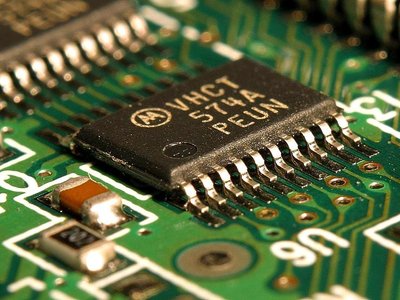
Most technologies are embodied in physical capital (e.g., computer chips).
Theories of Economic Growth
Classical Growth Theory
Classical growth theory (Malthusian theory) argues that any increase in real GDP per person is temporary because population growth will eventually outpace resource growth, returning incomes to subsistence levels.
Key proponent: Thomas Malthus
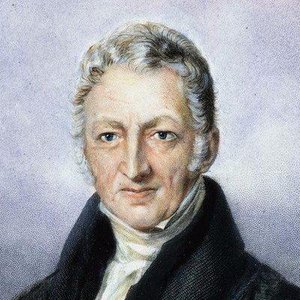
Modern-day Malthusians worry about resource limits and environmental constraints.
Neoclassical Growth Theory
Neoclassical theory emphasizes the role of technology, which improves at random intervals. Sustained growth in real GDP per person depends on technological progress, as population growth slows and returns to capital diminish.
New Growth Theory
New growth theory posits that technological progress results from intentional investment in knowledge, motivated by profit. Knowledge is a public good and not subject to diminishing returns, allowing for permanent economic growth as long as innovation continues.
Malthusian view: Population growth limits economic growth.
New growth view: Population growth can drive economic growth through more ideas and innovation.
Summary Table: Theories of Economic Growth
Theory | Main Idea | Key Driver | Long-Run Outlook |
|---|---|---|---|
Classical (Malthusian) | Growth is temporary; population growth erases gains | Population, resources | Return to subsistence |
Neoclassical | Growth depends on random technological progress | Technology | Growth possible with tech progress |
New Growth | Growth driven by purposeful innovation | Knowledge, incentives | Permanent growth possible |
