 뒤로
뒤로Gross Domestic Product (GDP): Concepts, Measurement, and Limitations
스터디 가이드 - 스마트 노트
 자료에 맞춘 맞춤형 노트, 핵심 정의, 예시, 맥락을 확장해 제공합니다.
Gross Domestic Product (GDP)
Definition and Core Concepts
Gross Domestic Product (GDP) is the market value of all final goods and services produced within a country in a given period of time. It is a fundamental measure used in macroeconomics to assess the economic performance of a nation.
Market Value: GDP values goods and services at their market prices, using a common unit (e.g., U.S. dollars).
Final Goods and Services: Only goods and services intended for the final user are included. Intermediate goods (used as inputs in the production of other goods) are excluded to avoid double counting.
Goods and Services: GDP includes both tangible goods (e.g., cars, food) and intangible services (e.g., healthcare, education).
Produced Goods Only: GDP counts only goods and services produced within the period; it excludes used goods, financial assets, and transfer payments.
Location and Time Period: GDP measures production within a country’s borders during a specific time frame, typically a year or a quarter.
Example: A new car manufactured in the U.S. and sold in the same year is included in U.S. GDP. A used car sold in a later year is not included, as it was counted when first produced.
What’s Included and Excluded in GDP?
Included: New goods and services produced and sold legally, such as new clothing, cars, and services like haircuts.
Excluded:
Intermediate goods (e.g., hamburger buns bought by McDonald’s for Big Macs)
Used goods (e.g., a used textbook)
Financial assets (e.g., stocks, bonds)
Illegal transactions and non-market household production
Goods produced outside the country (e.g., a Lexus SUV produced in Japan)
Transfer payments (e.g., Social Security benefits)
Example: A cup of coffee purchased at Starbucks is included; an illegally downloaded movie is not.
Circular Flow of Expenditures and Income
Understanding the Circular Flow Model
The circular flow diagram illustrates the movement of money, goods, and services in an economy. It shows how households and firms interact in product and factor markets, and how total expenditure equals total income.
Every dollar spent by buyers (households) is received as income by sellers (firms).
GDP can be measured as either total expenditure on the economy’s output or total income earned by everyone in the economy.
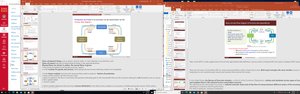
Example: Households provide labor to firms and receive wages; they use this income to purchase goods and services from firms.
Measuring GDP: The Expenditure Approach
Components of GDP
The expenditure approach calculates GDP as the sum of four main components:
Consumption (C): Total spending by households on durable goods, nondurable goods, and services. Rent payments are included, but purchases of new housing are not.
Gross Private Investment (I): Spending on newly produced capital goods (including new housing) and changes in business inventories.
Government Expenditures (G): Spending by federal, state, and local governments on goods and services (excluding transfer payments).
Net Exports (NX): Exports minus imports.
The GDP formula is:
Example: If households spend Y = 10,000 + 2,000 + 3,000 - 500 = 14,500 $.
Trade Deficit and Surplus
Trade Surplus: Exports exceed imports (), so .
Trade Deficit: Imports exceed exports (), so .
The U.S. has run trade deficits for decades.
Change in Private Inventories (CIPI)
Accounts for goods produced in the current year but sold in the next year.
Inventories include final and unfinished goods, materials, and supplies.
Example: An SUV produced on December 31 but sold in January is counted in the year it was produced.
GDP Data and Updates
Sources and Revisions
The Bureau of Economic Analysis (BEA) is the primary source for U.S. GDP data.
GDP estimates are revised as more complete data become available.
Example: A BEA news release may revise GDP growth from 1.3% to 1.4% based on updated data.
Limitations of GDP
What GDP Does Not Measure
While GDP is a key indicator of economic output, it has several limitations:
Quality of Life: GDP does not account for happiness, leisure, or well-being.
Inequality: GDP does not reflect how income is distributed among citizens.
Non-market Transactions: Household production and volunteer work are excluded.
Changes in Quality: Improvements or deteriorations in product quality are not captured.
Environmental Sustainability: GDP does not consider environmental degradation or resource depletion.
Additional info: Economists often supplement GDP with other indicators, such as the Human Development Index (HDI), to provide a more comprehensive view of economic well-being.
