 뒤로
뒤로Unemployment, Inflation, and Long-Run Growth: Key Concepts in Macroeconomics
스터디 가이드 - 스마트 노트
 자료에 맞춘 맞춤형 노트, 핵심 정의, 예시, 맥락을 확장해 제공합니다.
Unemployment, Inflation, and Long-Run Growth
Introduction
This chapter explores three central macroeconomic topics: unemployment, inflation, and long-run economic growth. Understanding how these variables are measured, their causes, and their effects is essential for analyzing the health and trajectory of an economy.
Unemployment
Measuring Unemployment
Unemployment is a key indicator of economic performance. The U.S. Bureau of Labor Statistics (BLS) provides monthly updates on the unemployment rate and related statistics.
Employed: Individuals 16 years or older who work for pay (at least 1 hour per week), work without pay in a family business (15+ hours per week), or have a job but are temporarily absent.
Unemployed: Individuals 16 years or older who are not working, are available for work, and have actively sought employment in the past 4 weeks.
Not in the Labor Force: Individuals not seeking work because they do not want a job or have given up looking.
Labor Force: The sum of employed and unemployed individuals.
Unemployment Rate: The ratio of unemployed individuals to the total labor force.
Labor Force Participation Rate: The ratio of the labor force to the population aged 16 and older.
Formulas:
Unemployment Rate:
Labor Force Participation Rate:
Components of the Unemployment Rate
Discouraged-Worker Effect: When individuals stop looking for work due to lack of opportunities, they are no longer counted as unemployed, which can artificially lower the unemployment rate.
Some economists argue that including discouraged workers in unemployment statistics provides a more accurate picture of labor market conditions.
Types of Unemployment
Frictional Unemployment: Short-term unemployment due to normal labor market turnover and job matching.
Structural Unemployment: Unemployment resulting from changes in the economy that eliminate certain jobs or industries.
Cyclical Unemployment: Unemployment above the natural rate, typically caused by economic downturns.
Natural Rate of Unemployment: The sum of frictional and structural unemployment, representing the "normal" level of unemployment in a healthy economy.
Social and Economic Costs of Unemployment
Unemployment can lead to loss of income, reduced economic output, and social consequences such as increased poverty and psychological distress.
The effects are not evenly distributed; some groups are more vulnerable than others.
Long-term unemployment can have persistent negative effects on future earnings and career prospects.

Inflation and Deflation
Measuring Inflation
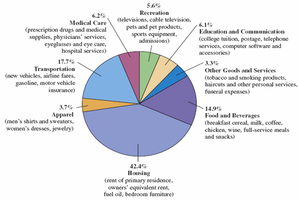
Inflation is the sustained increase in the general price level of goods and services. The main tools for measuring inflation are:
Consumer Price Index (CPI): Measures the average change in prices paid by urban consumers for a fixed basket of goods and services.
Producer Price Indexes (PPIs): Measure the average change in prices received by producers at various stages of production.
Formula:
CPI:
The Costs of Inflation
During inflation, most prices—including wages—tend to rise together, so purchasing power may not always decline.
Anticipated Inflation: If expected, individuals and institutions can adjust, minimizing negative effects.
Unanticipated Inflation: Can redistribute income between borrowers and lenders. If actual inflation exceeds expectations, debtors benefit; if lower, creditors benefit.
Real Interest Rate: The nominal interest rate minus the inflation rate.
Formula:
Real Interest Rate:
Other costs include administrative costs (e.g., updating prices), inefficiencies, and increased opportunity costs of holding cash.
Deflation
Deflation is a sustained decrease in the general price level.
Unanticipated deflation can benefit borrowers and those on fixed incomes, but can harm lenders and reduce overall economic activity.
Long-Run Growth
Measuring Economic Growth
Output Growth: The growth rate of total economic output (usually measured as GDP).
Per-Capita Output Growth: The growth rate of output per person, indicating changes in average living standards.
Productivity Growth: The growth rate of output per worker, a key driver of long-term increases in living standards.
Formulas:
Output Growth Rate:
Per-Capita Output Growth Rate:
Productivity Growth Rate:
Key Terms and Concepts
Consumer Price Index (CPI)
Cyclical Unemployment
Discouraged-Worker Effect
Employed
Frictional Unemployment
Labor Force
Labor Force Participation Rate
Natural Rate of Unemployment
Not in the Labor Force
Output Growth
Per-Capita Output Growth
Producer Price Indexes (PPIs)
Productivity Growth
Real Interest Rate
Structural Unemployment
Unemployed
Unemployment Rate
