 뒤로
뒤로Understanding Suffixes in Medical Terminology
스터디 가이드 - 스마트 노트
 자료에 맞춘 맞춤형 노트, 핵심 정의, 예시, 맥락을 확장해 제공합니다.
Chapter 2: Understanding Suffixes
Introduction to Suffixes
Suffixes are essential components of medical terms, providing information about what is wrong, what is being done, or the nature of a condition. They are always placed at the end of a word root or combining form and modify the meaning of the term.
Suffix: A word part added to the end of a root or combining form.
Function: Indicates a procedure, condition, disease, or part of speech.
Example: In gastroscopy, -scopy means the process of viewing, and gastr/o refers to the stomach.
Common Suffixes and Their Meanings
Many suffixes are used in medical terminology to describe actions, states, conditions, diseases, locations, numbers, qualities, specialties, and procedures.
Suffixes Indicating Actions or States
-drome: Run or running (e.g., syndrome)
-emesis: Vomiting (e.g., hyperemesis)
-malacia: Softening (e.g., osteomalacia)
-opsy: To view (e.g., biopsy)
-oxia: Oxygen (e.g., hypoxia)
-philia/-phil: Loving or affinity for (e.g., hemophilia)
-phagia: Eating or swallowing (e.g., dysphagia)
-phasia: Speech (e.g., aphasia)
-physis: Growth (e.g., epiphysis)
-plegia: Paralysis (e.g., paraplegia)
-oma: Tumor or mass (e.g., carcinoma)
-stasis: Standing still (e.g., homeostasis)
Suffixes Indicating Conditions or Diseases
-algia: Pain (e.g., neuralgia)
-asthenia: Weakness (e.g., myasthenia)
-atresia: Absence of a normal body opening (e.g., biliary atresia)
-cele: Hernia or protrusion (e.g., meningocele)
-dynia: Pain (e.g., gastrodynia)
-ia: Condition (e.g., pneumonia)
-osis: Abnormal condition (e.g., cyanosis)
-ism: Condition or disease (e.g., hypothyroidism)
-itis: Inflammation (e.g., dermatitis)
-oma: Tumor (e.g., lymphoma)
-pathy: Disease (e.g., neuropathy)
-penia: Deficiency (e.g., leukopenia)
-phobia: Fear (e.g., claustrophobia)
-plasia: Formation or growth (e.g., hyperplasia)
-rrhagia: Abnormal flow (e.g., hemorrhagia)
-rrhea: Discharge or flow (e.g., diarrhea)
-rrhexis: Rupture (e.g., hysterorrhexis)
-sclerosis: Hardening (e.g., arteriosclerosis)
-spasm: Sudden involuntary contraction (e.g., bronchospasm)

Suffixes Indicating Location, Number, or Quality
-ad: Toward (e.g., caudad)
-ae: Plural ending (e.g., vertebrae)
-emia/-hemia: Condition of blood (e.g., anemia, hypoglycemia)
-ac, -al, -ar, -ary, -ic, -ous: Pertaining to (e.g., cardiac, neural, muscular, pulmonary, gastric, fibrous)
Suffixes Indicating Medical Specialties
-iatry: Medical treatment (e.g., psychiatry)
-logist: Specialist (e.g., cardiologist)
-logy: Study of (e.g., biology)
-practic: Practice (e.g., chiropractic)
Suffixes Indicating Procedures or Treatments
-centesis: Surgical puncture to remove fluid (e.g., amniocentesis)
-clasia, -clasis, -clast: To break (e.g., osteoclasis)
-desis: Binding or fixation (e.g., arthrodesis)
-ectomy: Surgical removal (e.g., thyroidectomy)

-gram: Record or image (e.g., angiogram)
-graph: Instrument for recording (e.g., electrocardiograph)
-graphy: Process of recording (e.g., radiography)
-meter: Instrument for measuring (e.g., thermometer)
-metry: Process of measuring (e.g., spirometry)
-pexy: Surgical fixation (e.g., nephropexy)
-phylaxis: Protection (e.g., prophylaxis)
-plasty: Surgical repair (e.g., gastroplasty)
-rrhaphy: Suturing (e.g., herniorrhaphy)
-scope: Instrument for viewing (e.g., endoscope)
-scopy: Process of viewing (e.g., laparoscopy)
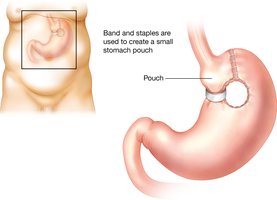
-stomy: Creation of an opening (e.g., colostomy)
-tome: Instrument for cutting (e.g., dermatome)
-tomy: Cutting or incision (e.g., gastrotomy)
-tripsy: Crushing (e.g., lithotripsy)
-ion: Process (e.g., excision)
Examples of Medical Terms Using Suffixes
Gastroscopy: Examination of the stomach using a scope.
Gastrectomy: Surgical removal of the stomach.
Dermatitis: Inflammation of the skin.
Hypoglycemia: Condition of low blood sugar.
Electrocardiogram: Record of the electrical activity of the heart.
Formula Example:
Electrocardiogram: electr/o (electricity) + cardi/o (heart) + -gram (record)
Summary Table: Common Suffixes in Medical Terminology
Suffix | Meaning | Example |
|---|---|---|
-itis | Inflammation | Dermatitis |
-ectomy | Surgical removal | Thyroidectomy |
-oma | Tumor, mass | Carcinoma |
-algia | Pain | Neuralgia |
-scopy | Process of viewing | Laparoscopy |
-plasty | Surgical repair | Gastroplasty |
-rrhea | Discharge, flow | Diarrhea |
-logy | Study of | Biology |
Key Takeaways
Suffixes are crucial for constructing and understanding medical terms.
They provide information about procedures, conditions, diseases, and specialties.
Recognizing and correctly using suffixes is foundational for medical communication.
