뒤로
Antimicrobial Chemotherapy and Antibiotic Resistance: Microbiology Study Guide
스터디 가이드 - 스마트 노트
 자료에 맞춘 맞춤형 노트, 핵심 정의, 예시, 맥락을 확장해 제공합니다.
Antimicrobial Chemotherapy
Definition and Basic Principles
Antimicrobial chemotherapy refers to the use of substances with antimicrobial activity for the treatment of infectious diseases. These substances are effective against pathogens and exhibit minimal toxicity to the host, a property known as selective toxicity.
Antimicrobial: Any substance used therapeutically to kill or inhibit microorganisms.
Origin: Can be natural, chemically synthesized (chemotherapeutic), or semi-synthetic (modified natural molecules).
Types: Antibiotic, Antibacterial, Antiviral, Antifungal, Antiparasitic.
Therapeutic Targets: Fundamental structures of microorganisms (cell wall, ribosome, membrane, nucleic acids, metabolic pathways).
Drug Concentration: Must be sufficient in tissues to inhibit or kill pathogens without harming the host.
Key Characteristics of Antimicrobials
Active against pathogens at low concentrations
Minimum toxicity in the host
Choice of antimicrobial depends on the relationship between the microorganism, patient, and drug properties (virulence, defenses, sensitivity, resistance, toxicity, pharmacokinetics).
Mechanisms of Action of Antimicrobials
Spectrum of Action
Narrow spectrum: Active against a limited group of bacteria.
Broad spectrum: Active against a wide range of microorganisms.
Antibacterial Effects
Bacteriostatic: Reversibly inhibit growth; host defenses are essential.
Bactericidal: Kill microorganisms; activity depends on concentration.
Classification by Mechanism of Action
Cell wall synthesis inhibitors: β-lactams (penicillins, cephalosporins, carbapenems, monobactams), glycopeptides (vancomycin), fosfomycin.
Protein synthesis inhibitors: Aminoglycosides, macrolides, streptogramins, lincosamides, oxazolidinones, tetracyclines, chloramphenicol.
Membrane function inhibitors: Polymyxins, lipopeptides.
Nucleic acid synthesis inhibitors: Quinolones, rifamycins, nitroimidazoles.
Metabolic pathway inhibitors: Sulfonamides, trimethoprim.
Mode of Action of Key Antibiotic Classes
β-lactams: Bind to PBPs (penicillin binding proteins), block cell wall synthesis, cause bacterial lysis. Bactericidal.
Macrolides: Bind to 50S ribosomal subunit, inhibit protein translation by preventing translocation of aminoacyl tRNA.
Aminoglycosides: Bind to 30S ribosomal proteins, block initiation of protein synthesis.
Lincosamides: Bind to 50S ribosomal subunit, similar to macrolides.
Tetracyclines: Bind to 30S ribosomal proteins, block entry of new aminoacyl-tRNA.
Quinolones: Bind to DNA gyrase and topoisomerase IV, inhibit DNA replication. Broad spectrum.
Rifamycins: Bind DNA-dependent RNA polymerase, block mRNA synthesis.
Nitroimidazoles: Metabolized by anaerobes to toxic compounds that damage DNA.
Sulfonamides: Compete with PABA, prevent folic acid synthesis.
Trimethoprim: Inhibits dihydrofolate reductase.
Chemical Structure and Classification
Group | Subgroup | Examples |
|---|---|---|
Beta-lactams | Penicillins | Penicillin, ampicillin, amoxicillin |
Cephalosporins | Cephalotine, cefuroxime, cefotaxime, ceftriaxone | |
Carbapenems | Imipenem, meropenem, ertapenem | |
Aminoglycosides | Gentamicin, tobramycin, amikacin | |
Macrolides | Erythromycin, clarithromycin, azithromycin | |
Tetracyclines | Tetracycline, doxycycline | |
Quinolones | Nalidixic acid, norfloxacin, ciprofloxacin, levofloxacin |
Mechanisms of Bacterial Resistance to Antimicrobials
Overview of Antibiotic Resistance
Antibiotic resistance is the ability of bacteria to survive in the presence of antibiotics, rendering treatment ineffective. Resistance can be intrinsic (innate to all members of a species) or acquired (via mutations or horizontal gene transfer).
Intrinsic resistance: Innate genetic traits (e.g., Gram-negative resistance to glycopeptides).
Acquired resistance: Chromosome mutations or acquisition of exogenous genetic material (plasmids, transposons).
Mechanisms of Resistance
Enzymatic inactivation: Antibiotic is destroyed or modified (e.g., β-lactamases hydrolyze β-lactam ring).
Modification of target: Altered binding sites (e.g., mutations in PBPs, ribosomal RNA, DNA gyrase).
Active efflux pumps: Expel antibiotics from the cell, require energy, can affect multiple classes.
Reduced permeability: Changes in membrane porins, especially in Gram-negative bacteria.
New metabolic pathways: Bypass the antibiotic's target pathway.
Resistance to β-lactams
Modification of PBPs (target)
Inactivation by β-lactamases (enzymes)
Reduced permeability (loss of porins)
Efflux pumps
β-lactamase Inhibitors
Clavulanic acid, sulbactam, tazobactam: Irreversibly bind β-lactamases, allow β-lactam antibiotics to act.
Used in combination: e.g., amoxicillin + clavulanic acid, piperacillin + tazobactam.
Resistance to Macrolides and Quinolones
Macrolides: Target modification (methylation of 23S rRNA), efflux pumps, enzyme inactivation.
Quinolones: Modification of DNA gyrase and topoisomerase IV.
Multiresistant Bacteria
Bacteria with multiple resistance mechanisms, resistant to almost all antibiotic families.
Treatment options are limited and require careful selection.
Antibiogram: Testing Antibiotic Susceptibility
Definition and Importance
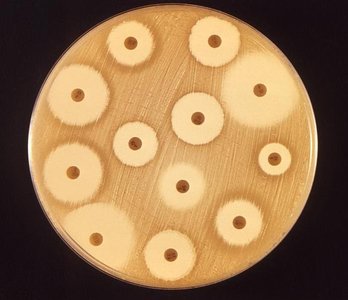
An antibiogram is a laboratory evaluation of a microorganism's response to antimicrobials. It is essential for selecting appropriate antibiotic treatment based on resistance patterns.
Techniques: Diffusion (disk-plate, E-test) and dilution (agar or broth microdilution).
Classification: Susceptible, intermediate (increased exposure), resistant.
Clinical categories: Based on probability of therapeutic success.
Diffusion Techniques
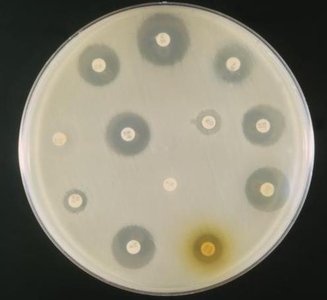
Disk-plate diffusion: Discs with antibiotics placed on inoculated agar; inhibition zones measured in mm.
E-test: Plastic strips with decreasing antibiotic concentrations; MIC determined at intersection of inhibition ellipse and strip.

Dilution Techniques
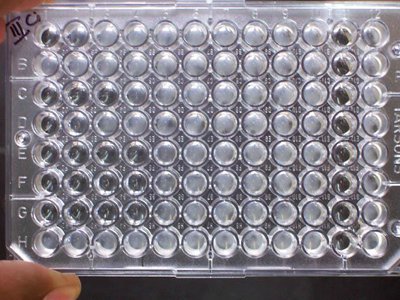
Broth microdilution: Serial dilutions of antibiotics in liquid medium; MIC is lowest concentration with no growth.
Agar dilution: Antibiotic dilutions in solid medium; MIC determined similarly.
MIC Concepts
Range: MICs found in a population (lowest-highest).
MIC50: Inhibits at least 50% of bacteria.
MIC90: Inhibits at least 90% of bacteria.
Rational Use of Antibiotics
Principles and Toxicity
Antibiotics should act selectively on microorganisms without harming the host.
Undesirable effects: toxicity, hypersensitivity, disruption of normal flora.
Combination therapy: increases action, extends spectrum, prevents resistance, but may increase toxicity or antagonism.
Adverse effects (resistance) can affect others beyond the patient.
Correct Use in Dentistry
Most dental infections are polymicrobial; oral flora is diverse and includes anaerobes.
Empiric treatment: based on likely pathogens and local sensitivity patterns.
Directed treatment: based on microbiological diagnosis.
Responsible use: only when necessary, correct dose and duration, associations only when essential.
Prophylaxis and treatment should cover predominant oral microorganisms (anaerobes, Gram-positive cocci).
Summary Table: Mechanisms of Bacterial Resistance
Mechanism | Description | Example Antibiotics |
|---|---|---|
Enzymatic Inactivation | Destruction/modification of antibiotic | β-lactams (β-lactamases), aminoglycosides (acetyl/adenylyl/phosphoryl transferases) |
Modification of Target | Altered binding sites | β-lactams (PBPs), macrolides (23S rRNA), quinolones (DNA gyrase) |
Active Efflux Pumps | Expel antibiotics from cell | Multiple classes |
Reduced Permeability | Changes in membrane porins | β-lactams, fluoroquinolones |
New Metabolic Pathways | Bypass antibiotic target | Sulfonamides, trimethoprim |
Key Equations and Concepts
Minimum Inhibitory Concentration (MIC): The lowest concentration of an antibiotic that inhibits visible growth of a microorganism.
MIC50 and MIC90: $\text{MIC}_{50}$ = concentration inhibiting 50% of population $\text{MIC}_{90}$ = concentration inhibiting 90% of population
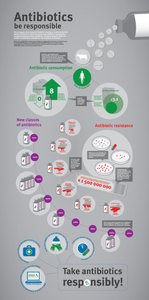
Responsible Antibiotic Use
Use antibiotics only when necessary.
Know the bacteria involved and their sensitivity.
Use correct dose and duration.
Seek synergy in associations, avoid unnecessary combinations.
Questions and Further Study