뒤로
Antimicrobial Drugs: History, Mechanisms, and Resistance
스터디 가이드 - 스마트 노트
 자료에 맞춘 맞춤형 노트, 핵심 정의, 예시, 맥락을 확장해 제공합니다.
History and Principles of Chemotherapy
Development of Chemotherapy
Chemotherapy refers to the use of chemicals to treat diseases, particularly infections caused by microorganisms. The concept of selective toxicity, introduced by Paul Ehrlich in the early 1900s, is fundamental: drugs should target pathogens without harming the host.
Selective Toxicity: The ability of a drug to target microbial cells without damaging host cells.
Magic Bullet: Ehrlich's idea of a chemical that selectively targets pathogens.
Antibiotic: A substance produced by a microbe that inhibits the growth of another microbe.
Antimicrobial Drugs: Synthetic substances that interfere with microbial growth.
Discovery of Penicillin
Alexander Fleming discovered penicillin in 1928, marking the beginning of the antibiotic era. Penicillin was first clinically tested in 1940.
Penicillin: The first widely used antibiotic, effective against many bacterial infections.
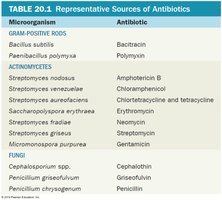
Representative Sources of Antibiotics
Antibiotics are produced by various microorganisms, including bacteria, actinomycetes, and fungi.
Microorganism | Antibiotic |
|---|---|
Gram-Positive Rods | Bacitracin, Polymyxin |
Actinomycetes | Streptomyces (various antibiotics), Micromonospora (Gentamicin) |
Fungi | Cephalosporin, Griseofulvin, Penicillin |
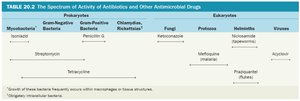
Spectrum of Antimicrobial Activity
Broad vs. Narrow Spectrum
The spectrum of activity describes the range of microorganisms an antimicrobial drug can affect.
Broad-spectrum antibiotics: Effective against a wide variety of microbes.
Narrow-spectrum antibiotics: Target specific groups of bacteria.
Drug | Effective Against |
|---|---|
Penicillin G | Gram-positive bacteria |
Tetracycline | Gram-positive, Gram-negative, Chlamydias, Rickettsias |
Acyclovir | Viruses |
Mechanisms of Action of Antimicrobial Drugs
Major Mechanisms
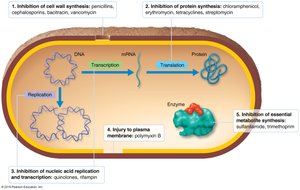
Antimicrobial drugs act through several mechanisms:
Inhibition of cell wall synthesis: Penicillins, cephalosporins, bacitracin, vancomycin
Inhibition of protein synthesis: Chloramphenicol, erythromycin, tetracyclines, streptomycin
Inhibition of nucleic acid replication and transcription: Quinolones, rifampin
Injury to plasma membrane: Polymyxin B
Inhibition of essential metabolite synthesis: Sulfanilamide, trimethoprim
Antibacterial Antibiotics: Inhibitors of Cell Wall Synthesis
Penicillins
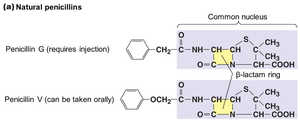
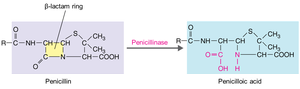
Penicillins contain a β-lactam ring and prevent cross-linking of peptidoglycans, interfering with cell wall construction, especially in gram-positive bacteria.
Natural Penicillins: Penicillin G (injection), Penicillin V (oral)
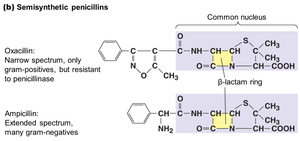
Semisynthetic Penicillins: Modified to resist penicillinase or broaden spectrum (e.g., oxacillin, ampicillin)
Penicillinase-resistant penicillins: Methicillin, oxacillin
Extended-spectrum penicillins: Effective against gram-negatives and gram-positives
Penicillins plus β-lactamase inhibitors: Combine with clavulanic acid to inhibit penicillinase
Cephalosporins
Cephalosporins are structurally similar to penicillins but have a different β-lactam ring. They are grouped by generations based on their spectrum and resistance to β-lactamase. 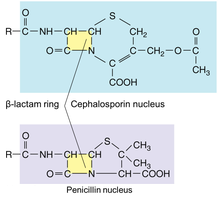
Polypeptide Antibiotics
Bacitracin: Topical application; effective against gram-positives
Vancomycin: Glycopeptide; last line against MRSA
Teixobactin: New class; effective against gram-positives
Competitive Inhibition of Essential Metabolites
Sulfonamides
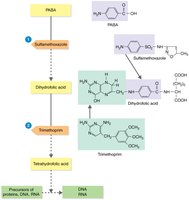
Sulfonamides inhibit folic acid synthesis, which is essential for nucleic acid and protein synthesis. They competitively bind to the enzyme that normally binds PABA, a folic acid precursor.
Drug Synergism: Combination of trimethoprim and sulfamethoxazole (TMP-SMZ) increases efficacy.
Antifungal and Antiviral Drugs
Antifungal Drugs
Antifungal drugs target fungal sterols, cell walls, nucleic acids, or microtubule assembly.
Ergosterol synthesis inhibitors: Disrupt membrane permeability
β-glucan inhibitors: Target fungal cell wall
Flucytosine: Cytosine analog interferes with RNA synthesis
Microtubule inhibitors: Block cell division
Antiviral Drugs
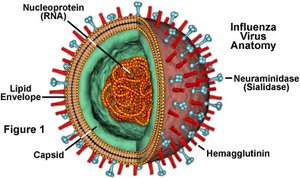
Antiviral drugs act by blocking entry, fusion, uncoating, genome integration, nucleic acid synthesis, assembly, and exit.
Entry and fusion inhibitors: Block virus binding or fusion
Nucleoside analogs: Inhibit viral RNA or DNA synthesis
Protease and neuraminidase inhibitors: Block viral assembly and release
Interferons: Induce antiviral proteins in host cells
Tests to Guide Chemotherapy
Disk-Diffusion Method (Kirby-Bauer Test)
Paper disks with chemotherapeutic agents are placed on agar containing the test organism. The zone of inhibition determines sensitivity. 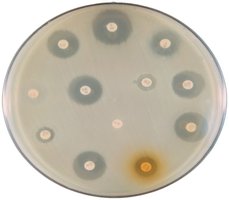
E Test
Determines the minimal inhibitory concentration (MIC), the lowest antibiotic concentration preventing bacterial growth. 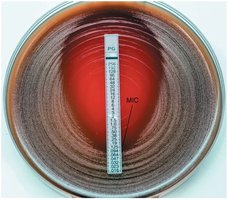
Broth Dilution Tests
Used to determine MIC and minimal bactericidal concentration (MBC) of an antimicrobial drug. 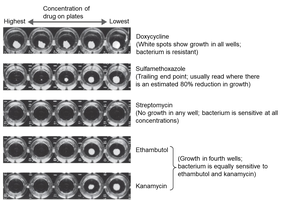
Resistance to Antimicrobial Drugs
Mechanisms of Resistance
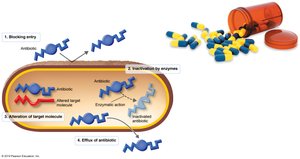
Bacteria can develop resistance through various mechanisms:
Persister cells: Survive antibiotic exposure due to genetic traits
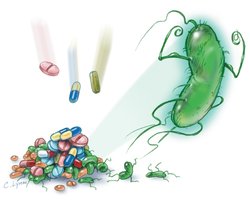
Superbugs: Resistant to multiple antibiotics
Horizontal gene transfer: Resistance genes spread via plasmids or transposons
Antibiotic Misuse
Misuse of antibiotics selects for resistance mutants. Common misuse includes:
Using outdated or weakened antibiotics
Using antibiotics for viral infections
Using antibiotics in animal feed
Failing to complete prescribed regimen
Using someone else's prescription

Effects of Combinations of Drugs
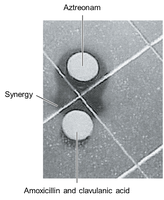
Synergism and Antagonism
Synergism: The effect of two drugs together is greater than either alone.
Antagonism: The effect of two drugs together is less than either alone.
Future of Chemotherapeutic Agents
Emerging Strategies
Targeting virulence factors: Disrupting pathogen mechanisms without killing them
Sequestering iron: Limiting pathogen access to essential nutrients
Antimicrobial peptides: Produced by various organisms, including bacteriocins from bacteria
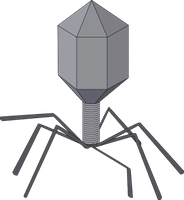
Phage therapy: Using bacteriophages to target bacterial infections