 뒤로
Antimicrobial Drugs: Mechanisms, Spectrum, and Resistance
스터디 가이드 - 스마트 노트
 자료에 맞춘 맞춤형 노트, 핵심 정의, 예시, 맥락을 확장해 제공합니다.
Antimicrobial Drugs
Introduction to Antimicrobial Drugs
Antimicrobial drugs are agents that interfere with the growth of microbes within a host. Their development revolutionized the treatment of infectious diseases. The concept of selective toxicity—destroying harmful microbes without damaging the host—was pioneered by Paul Ehrlich, who coined the term chemotherapy for the use of chemicals to treat disease.
Antibiotic: A substance produced by a microbe that, in small amounts, inhibits another microbe.
Selective toxicity: The ability of a drug to target microbial cells without harming host cells.
Salvarsan: The first chemotherapeutic agent used to treat syphilis.
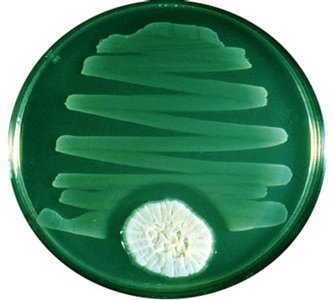
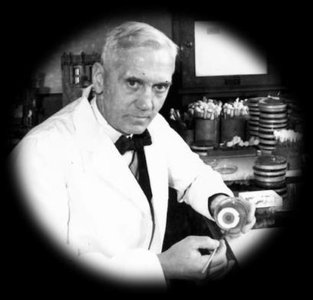
Example: In 1928, Alexander Fleming discovered penicillin, produced by the mold Penicillium, which inhibits bacterial growth.
Problems with Chemotherapy
It is easier to develop drugs against prokaryotes than eukaryotes because eukaryotic pathogens (fungi, protozoa, helminths) resemble host cells, increasing the risk of host toxicity. Viruses are especially challenging because they replicate inside host cells, using host machinery.
Prokaryotic pathogens: More distinct from host cells, easier to target.
Eukaryotic pathogens: Similar to host cells, higher risk of side effects.
Viruses: Intracellular, use host cell machinery, making selective targeting difficult.
Sources of Antibiotics
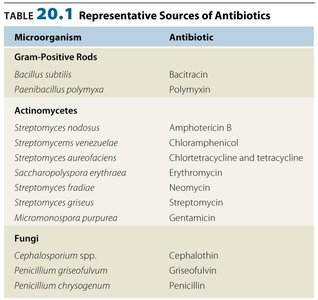
Antibiotics are derived from various microorganisms, including bacteria and fungi. The following table summarizes representative sources:
Microorganism | Antibiotic |
|---|---|
Gram-Positive Rods | Bacitracin, Polymyxin |
Actinomycetes | Amphotericin B, Chloramphenicol, Chlortetracycline, Tetracycline, Erythromycin, Neomycin, Streptomycin, Gentamicin |
Fungi | Cephalothin, Griseofulvin, Penicillin |
Spectrum of Antimicrobial Activity
Narrow vs. Broad Spectrum
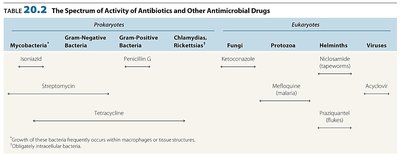
The spectrum of activity refers to the range of microbes an antimicrobial drug affects.
Narrow-spectrum antibiotics: Effective against a limited group of microbes (e.g., only Gram-positive bacteria).
Broad-spectrum antibiotics: Effective against a wide variety of microbes, including both Gram-positive and Gram-negative bacteria.
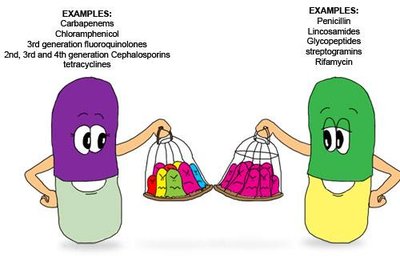
Superinfection: The growth of a target pathogen that has developed resistance to an antibiotic, often resulting from the use of broad-spectrum drugs. Opportunistic pathogens may also cause superinfections.
Modes of Action of Antimicrobial Drugs
Overview of Mechanisms
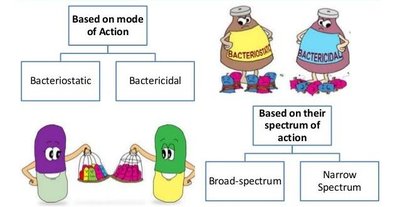
Antimicrobial drugs act by targeting essential microbial structures or functions. The five main modes of action are:
Inhibition of cell wall synthesis (e.g., penicillins, cephalosporins, vancomycin)
Inhibition of protein synthesis (e.g., chloramphenicol, erythromycin, tetracyclines, streptomycin)
Inhibition of nucleic acid replication and transcription (e.g., quinolones, rifampin)
Injury to plasma membrane (e.g., polymyxin B)
Inhibition of essential metabolite synthesis (e.g., sulfonamides, trimethoprim)
Inhibitors of Cell Wall Synthesis
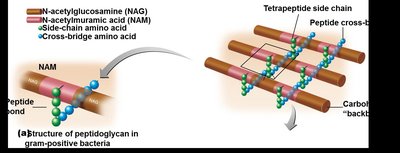
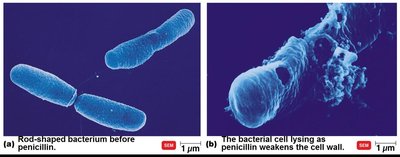
These drugs prevent the synthesis of peptidoglycan, weakening the cell wall and causing cell lysis. They are most effective against actively growing bacteria.
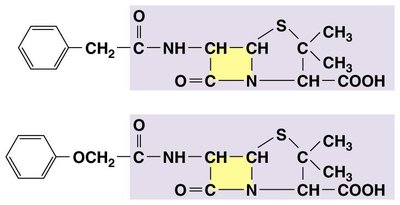
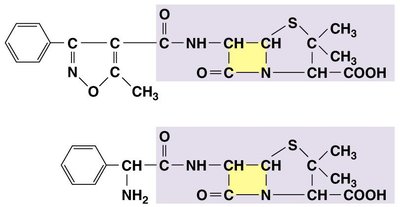
Penicillins: Natural (Penicillin G, Penicillin V), semisynthetic (oxacillin, ampicillin), and extended-spectrum types. All contain a β-lactam ring.
Cephalosporins: Similar to penicillins but with a broader spectrum and resistance to some β-lactamases.
Polypeptide antibiotics: Vancomycin, important for treating MRSA.
Antimycobacterial antibiotics: Isoniazid inhibits mycolic acid synthesis in mycobacteria.


Inhibitors of Protein Synthesis
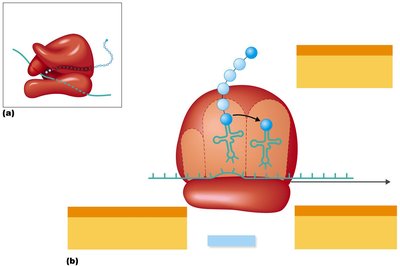
These drugs target the bacterial ribosome (70S), which differs from the eukaryotic ribosome (80S), allowing selective toxicity. They interfere with various steps of translation.
Chloramphenicol: Binds to the 50S subunit and inhibits peptide bond formation.
Tetracyclines: Interfere with tRNA attachment to the ribosome.
Streptomycin: Changes the shape of the 30S subunit, causing mRNA to be read incorrectly.
Erythromycin: Binds to the 50S subunit, blocking translocation.
Inhibitors of Nucleic Acid Synthesis
These drugs interfere with DNA replication or transcription.
Rifamycins: Inhibit mRNA synthesis; used for tuberculosis and leprosy.
Quinolones and fluoroquinolones: Inhibit DNA gyrase, blocking DNA replication; used for urinary tract infections and pneumonia.
Injury to the Plasma Membrane
Some drugs disrupt the structure or function of the plasma membrane, causing cell contents to leak out.
Lipopeptides: Cause structural changes in the membrane, effective against Gram-positive bacteria.
Polymyxin B: Effective against Gram-negative bacteria; used topically.
Inhibitors of Essential Metabolite Synthesis
These drugs act as competitive inhibitors of enzymes involved in essential metabolic pathways.
Sulfonamides (sulfa drugs): Inhibit folic acid synthesis by competing with para-aminobenzoic acid (PABA).
Tests to Guide Chemotherapy
Diffusion Methods
Laboratory tests help determine the susceptibility of microbes to antimicrobial agents.
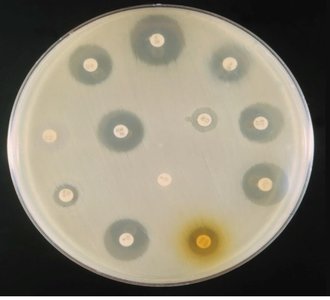
Disk diffusion (Kirby-Bauer) test: Disks with antibiotics are placed on an agar plate inoculated with bacteria; zones of inhibition indicate effectiveness.
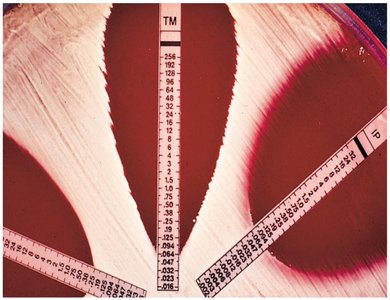
E-test: Determines the minimal inhibitory concentration (MIC) using a gradient of antibiotic concentrations.
Broth Dilution Tests
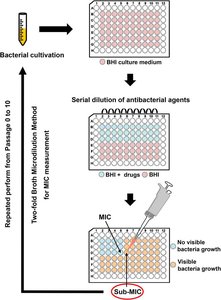
Serial dilutions of antibiotics in broth are used to determine the MIC and minimal bactericidal concentration (MBC).
Effects of Drug Combinations
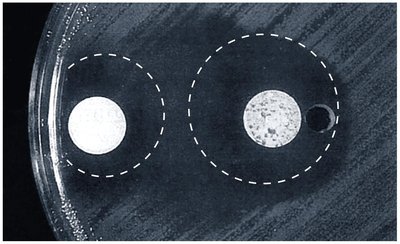
Combining drugs can have synergistic or antagonistic effects.
Synergism: The effect of two drugs together is greater than the effect of either alone.
Antagonism: The effect of two drugs together is less than the effect of either alone.
Mechanisms of Microbial Resistance
Bacteria can develop resistance to antibiotics through several mechanisms:
Blocking entry: Modifying porins to prevent antibiotic entry.
Inactivation by enzymes: Producing enzymes (e.g., β-lactamase) that destroy or inactivate the drug.
Alteration of target molecule: Minor changes in target sites reduce drug binding.
Efflux of antibiotic: Proteins in the plasma membrane pump antibiotics out of the cell.
Antibiotic Misuse and Prevention of Resistance
Misuse of antibiotics accelerates the development of resistance. Common forms of misuse include:
Using outdated or weakened antibiotics
Using antibiotics for viral infections (e.g., common cold)
Using antibiotics in animal feed
Failing to complete the prescribed regimen
Using someone else’s leftover prescription
Prevention strategies include:
Always finishing the prescribed regimen
Never using leftover antibiotics
Avoiding unnecessary prescriptions
Choosing the correct antibiotic and dosage
Using specific antibiotics instead of broad-spectrum agents when possible
Future of Chemotherapeutic Agents
Future directions in antimicrobial therapy include the development of antimicrobial peptides, phage therapy, and leveraging increased knowledge of microbial genetics to design targeted drugs.
