뒤로
Antimicrobial Susceptibility Testing: The Kirby-Bauer Disk Diffusion Method
스터디 가이드 - 스마트 노트
 자료에 맞춘 맞춤형 노트, 핵심 정의, 예시, 맥락을 확장해 제공합니다.
Antimicrobial Susceptibility Testing
Introduction to Antimicrobial Susceptibility
Antimicrobial susceptibility testing is a critical laboratory procedure used to determine the effectiveness of antibiotics against specific bacterial pathogens. This process helps guide clinical decisions regarding the most appropriate antimicrobial therapy for infections.
Purpose: To assess whether a microorganism is susceptible, intermediate, or resistant to a particular antibiotic.
Clinical Relevance: Ensures optimal treatment and helps prevent the spread of resistant strains.
The Kirby-Bauer Disk Diffusion Method
Principle and Overview
The Kirby-Bauer test is a standardized disk diffusion method used to evaluate the sensitivity of bacteria to various antimicrobial agents. It is widely used due to its simplicity, reproducibility, and ability to test multiple drugs simultaneously.
Disk Diffusion: Antibiotic-impregnated disks are placed on an agar plate inoculated with the test organism.
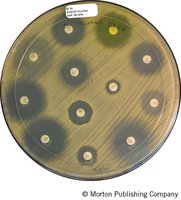
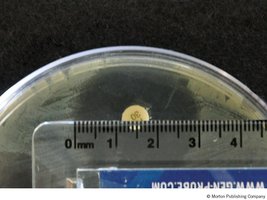
Zone of Inhibition: After incubation, clear zones appear around disks where bacterial growth is inhibited.
Interpretation: The diameter of these zones is measured and compared to standardized charts to determine susceptibility.
Limitation: The test does not distinguish between bactericidal and bacteriostatic effects.
Standardization of the Kirby-Bauer Test
To ensure reliable and reproducible results, the Kirby-Bauer test must be carefully standardized. This includes controlling the depth of the agar, the concentration of bacteria, and the incubation conditions.
Agar Depth: Plates are poured to a specific depth (usually 4 mm) to standardize antibiotic diffusion rates.
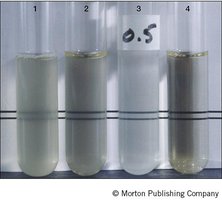
Bacterial Inoculum: The density of the bacterial suspension is adjusted to match the 0.5 McFarland standard, which approximates 1.5 × 10⁸ cells/mL.
Incubation: Plates are incubated at 37°C for 16–18 hours.
Preparation and Application of Antibiotic Disks
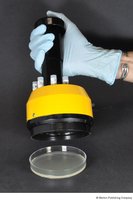
Antibiotic disks are applied to the surface of the inoculated agar using a disk dispenser or manually with sterile forceps. The dispenser ensures even spacing and consistent placement of disks.
Disk Dispenser: Facilitates the simultaneous and uniform application of multiple disks.
Manual Application: Disks can also be placed individually if a dispenser is not available.
Measuring and Interpreting Zones of Inhibition
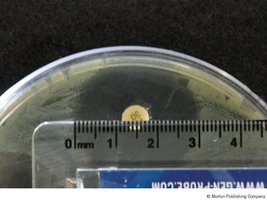
After incubation, the diameter of each zone of inhibition is measured in millimeters. These measurements are compared to interpretive charts to classify the organism as susceptible, intermediate, or resistant to each antibiotic.
Measurement: Use a ruler or caliper to measure the diameter of the clear zone around each disk.
Interpretation: The size of the zone, not just its presence, determines susceptibility. Even resistant bacteria may show some inhibition at high antibiotic concentrations.
Laboratory Procedure Summary
In a typical laboratory exercise, students will:
Prepare bacterial suspensions and adjust turbidity to the 0.5 McFarland standard.
Inoculate Mueller-Hinton agar plates with Staphylococcus epidermidis and Escherichia coli using a sterile cotton applicator to create a bacterial lawn.
Allow plates to dry for 5 minutes.
Apply antibiotic disks using a dispenser or manually.
Incubate plates at 37°C for 16–18 hours.
Measure zones of inhibition and interpret results using standardized charts.
Key Terms and Concepts
Zone of Inhibition: The clear area around an antibiotic disk where bacterial growth is prevented.
Susceptibility: Indicates that the organism is inhibited by achievable concentrations of the antibiotic.
Resistance: Indicates that the organism is not inhibited by the antibiotic at standard concentrations.
Mueller-Hinton Agar: The standard medium used for the Kirby-Bauer test due to its reproducibility and support for antibiotic diffusion.
McFarland Standard: A turbidity standard used to ensure consistent bacterial inoculum density.
Example: Clinical Application
If a patient presents with a bacterial infection, the clinical laboratory will isolate the pathogen and perform a Kirby-Bauer test. The results guide the physician in selecting the most effective antibiotic, reducing the risk of treatment failure and the spread of resistance.
Summary Table: Steps in the Kirby-Bauer Test
Step | Description |
|---|---|
1. Prepare Bacterial Suspension | Adjust to 0.5 McFarland standard |
2. Inoculate Plate | Spread bacteria evenly on Mueller-Hinton agar |
3. Apply Disks | Place antibiotic disks on agar surface |
4. Incubate | 16–18 hours at 37°C |
5. Measure Zones | Measure diameter of inhibition zones |
6. Interpret Results | Compare to interpretive charts |