 뒤로
Aseptic Technique, Inoculation, and Streak Plating: Microbiology Lab Study Guide
스터디 가이드 - 스마트 노트
 자료에 맞춘 맞춤형 노트, 핵심 정의, 예시, 맥락을 확장해 제공합니다.
Aseptic Technique in Microbiology
Introduction to Aseptic Technique
Aseptic technique is a fundamental practice in microbiology to prevent contamination of cultures, media, and the laboratory environment. It ensures that only the intended microorganisms are transferred and grown, maintaining the integrity of pure cultures and experimental results.
Pure cultures: Contain only one microbial species.
Mixed cultures: Contain more than one microbial species.
Goal: Transfer microbes without contaminating the original culture, new culture, yourself, or the environment.
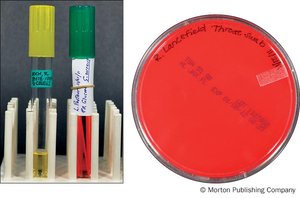
Preparation: Gather all necessary supplies, clear workspace, and label media appropriately.
Setting Up the Workstation
Proper preparation is essential for efficient and safe microbiological work. This includes organizing materials and labeling media to avoid confusion and ensure traceability.
Clear bench: Remove unnecessary items to minimize contamination risk.
Collect media: Use test tube racks for organization.
Labeling: Use permanent markers to label plates and tubes with relevant information (name, date, organism).
Using the Bunsen Burner for Sterilization
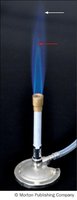
The Bunsen burner is used to sterilize inoculation tools before and after handling cultures. Proper flame adjustment is crucial for effective sterilization.
Lighting: Use a match and adjust gas flow for a blue flame with two cones.
Sterilization point: The tip of the inner cone is the hottest and used for sterilizing implements.
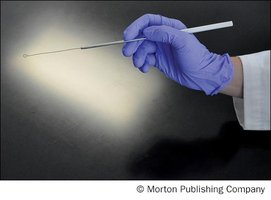
Technique: Hold the inoculating loop like a pencil and pass it through the flame.
Types of Transfers
Microbiologists perform various transfers to propagate cultures or test microbial properties. Each transfer type requires specific aseptic steps.
Broth to broth: Loosen caps before transfer.
Broth to slant: Use the fishtail technique for even distribution.
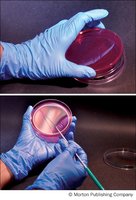
Broth to plate: Tilt lid to prevent contamination.
Cooling loop: Always cool the loop before touching cultures to prevent aerosols.
Streak Plating for Isolation of Pure Cultures
Principles of Streak Plating
Streak plating is a method used to isolate individual microbial colonies from a mixed or concentrated culture. By diluting the sample across the agar surface, single cells are separated and can form distinct colonies.
Colony-forming units (CFUs): Each colony arises from a single cell or clump, representing a pure population.
Goal: Obtain isolated CFUs for further study.
Methods: Quadrant streak for concentrated samples; zig-zag streak for low-density samples.
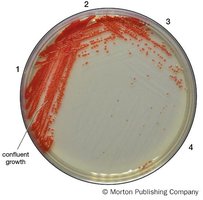
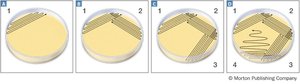
Quadrant Streak Method
The quadrant streak is used to progressively dilute a concentrated sample across four sections of an agar plate, increasing the likelihood of isolating single colonies.
Label plate base with name, date, and microbe.
Sterilize loop and obtain sample from mixed culture.
Streak in quadrant 1 without overlapping.
Flame loop, rotate plate, cool loop, streak from quadrant 1 into quadrant 2.
Repeat flaming, rotation, and streaking for quadrants 3 and 4.
Zigzag Inoculation Method
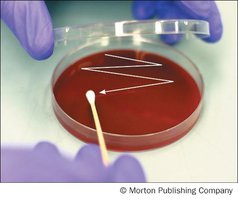
The zigzag method is used for environmental samples or when microbial density is low. It involves lightly dragging a sterile swab or loop across the agar surface in a zigzag pattern.
Sample collection: Use a sterile cotton swab dipped in sterile water for dry surfaces, or a sterile loop for liquid sources.
Technique: Lightly drag across agar in a zigzag pattern.
Disposal: Swabs are disposed of in autoclave bins.
Lab Practice and Applications
Student Lab Activities
Students practice aseptic technique and streak plating by transferring cultures between various media and isolating pure colonies. These exercises reinforce the importance of proper labeling, sterile technique, and accurate microbial handling.
Obtain and label sterile media (TSB tubes, TSA slants, TSA plates, microtubes).
Practice liquid to slant and slant to liquid transfers using aseptic technique.
Transfer S. epidermidis between different media and incubate at 37°C.
Prepare mixed cultures of S. epidermidis and M. luteus for quadrant streaking.
Sample environmental sources and inoculate plates using zigzag method; incubate at 25°C.
Summary Table: Comparison of Streak Plate Methods
The following table summarizes the main differences between the quadrant streak and zigzag inoculation methods:
Method | Sample Type | Purpose | Technique |
|---|---|---|---|
Quadrant Streak | Concentrated, mixed culture | Isolation of pure colonies | Sequential streaking across four quadrants |
Zigzag Inoculation | Environmental, low-density sample | General growth and isolation | Zigzag pattern across agar surface |
Key Terms and Concepts
Aseptic technique: Procedures to prevent contamination by unwanted microorganisms.
Inoculation loop: Tool used to transfer microbes.
Colony-forming unit (CFU): A single cell or clump that grows into a visible colony.
Sterilization: Process of eliminating all forms of life, especially microorganisms, from an object or area.
Incubation: Maintaining cultures at optimal temperature for growth.
Example: Application of Aseptic Technique
When transferring S. epidermidis from a slant to a broth tube, the student must sterilize the loop before and after transfer, avoid touching non-sterile surfaces, and label the media accurately to ensure traceability and prevent cross-contamination.
Additional info:
Proper aseptic technique is critical not only for laboratory safety but also for the reliability of experimental results in microbiology. Mastery of these methods is foundational for advanced studies in microbial genetics, metabolism, and clinical microbiology.
