 뒤로
뒤로Biofilm Formation and Microbial Communities: Structure, Function, and Genetic Regulation
스터디 가이드 - 스마트 노트
 자료에 맞춘 맞춤형 노트, 핵심 정의, 예시, 맥락을 확장해 제공합니다.
Biofilm Formation: The Prevailing Microbial Lifestyle
Introduction to Biofilms
Biofilms are structured communities of microorganisms that adhere to surfaces and are embedded in a self-produced matrix of extracellular polymeric substances. In most natural environments, biofilm formation is the dominant microbial lifestyle, providing advantages such as protection from environmental stress and enhanced nutrient access.
Biofilm Definition: A biofilm is a complex aggregation of microorganisms marked by the excretion of a protective and adhesive matrix.
Planktonic vs. Biofilm: Planktonic cells are free-swimming, while biofilm-associated cells are surface-attached and embedded in a matrix.
Ecological Importance: Biofilms are found in aquatic environments, medical devices, and natural surfaces, playing key roles in microbial ecology and pathogenesis.
Steps in Biofilm Development
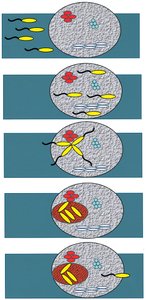
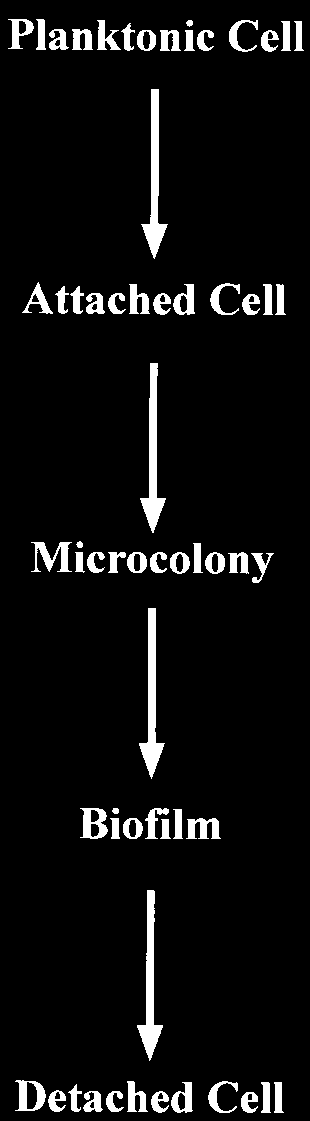
The formation of a biofilm is a multi-step process involving surface attachment, microcolony formation, and maturation into a three-dimensional structure.
Step 1: Surface Approach – Motile bacteria approach a surface, slowing their movement as they near it.
Step 2: Transient Attachment – Bacteria form loose, reversible associations with the surface or other microbes.
Step 3: Stable Attachment and Microcolony Formation – Bacteria establish stable associations, forming microcolonies.
Step 4: Biofilm Maturation – Production of exopolysaccharides leads to the development of a mature, three-dimensional biofilm.
Step 5: Detachment – Some cells detach from the biofilm to colonize new environments.
Microscopic Evidence of Biofilm Formation
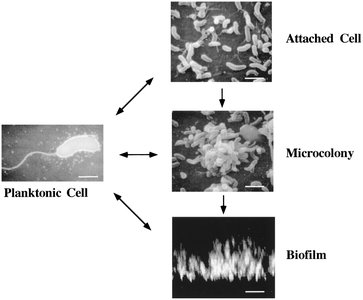
Microscopy studies reveal the structural progression from planktonic cells to attached cells, microcolonies, and mature biofilms.
Transmission Electron Microscopy (TEM): Visualizes planktonic cells.
Scanning Electron Microscopy (SEM): Shows attached cells and microcolonies.
Confocal Scanning Laser Microscopy: Provides vertical sections of mature biofilms, highlighting their three-dimensional architecture.
Genetic Regulation and Differentiation in Biofilms
Gene Expression in Biofilm vs. Planktonic Cells
Biofilm-associated cells exhibit distinct gene expression profiles compared to planktonic cells, reflecting their adaptation to the biofilm environment.
Flagellin Synthesis: Decreased in biofilm cells, reducing motility.
Exopolysaccharide Production: Increased in biofilm cells, stabilizing the biofilm structure.
Example: In Escherichia coli, colanic acid production is upregulated in biofilm cells; in Pseudomonas aeruginosa, alginate synthesis is increased.
Surface-Specific Gene Expression
Bacteria may express different genes depending on the type of surface they attach to, such as chitin versus abiotic surfaces.
Chitin Attachment: Marine Vibrio species express chitinase and chitin-binding genes when attaching to chitin.
Abiotic Surfaces: Different structural genes are required for attachment to plastic or glass.
Microbial Community Structure and Interactions
Spatial Organization and Environmental Gradients
Biofilms are highly organized, with bacteria distributed according to their environmental needs and symbiotic relationships.
Microenvironmental Gradients: Oxygen concentration and pH decrease as the substratum is approached.
Species Distribution: Bacteria settle in niches where they can best survive, often forming multispecies communities.
Intercellular Communication: Quorum Sensing and Signaling
Bacteria in biofilms communicate via diffusible molecules, regulating biofilm development and community structure.
Quorum Sensing: Acyl-homoserine lactones (acyl-HSLs) are key signaling molecules in biofilms.
Regulation: Acyl-HSLs define spatial separation in biofilms and mediate surface attachment.
Interspecies Communication: Signals may include metabolites, proteins, DNA/RNA, and can be beneficial or lethal (e.g., bacteriocins).
Advantages and Adaptations of Biofilm Living
Resistance to Environmental Stress
Biofilm-associated cells are more resistant to antibiotics, chlorine, and detergents due to multiple factors:
Decreased Diffusion: Protective matrix limits penetration of toxic substances.
Reduced Growth Rate: Slower growth increases resistance.
Biofilm-Specific Substances: Exopolysaccharides and quorum-sensing effects contribute to resistance.
Horizontal Gene Transfer and Evolution
Biofilms facilitate accelerated rates of genetic exchange, promoting rapid evolution and emergence of new traits.
Conjugation: Increased rates of plasmid transfer in biofilms.
Pathogen Emergence: Acquisition of antibiotic resistance and virulence factors is enhanced.
Energy Storage and Survival Strategies
Exopolysaccharide Lyase: Enzymes degrade the matrix for nutrient access and facilitate detachment during starvation.
Cell Division: May be infrequent in mature biofilms; energy is stored in the matrix.
Biofilm Activity and Dynamics
Real-Time Activity in Mature Biofilms
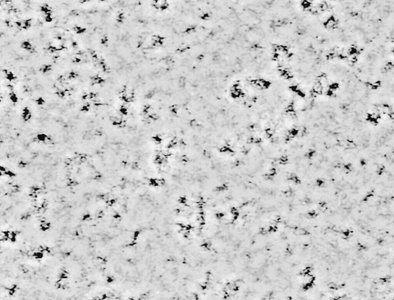
Mature biofilms are dynamic, with both fixed and motile cells interacting within the structure.
Pillars and Monolayers: Biofilms contain pillar-like structures and monolayers of cells.
Motile Cells: Some cells swim between pillars, maintaining association with the biofilm.
Summary Table: Steps in Biofilm Formation
Stage | Description | Key Features |
|---|---|---|
Planktonic Cell | Free-swimming, motile cell | Flagella, chemotaxis |
Attached Cell | Transient association with surface | Pili, initial adhesion |
Microcolony | Stable association, colony formation | Cell-cell interactions |
Biofilm | Mature, three-dimensional structure | Exopolysaccharide matrix |
Detached Cell | Cell leaves biofilm | Motility, matrix degradation |
Conclusion
The multispecies bacterial biofilm is analogous to a city, with bacteria settling selectively, communicating, storing energy, and transferring genetic material for the benefit of the community. Understanding the genetic and biochemical interactions within biofilms is essential for appreciating their ecological and medical significance.
