 뒤로
뒤로Biofilm Formation and Microbial Communities: Structure, Function, and Genetic Regulation
스터디 가이드 - 스마트 노트
 자료에 맞춘 맞춤형 노트, 핵심 정의, 예시, 맥락을 확장해 제공합니다.
Biofilm Formation: The Prevailing Microbial Lifestyle
Introduction to Biofilms
Biofilms are structured communities of microorganisms attached to surfaces, representing the dominant lifestyle for microbes in most natural environments. Unlike planktonic (free-swimming) cells, biofilm-associated bacteria benefit from increased survival, genetic exchange, and resistance to environmental stresses.
Biofilm: A complex aggregation of microorganisms growing on a surface, embedded in a self-produced matrix of extracellular polymeric substances (EPS).
Planktonic cells: Free-swimming bacteria that can transition to biofilm mode for surface colonization.
Microbial city analogy: Biofilms are likened to cities, with bacteria choosing their 'neighborhoods,' communicating, and adapting to local conditions.
Steps in Biofilm Development
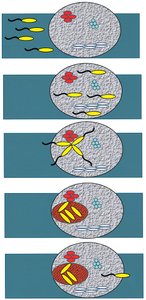
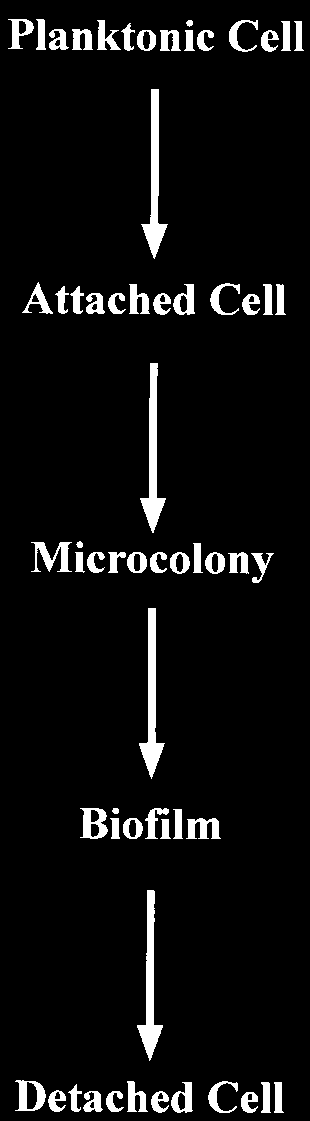
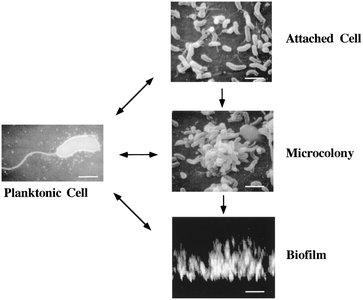
Biofilm formation is a multi-step process involving surface approach, transient attachment, microcolony formation, maturation, and eventual detachment. Each step is regulated by specific genetic and biochemical mechanisms.
Step 1: Surface Approach – Motile bacteria (often using flagella or pili) approach a surface, slowing their movement.
Step 2: Transient Attachment – Bacteria form loose, reversible associations with the surface or other microbes.
Step 3: Stable Attachment & Microcolony Formation – Bacteria settle and form microcolonies, selecting their 'neighborhood.'
Step 4: Biofilm Maturation – Production of exopolysaccharides stabilizes the three-dimensional biofilm structure.
Step 5: Detachment – Some bacteria leave the biofilm when conditions become unfavorable, resuming planktonic life.
Genetic Regulation of Biofilm Formation
Biofilm formation is a genetically regulated developmental process, distinct from planktonic growth. Specific genes are activated or repressed during biofilm development, affecting motility, adhesion, and matrix production.
Force-generating organelles: Type IV pili and flagella accelerate initial surface interaction and migration.
Exopolysaccharide production: Essential for stabilizing biofilm pillars; e.g., colanic acid in Escherichia coli, alginate in Pseudomonas aeruginosa.
Gene expression changes: Flagellin synthesis decreases, while exopolysaccharide synthesis increases in biofilm-associated cells.
Regulatory factors: Alternative sigma factors (e.g., s22) modulate exopolysaccharide and flagellum synthesis.
Surface Specificity and Nutrient Adaptation
Bacteria adapt their attachment strategies based on surface type and nutrient availability. Attachment to nutritive surfaces (e.g., chitin) is favored in nutrient-poor environments, while abiotic surfaces (plastic, glass) are colonized in nutrient-rich conditions.
Chitin attachment: Marine Vibrio species express chitinase and chitin-binding genes in the presence of chitin.
Surface sensing: Different structural genes are required for attachment to biotic versus abiotic surfaces.
Spatial Organization and Microenvironment
Biofilms are spatially organized, with bacteria distributed according to their metabolic needs and symbiotic relationships. Microenvironments within biofilms vary in oxygen concentration, pH, and nutrient availability.
Coaggregation: Specific interactions between oral bacteria determine their distribution in dental plaque.
Microelectrode measurements: Reveal gradients of oxygen and pH within biofilms.
Gene expression adaptation: Bacteria alter gene expression to maximize survival in their local microenvironment.
Intercellular Communication in Biofilms
Bacteria communicate via diffusible molecules, especially in the diffusion-limited environment of biofilms. Quorum sensing, mediated by acyl-homoserine lactones (acyl-HSLs), regulates biofilm structure and function.
Quorum sensing: Acyl-HSLs define spatial separation between bacterial pillars in P. aeruginosa biofilms.
Intercellular signals: Include metabolites, proteins, DNA/RNA, and bacteriocins, affecting neighboring cells' behavior.
Lethal interactions: Bacteriocins and predatory signaling (e.g., Myxococcus xanthus preying on E. coli) can shape biofilm diversity.
Biofilm Resistance and Genetic Exchange
Biofilm-associated bacteria exhibit increased resistance to antibiotics, disinfectants, and environmental stresses. Horizontal gene transfer is accelerated in biofilms, promoting rapid evolution and adaptation.
Resistance mechanisms: Decreased diffusion, slow growth rate, exopolysaccharide matrix, and quorum-sensing effects.
Genetic exchange: High rates of conjugation facilitate the spread of antibiotic resistance and virulence factors.
Detachment and Survival Strategies
When conditions become unfavorable, bacteria may detach from the biofilm, aided by enzymes such as polysaccharide lyases. This allows them to seek new environments and complete the biofilm life cycle.
Polysaccharide lyase: Degrades the biofilm matrix, enabling cell escape and nutrient acquisition during starvation.
Energy storage: Excess energy may be used to produce edible exopolysaccharide scaffolds for later consumption.
Summary Table: Stages of Biofilm Formation
Stage | Description | Key Features |
|---|---|---|
Planktonic Cell | Free-swimming, motile bacteria | Flagella, pili, chemotaxis |
Attached Cell | Transient association with surface | Adhesion proteins, reversible binding |
Microcolony | Stable attachment, colony formation | Cell-cell interactions, surface migration |
Biofilm | Mature, three-dimensional structure | Exopolysaccharide matrix, spatial organization |
Detached Cell | Cells leave biofilm, resume planktonic life | Polysaccharide lyase activity, motility |
Conclusion
Biofilms are dynamic, multicellular communities with complex genetic regulation, spatial organization, and intercellular communication. Understanding biofilm formation and function is essential for microbiology, as biofilms play critical roles in environmental survival, pathogenesis, and resistance to antimicrobial agents.
