 뒤로
Biofilms & Culture Media: Microbial Communities and Laboratory Growth
스터디 가이드 - 스마트 노트
 자료에 맞춘 맞춤형 노트, 핵심 정의, 예시, 맥락을 확장해 제공합니다.
Biofilms: Microbes in Communities
Definition and Formation of Biofilms
Biofilms are organized microbial communities encased in a slimy extracellular matrix that adhere to surfaces. In nature, microbes typically live as part of these communities rather than as isolated single-species colonies. Confocal microscopy has revealed the three-dimensional structure of biofilms, highlighting their complexity.
Biofilm: A thin, slimy layer of microorganisms attached to a surface.
Community Living: Biofilms may contain one or multiple species, often increasing survival and adaptability.
Examples: Dental plaque on teeth, microbial layers on rocks in ponds, biofilms on catheters, and communities on ocean plastics.


Example: Dental plaque is a biofilm attached to the human tooth, while biofilms can also form on medical devices such as catheters.
Quorum Sensing: Bacterial Communication
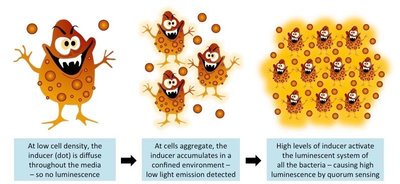
Quorum sensing is a cell-to-cell chemical communication mechanism that allows bacteria to coordinate their activities and organize into functional communities. This process is essential for biofilm development and maintenance.
Quorum Sensing: Enables bacteria to sense population density and regulate gene expression collectively.
Key Example: Vibrio fischeri uses quorum sensing to regulate bioluminescence.
Biofilm Function: Biofilms are not just random slime; they are structured systems with coordinated activity.
Biofilm Formation Process
The formation of a biofilm involves several steps, each critical for establishing a stable microbial community.
Step 1: Microbes reach a surface (e.g., tooth, rock, catheter).
Step 2: Cells attach and remain associated with the surface.
Step 3: Cells communicate via quorum sensing to coordinate activity.
Step 4: The community develops into a functional biofilm.
Example: Biofilms on catheters can become sources of infection due to their persistent attachment and community structure.
Culture Media: Growing Microbes in the Laboratory
Basic Concepts: Culture Medium, Inoculum, and Culture
Microbiologists use culture media to provide the necessary nutrients and conditions for microbial growth in the laboratory. The process involves introducing microbes (inoculum) into the medium, where they grow and multiply (culture).
Culture Medium: Nutrient material prepared for microbial growth.
Inoculum: Microbes introduced to start growth.
Culture: The resulting population of microbes.
Sterility: The medium must be sterile initially to ensure only the intended microbes grow.
Agar: Solidifying Agent in Culture Media
Agar is a complex polysaccharide derived from marine algae, used to solidify culture media. It is not a nutrient itself but provides a stable surface for microbial growth.Properties: Fe
w microbes can degrade agar, so it remains solid during growth.
Forms: Petri plates (shallow), slants (angled), and deeps (vertical).
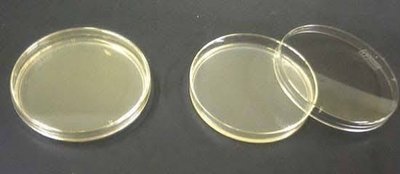
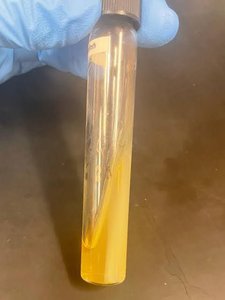
Example: Agar plates are commonly used for isolating and identifying bacteria.
Chemically Defined vs. Complex Media
Chemically defined media have a known exact composition, suitable for experimental work and organisms with specific requirements. Complex media contain nutrient extracts and have variable composition, supporting a wide range of chemoheterotrophs.
Chemically Defined Media: Exact chemical composition is known; used for precise experimental needs.
Complex Media: Contains peptones, meat, or yeast extracts; composition varies from batch to batch.
Fastidious Microbes: Require many growth factors supplied in the medium (e.g., Leuconostoc, Lactobacillus).
Example: Nutrient broth is a complex liquid medium.
Special Culture Techniques
Some microbes require unique conditions for growth, such as the absence of oxygen or elevated CO2 levels.
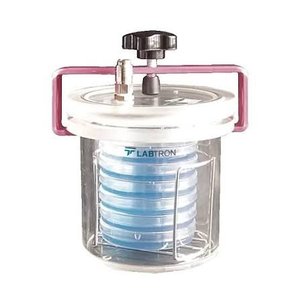
Obligate Anaerobes: Grow only in the absence of oxygen; require reducing media or anaerobic jars/chambers.
Reducing Media: Contains chemicals (e.g., sodium thioglycolate) to remove dissolved oxygen.
Anaerobic Jar: Seals plates in a container where oxygen is chemically removed.
Living Host Cells: Some obligate intracellular bacteria require living cells for growth (e.g., Mycobacterium leprae in armadillos).
Capnophiles: Microbes that grow better at elevated CO2 concentrations; CO2 incubators or candle jars are used.
Types of Culture Media
Selective Media
Selective media suppress unwanted microbes and encourage the growth of desired microorganisms. They apply selection pressure to favor target organisms.
Example: Bismuth sulfite agar isolates Salmonella Typhi; Sabouraud’s dextrose agar favors fungi.
Differential Media
Differential media make it easier to distinguish colonies of the desired organism from others based on visible differences.
Example: Blood agar shows clear zones where bacteria lyse red blood cells (e.g., Streptococcus pyogenes).
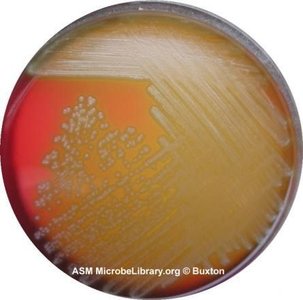
Selective and Differential Media
Some media are both selective and differential, such as Mannitol Salt Agar (MSA). MSA selects for salt-tolerant Staphylococcus species and differentiates based on mannitol fermentation, which causes a color change.
Selective: High salt discourages most organisms except Staphylococcus.
Differential: Mannitol fermentation produces acid, changing the medium's color.
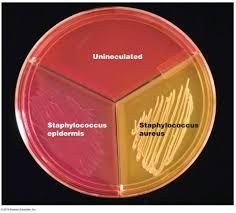
Enrichment Culture
Enrichment culture is used to increase the population of a desired microbe present in very small numbers until it becomes detectable. This technique is similar to selection but focuses on boosting rare populations.
Example: Isolating microbes that can use phenol from a soil sample by repeated transfer in phenol-only medium.
Biosafety Levels: Laboratory Containment
Biosafety Levels (BSL)
Biosafety levels match laboratory containment procedures to the risk posed by the microorganisms being handled.
BSL-1: Low risk; basic teaching labs.
BSL-2: Moderate risk; personal protective equipment and careful handling.
BSL-3: Serious airborne risk; restricted access and containment.
BSL-4: Highest risk; sealed labs, negative pressure, filtered air, and air-supplied suits.
Example: Handling a lethal virus with no known treatment requires BSL-4 containment.
Summary Table: Types of Culture Media
Type | Core Idea | Main Use |
|---|---|---|
Chemically defined | Exact composition known | Experimental work / known requirements |
Complex | Composition not exact | Growth of many chemoheterotrophs |
Reducing | Removes oxygen | Obligate anaerobes |
Selective | Suppresses unwanted microbes | Favor desired microbe |
Differential | Shows visible differences | Distinguish organisms |
Enrichment | Boosts small target population | Make rare microbe detectable |
Key Terms and Concepts
Biofilm: Community of microbes attached to a surface.
Quorum Sensing: Chemical communication for coordinated activity.
Chemically Defined Medium: Exact composition known.
Complex Medium: Variable composition, supports many microbes.
Selective Medium: Favors growth of specific microbes.
Differential Medium: Distinguishes microbes by visible differences.
Enrichment Culture: Increases rare microbes to detectable levels.
Biosafety Levels: Laboratory containment matched to risk.
Capnophile: Microbe that grows best at elevated CO2 concentrations.
Obligate Anaerobe: Microbe that cannot survive in the presence of oxygen.
