 뒤로
Biotechnology and DNA Technology: Microbiology Study Guide
스터디 가이드 - 스마트 노트
 자료에 맞춘 맞춤형 노트, 핵심 정의, 예시, 맥락을 확장해 제공합니다.
Biotechnology and DNA Technology
Introduction to Biotechnology
Biotechnology is the application of microorganisms, cells, or cell components to produce useful products such as foods, antibiotics, vitamins, and enzymes. Recombinant DNA (rDNA) technology involves the insertion or modification of genes to produce desired proteins, revolutionizing medicine, agriculture, and industry.
Biotechnology: Use of biological systems for practical purposes.
Recombinant DNA technology: Manipulation of genetic material to produce new traits or products.
Example: Human growth hormone gene inserted into E. coli for mass production.

An Overview of Recombinant DNA Procedures
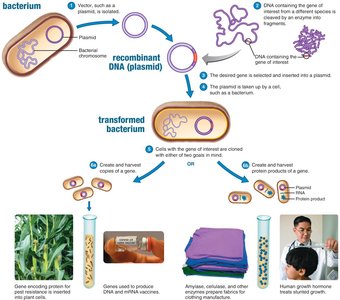
Recombinant DNA procedures involve the use of vectors to transport foreign DNA into cells, which are then grown in culture to form clones. These clones can be used to harvest genes or express proteins.
Vector: Self-replicating DNA molecule (plasmid or viral genome) used to carry foreign DNA.
Clone: Population of genetically identical cells, each carrying the vector.
Applications: Production of proteins, gene therapy, and genetic research.
Tools of Biotechnology
Selection and Mutation
Selection involves isolating microbes with desired traits, while mutation uses mutagens to induce beneficial genetic changes. Site-directed mutagenesis allows targeted gene modification.
Selection: Identifying naturally occurring microbes with useful properties.
Mutation: Inducing genetic changes for improved traits.
Site-directed mutagenesis: Precise alteration of specific DNA sequences.
Restriction Enzymes
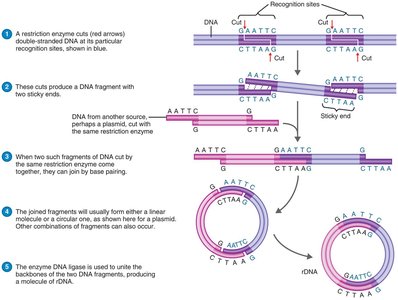
Restriction enzymes are bacterial proteins that cut DNA at specific sequences, producing fragments with blunt or sticky ends. These fragments can be joined to form recombinant DNA.
Restriction enzymes: Cut DNA at defined sites, enabling gene cloning.
Sticky ends: Overhanging DNA fragments that facilitate joining with other DNA.
DNA ligase: Enzyme that seals DNA fragments together.
Vectors
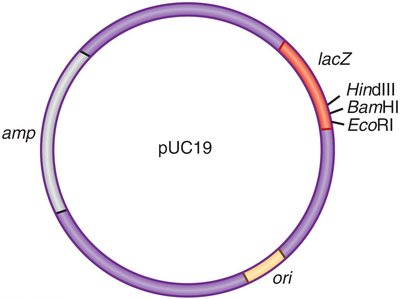
Vectors are laboratory-designed tools for carrying new DNA into cells. Plasmids and viruses are common vectors, and shuttle vectors can transfer DNA among different species.
Properties of vectors: Self-replication, protection from destruction, ability to carry foreign DNA, and compatibility with host cells.
Plasmid: Circular DNA used in bacterial cloning.
Viral vector: Virus genome used for gene delivery.
Polymerase Chain Reaction (PCR)
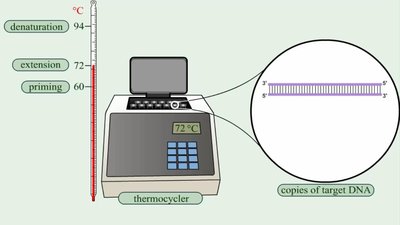
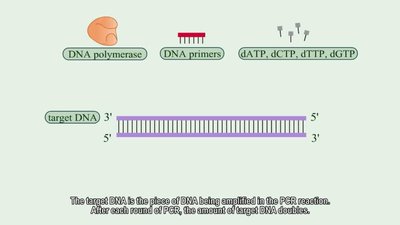
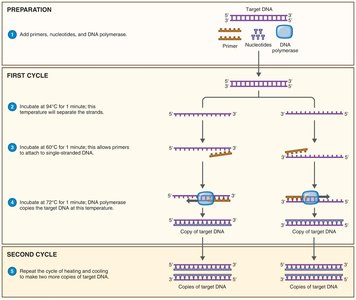
PCR is a technique for amplifying small quantities of DNA, making billions of copies in hours. It is used for diagnostics, pathogen detection, and genetic research. Reverse-transcription PCR uses mRNA as a template.
Steps: Denaturation, priming, extension.
Components: DNA polymerase, primers, nucleotides.
Applications: Disease diagnosis, forensic analysis, research.
Inserting Foreign DNA Into Cells
Several methods exist for introducing DNA into cells, including transformation, electroporation, protoplast fusion, gene gun, and microinjection.
Transformation: Uptake of DNA from the environment.
Electroporation: Electrical pulses create membrane pores for DNA entry.
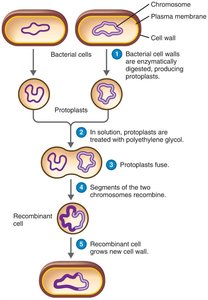
Protoplast fusion: Fusion of cells without cell walls for DNA recombination.
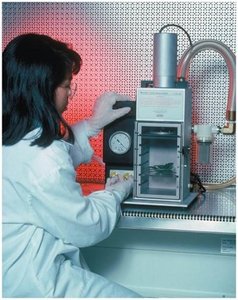
Gene gun: Physical delivery of DNA-coated particles into cells.
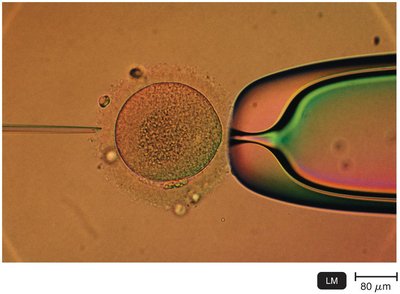
Microinjection: Direct injection of DNA using a micropipette.
Genomic Libraries
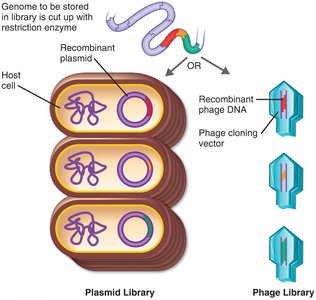
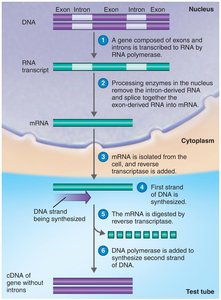
Genomic libraries are collections of clones containing different DNA fragments from an organism. Complementary DNA (cDNA) is synthesized from mRNA, allowing isolation of eukaryotic genes without introns.
Genomic library: Repository of cloned DNA fragments.
cDNA: DNA synthesized from mRNA, representing expressed genes.
Applications: Gene discovery, functional studies, biotechnology.
Synthetic DNA
Synthetic DNA is produced in vitro using DNA synthesis machines. The gene sequence must be known, and oligonucleotides are joined to form complete genes.
Synthetic DNA: Artificially constructed DNA for research and biotechnology.
Requirement: Known gene sequence.
Selecting a Clone
Blue-White Screening
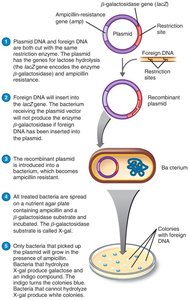
Blue-white screening uses plasmids with ampicillin resistance and lacZ gene to distinguish recombinant bacteria. White colonies indicate successful insertion of foreign DNA.
lacZ gene: Encodes β-galactosidase, hydrolyzes X-gal.
White colonies: Recombinant bacteria with inserted DNA.
Blue colonies: Bacteria with intact lacZ gene.
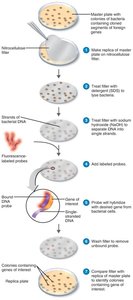
Colony Hybridization
Colony hybridization uses DNA probes to identify cells carrying specific cloned genes. Probes are labeled and bind to complementary DNA sequences.
DNA probe: Labeled, single-stranded DNA complementary to target gene.
Application: Screening for desired gene in bacterial colonies.
Making a Gene Product
Different organisms are used to produce gene products, each with advantages and disadvantages. E. coli is commonly used but may produce endotoxins. Yeast, plant, and mammalian cells are also used for expressing eukaryotic genes.
E. coli: Easy to grow, known genomics, but produces endotoxins.
Saccharomyces cerevisiae: Yeast, expresses eukaryotic genes, secretes products.
Plant cells: Large-scale, low-cost production.
Mammalian cells: Medical products, harder to grow.
Pharmaceutical Products of rDNA
Recombinant DNA technology has enabled the production of various pharmaceuticals, including vaccines, hormones, enzymes, and monoclonal antibodies.
Product | Comments |
|---|---|
Cervical Cancer Vaccine | Produced by yeast or insect cells |
Epidermal Growth Factor | Produced by E. coli |
Human Insulin | Produced by E. coli, better tolerated than animal insulin |
Interferons | Produced by E. coli, yeast, or mammalian cells |
Hepatitis B Vaccine | Produced by yeast carrying viral gene |
Taxol | Produced in E. coli, used for ovarian cancer |
Tissue Plasminogen Activator | Dissolves blood clots, produced by mammalian cells |
Veterinary Vaccines | Canarypox virus carrying animal virus genes |
Applications of DNA Technology
Therapeutic Applications
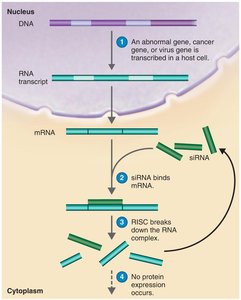
DNA technology is used for producing human enzymes, subunit vaccines, gene therapy, and gene editing (e.g., CRISPR). Gene silencing uses siRNA to inhibit gene expression.
Gene therapy: Replacing defective genes.
Gene editing: Correcting mutations with CRISPR.
RNA interference (RNAi): Silencing genes using siRNA.
Genome Projects
Genome projects have sequenced thousands of prokaryotic and eukaryotic genomes. Shotgun sequencing assembles small DNA fragments, and metagenomics studies genetic material from environmental samples.
Human Genome Project: Sequenced entire human genome.
Human Proteome Project: Mapping proteins expressed in human cells.
Scientific Applications
Bioinformatics and proteomics analyze gene and protein functions. Southern blotting detects specific DNA fragments, and genetic testing screens for diseases.
Bioinformatics: Computer-assisted analysis of DNA sequences.
Proteomics: Study of proteins expressed in cells.
Southern blotting: DNA probe detection of specific fragments.
Forensic Microbiology
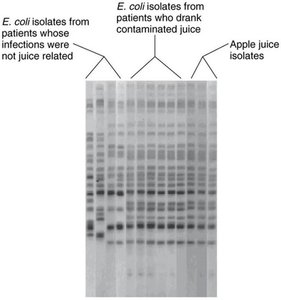
DNA fingerprinting identifies pathogens and individuals in forensic cases. PCR microarrays and DNA chips screen for multiple pathogens, and microbial forensics is used in criminal investigations.
Nanotechnology
Nanotechnology involves designing and manufacturing molecular-level devices. Bacteria can produce nanospheres for drug delivery and targeting.
Applications: Drug targeting, molecular devices.
Agricultural Applications
Plant breeding and genetic modification are enhanced by rDNA techniques. Protoplast fusion, gene guns, and Ti plasmid from Agrobacterium tumefaciens are used to introduce new genes into plants.
Ti plasmid: Integrates into plant genome, used for genetic engineering.
Protoplast fusion: Combines plant cells for new traits.
