 뒤로
Cell Structure and Function in Microbiology
스터디 가이드 - 스마트 노트
 자료에 맞춘 맞춤형 노트, 핵심 정의, 예시, 맥락을 확장해 제공합니다.
Processes of Life
Characteristics of Living Cells
All living organisms share several fundamental processes that define life. These include:
Growth: Increase in size and complexity of the organism.
Reproduction: Ability to produce new cells or organisms, either sexually or asexually.
Responsiveness: Ability to respond to environmental stimuli.
Metabolism: Collection of controlled chemical reactions that occur in organisms to maintain life.
Cell Types: Prokaryotes vs. Eukaryotes
Overview of Cell Types
Cells are classified into two main types based on their structural characteristics: prokaryotic and eukaryotic cells.
Prokaryotes: Lack a nucleus and membrane-bound organelles, are generally smaller (~1.0 µm), and have a simpler structure. Includes Bacteria and Archaea.
Eukaryotes: Possess a nucleus and internal membrane-bound organelles, are larger (10–100 µm), and have a more complex structure. Includes algae, protozoa, fungi, animals, and plants.
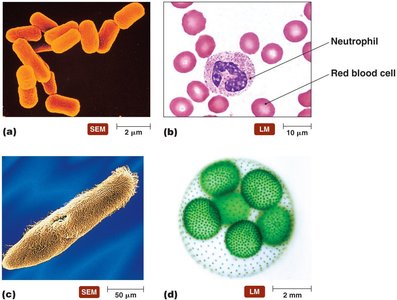
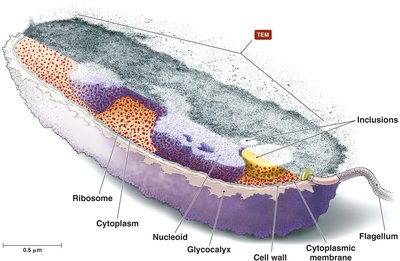
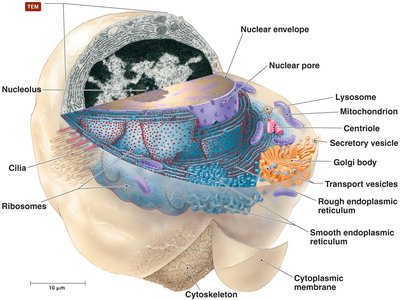
Relative Sizes of Cells
Cells and microorganisms vary greatly in size, from viruses (0.3 µm) to chicken eggs (47,000 µm).
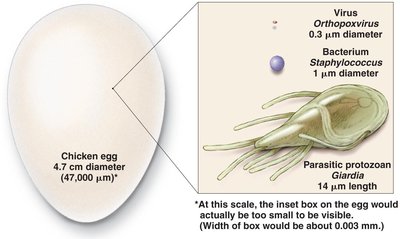
External Structures of Bacterial Cells
Glycocalyces
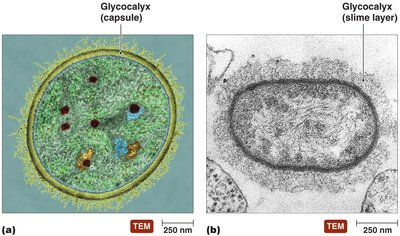
The glycocalyx is a gelatinous, sticky substance surrounding the outside of the cell, composed of polysaccharides, polypeptides, or both. It serves as protection and aids in attachment to surfaces.
Capsule: Organized, firmly attached, may prevent recognition by host immune system.
Slime Layer: Loosely attached, water-soluble, aids in surface attachment.
Flagella
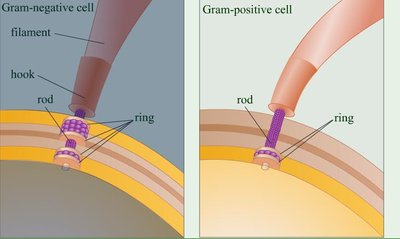
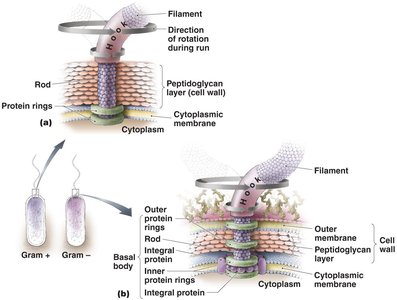
Flagella are long, whip-like structures responsible for bacterial motility. Not all bacteria possess flagella.
Structure: Composed of filament, hook, and basal body. The basal body anchors the flagellum to the cell wall and membrane.
Function: Rotation propels the bacterium; movement can be toward (positive taxis) or away from (negative taxis) stimuli. Movement patterns include runs and tumbles.
Fimbriae and Pili
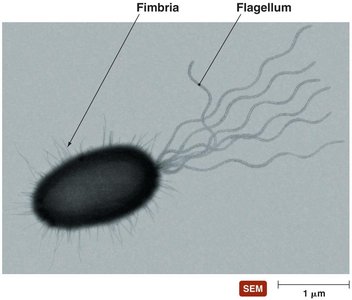
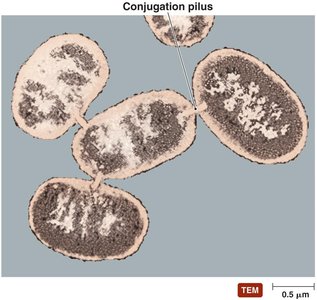
Fimbriae are short, bristlelike projections used for attachment to surfaces and in biofilm formation. Pili (or conjugation pili) are longer, less numerous, and mediate the transfer of DNA between cells (conjugation).
Bacterial Cell Walls
Structure and Function
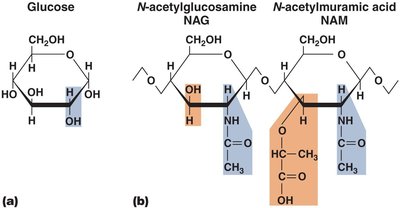
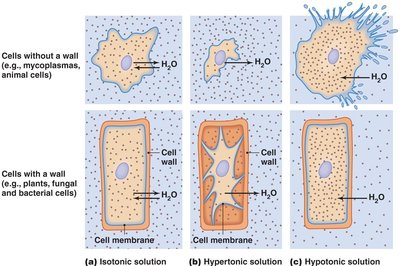
Bacterial cell walls provide structure, shape, and protection from osmotic forces. They are primarily composed of peptidoglycan, a polymer of sugars and amino acids.
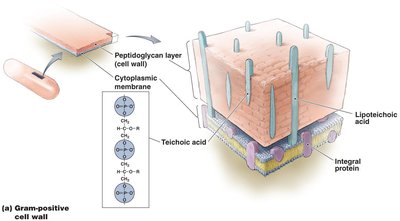
Gram-positive cell walls: Thick peptidoglycan layer, teichoic acids, stain purple in Gram stain.
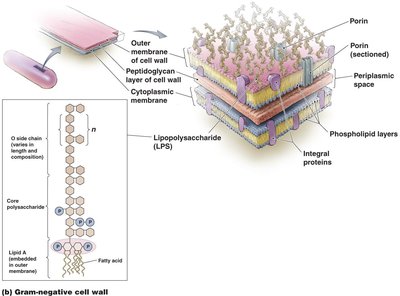
Gram-negative cell walls: Thin peptidoglycan layer, outer membrane with lipopolysaccharide (LPS), stain pink in Gram stain.
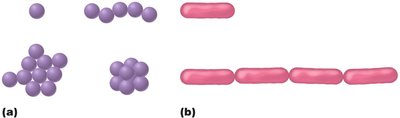
Bacterial Cytoplasmic Membranes
Structure
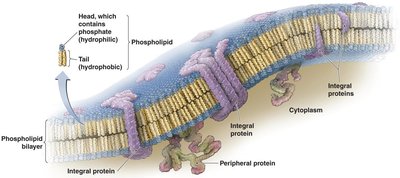
The cytoplasmic membrane is a phospholipid bilayer with embedded proteins, described by the fluid mosaic model.
Function
Energy storage and harvesting (in photosynthetic bacteria).
Selective permeability: Controls movement of substances in and out of the cell.
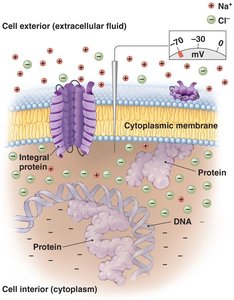
Maintains concentration and electrical gradients.
Transport Mechanisms
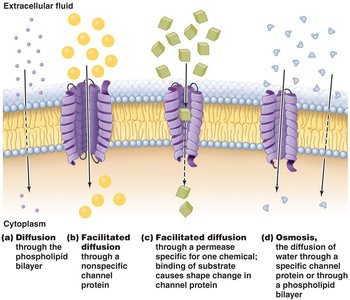
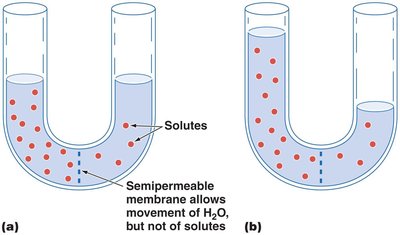
Passive processes: Diffusion, facilitated diffusion, and osmosis (no energy required).
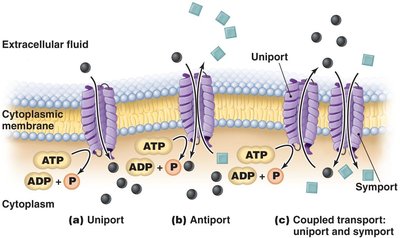
Active processes: Active transport (requires ATP), group translocation (substance is chemically modified during transport).
Cytoplasm of Bacteria
Components
Cytosol: Liquid portion containing dissolved substances.
Inclusions: Reserve deposits of chemicals.
Endospores: Dormant, resistant structures formed by some bacteria for survival in harsh conditions.
Ribosomes: Sites of protein synthesis (70S in prokaryotes).
Cytoskeleton: Maintains cell shape.
Archaeal Cell Structure
External Structures
Glycocalyces: Aid in biofilm formation and adherence.
Flagella: Structurally different from bacterial flagella.
Fimbriae and Hami: Attachment structures unique to archaea.
Cell Walls and Membranes
Most archaea have cell walls (no peptidoglycan).
All have cytoplasmic membranes for maintaining gradients and transport.
Cytoplasm
Similar to bacteria (70S ribosomes, circular DNA), but with unique proteins and enzymes.
Eukaryotic Cell Structure
External Structures
Glycocalyces: Less organized than in prokaryotes, aid in cell recognition and protection.
Cell Walls and Membranes
Present in fungi, algae, plants, and some protozoa; composed of various polysaccharides (e.g., cellulose, chitin).
All eukaryotes have a cytoplasmic membrane with steroid lipids and membrane rafts.
Endocytosis
Eukaryotic cells can engulf external materials via endocytosis, forming vesicles.
Motility Structures
Flagella: Structurally distinct from prokaryotic flagella, composed of microtubules, move by undulation.
Cilia: Shorter, more numerous, move substances past the cell surface.
Other Nonmembranous Organelles
Ribosomes: Larger (80S) than prokaryotic ribosomes.
Cytoskeleton: Network of microtubules, microfilaments, and intermediate filaments for shape and organelle movement.
Centrioles and Centrosome: Involved in cell division and organization of microtubules.
Membranous Organelles
Nucleus: Contains DNA, nucleolus, and is surrounded by a nuclear envelope with pores.
Endoplasmic Reticulum (ER): Rough ER (with ribosomes) synthesizes proteins; Smooth ER synthesizes lipids and detoxifies chemicals.
Golgi Body: Processes and packages molecules for export.
Lysosomes, Peroxisomes, Vacuoles, Vesicles: Storage, digestion, and waste removal.
Mitochondria: Site of ATP production, contains its own DNA and 70S ribosomes.
Chloroplasts: Photosynthetic organelles in plants and algae, also with DNA and 70S ribosomes.
Endosymbiotic Theory
The endosymbiotic theory proposes that eukaryotic cells originated through a symbiotic relationship between small aerobic prokaryotes (which became mitochondria and chloroplasts) and larger anaerobic prokaryotes. This theory is supported by the presence of circular DNA and 70S ribosomes in mitochondria and chloroplasts, but it is not universally accepted.
