 뒤로
Chapter 21: Management of Patients with Chronic Pulmonary Disease
스터디 가이드 - 스마트 노트
 자료에 맞춘 맞춤형 노트, 핵심 정의, 예시, 맥락을 확장해 제공합니다.
Chapter 21: Management of Patients with Chronic Pulmonary Disease
Overview and Definition
Chronic Obstructive Pulmonary Disease (COPD) is a preventable, treatable, and slowly progressive respiratory disease characterized by airflow obstruction in the airways and pulmonary parenchyma. The airflow limitation is not fully reversible and includes diseases such as emphysema and chronic bronchitis. Asthma can coexist with COPD and is a risk factor for its development. COPD is a leading cause of morbidity and mortality worldwide.
Key Features: Airflow obstruction, chronic inflammation, progressive symptoms
Major Types: Emphysema, Chronic Bronchitis
Other Related Disorders: Cystic fibrosis, bronchiectasis, asthma
Pathophysiology of COPD
The pathophysiology of COPD involves a progressive limitation of airflow due to an abnormal inflammatory response to noxious particles or gases. Chronic inflammation leads to structural changes in the airways, including increased goblet cells, mucus gland hyperplasia, and fibrosis. Proteinase-antiproteinase imbalance contributes to lung tissue destruction.
Chronic Bronchitis: Inflammation, increased mucus glands, excess mucus, and airway narrowing.
Emphysema: Destruction of alveolar walls, loss of elastic recoil, and air trapping.
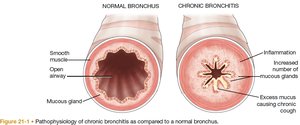
Figure: Comparison of normal bronchus and chronic bronchitis showing inflammation, increased mucus glands, and excess mucus production.
Risk Factors for COPD
Cigarette Smoking: Most significant risk factor
Environmental Exposures: Occupational dusts, chemicals, air pollution
Genetic Factors: Alpha1-antitrypsin deficiency
Other: Age, prior infections, lower socioeconomic status
Clinical Manifestations of COPD
Primary Symptoms: Chronic cough, sputum production, dyspnea
Advanced Disease: Dyspnea at rest, weight loss, barrel chest, retraction of supraclavicular fossae
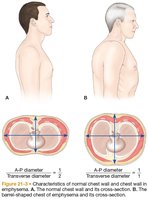
Figure: Comparison of normal chest wall and barrel-shaped chest of emphysema, illustrating increased anterior-posterior diameter.
Assessment and Diagnostic Findings
History and Physical Exam: Exposure to risk factors, symptom progression
Pulmonary Function Tests: Spirometry to confirm airflow obstruction
Imaging: Chest x-ray, high-resolution CT scan
Laboratory: Arterial blood gases, screening for alpha1-antitrypsin deficiency
Complications of COPD
Respiratory Insufficiency and Failure
Pneumonia, Chronic Atelectasis, Pneumothorax
Pulmonary Arterial Hypertension (Cor Pulmonale)
Medical and Pharmacologic Management of COPD
Management focuses on risk reduction, symptom control, and prevention of exacerbations.
Smoking Cessation: Most cost-effective intervention
Oxygen Therapy: For hypoxemia
Pharmacologic Therapy: Bronchodilators, inhaled corticosteroids, combination therapies
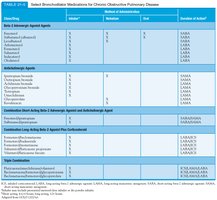
Table: Select bronchodilator medications for COPD, including beta2-agonists, anticholinergics, and combination agents.
Nursing Management of COPD
Educate patients about disease, progression, and treatment
Monitor for dyspnea, hypoxemia, and complications
Promote airway clearance: directed coughing, chest physiotherapy, increased fluid intake
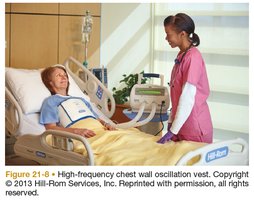
Figure: High-frequency chest wall oscillation vest used for airway clearance in COPD management.
Oxygen Therapy in COPD
Oxygen therapy is used to treat hypoxemia and improve quality of life. Various delivery devices are selected based on patient needs and oxygen requirements.
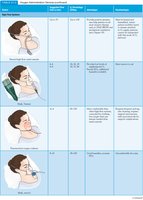
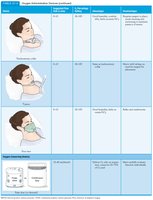
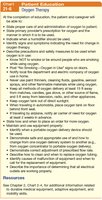
Figures: Oxygen delivery devices and patient education points for safe and effective oxygen therapy.
Bronchiectasis
Overview and Pathophysiology
Bronchiectasis is a chronic, irreversible dilation of the bronchi and bronchioles due to destruction of muscle and elastic tissue, often following recurrent infections or conditions such as cystic fibrosis. The disease is characterized by impaired mucociliary clearance, retention of secretions, and progressive respiratory insufficiency.
Key Features: Chronic cough, copious purulent sputum, hemoptysis, clubbing of fingers
Diagnosis: High-resolution CT scan showing bronchial dilation
Medical and Nursing Management of Bronchiectasis
Promote bronchial drainage and clear secretions (chest physiotherapy, postural drainage)
Prevent/control infection (antibiotics based on sensitivity studies)
Smoking cessation is critical
Energy conservation and nutritional support
Asthma
Overview and Pathophysiology
Asthma is a heterogeneous disease characterized by chronic airway inflammation, airway hyperresponsiveness, mucosal edema, and mucus production. Symptoms include recurrent episodes of cough, chest tightness, wheezing, and dyspnea. Asthma is largely reversible with treatment.
Triggers: Allergens, exercise, infections, weather changes
Inflammatory Cells: Mast cells, macrophages, T lymphocytes, neutrophils, eosinophils
Mediators: Histamine, bradykinin, leukotrienes
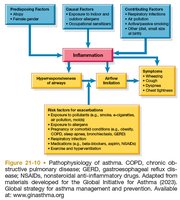
Figure: Pathophysiology of asthma and COPD, showing inflammation, airway hyperresponsiveness, and airflow limitation.
Clinical Manifestations and Diagnosis of Asthma
Symptoms: Cough, chest tightness, dyspnea, wheezing (often nocturnal or early morning)
Diagnosis: Episodic symptoms, partial reversibility, family history, environmental factors
Prevention and Complications of Asthma
Identify and avoid triggers (dust, mites, pets, molds, pollens)
Complications: Status asthmaticus, respiratory failure, pneumonia, atelectasis
Medical and Pharmacologic Management of Asthma
Prevent lung function impairment and exacerbations
Quick-relief medications (SABAs, anticholinergics) for acute symptoms
Long-acting medications (corticosteroids, LABAs, LAMAs, leukotriene modifiers, immunomodulators) for persistent asthma
Peak Flow Monitoring in Asthma
Peak flow monitoring measures the highest airflow during forced expiration and is used to assess asthma severity and control. It helps in early detection of exacerbations and guides self-management.
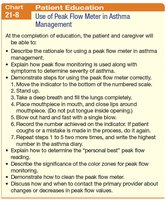
Figure: Patient education chart for proper use of peak flow meter in asthma management.
Nursing Management and Patient Education in Asthma
Assess respiratory status, monitor symptoms, and administer medications
Educate patients on disease nature, medication use, triggers, inhalation technique, and action plans
Promote adherence to therapy and follow-up care
Status Asthmaticus
Overview and Pathophysiology
Status asthmaticus is a severe, life-threatening asthma exacerbation unresponsive to conventional therapy. It is characterized by severe bronchospasm, mucus plugging, and ventilation-perfusion abnormalities leading to hypoxemia and respiratory failure.
Clinical Manifestations: Labored breathing, prolonged exhalation, distended neck veins, wheezing (may disappear as obstruction worsens)
Assessment: General and physical assessment, laboratory evaluation (ABGs, pulse oximetry)
Medical and Nursing Management of Status Asthmaticus
Close monitoring and objective reevaluation
Initial treatment: SABA (albuterol), systemic corticosteroids, supplemental oxygen, IV fluids
Magnesium sulfate for severe cases
Continuous monitoring, fluid management, and energy conservation
Cystic Fibrosis
Overview and Pathophysiology
Cystic fibrosis (CF) is the most common fatal autosomal recessive disease among White Americans, caused by mutations in the CFTR protein. This leads to thick, viscous secretions in the lungs, pancreas, and other organs, resulting in chronic respiratory infections and multi-organ involvement.
Key Features: Bronchial mucus plugging, inflammation, bronchiectasis
Common Mutation: F508 (over 2000 mutations identified)
Clinical Manifestations and Diagnosis of Cystic Fibrosis
Pulmonary: Productive cough, wheezing, hyperinflation, chronic infection
Non-pulmonary: Pancreatic insufficiency, recurrent pancreatitis, weight loss, diabetes, infertility
Diagnosis: Clinical picture and laboratory evidence of CFTR dysfunction
Medical and Nursing Management of Cystic Fibrosis
Multimodal antibiotic regimens, airway clearance, bronchodilators, CFTR modulators, nutritional support
Promote removal of secretions (CPT, postural drainage, chest percussion)
Prevent infections, educate on early signs, and provide nutritional counseling
