 뒤로
Control of Microbial Growth: Principles, Methods, and Applications
스터디 가이드 - 스마트 노트
 자료에 맞춘 맞춤형 노트, 핵심 정의, 예시, 맥락을 확장해 제공합니다.
Control of Microbial Growth
Introduction to Microbial Control
Microbial control is essential in healthcare, food processing, and everyday life to prevent infection, spoilage, and disease. Various methods and agents are used to reduce or eliminate microorganisms, each targeting specific microbial structures and functions.
Terminology of Microbial Control
Definitions and Concepts
Understanding the terminology is crucial for distinguishing between different levels and methods of microbial control.
Sterilization: Removal or destruction of all forms of microbial life, including endospores.
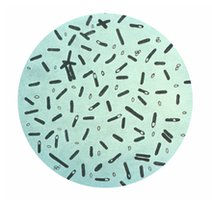
Commercial Sterilization: Limited heat treatment used in canned food processing; kills endospores of Clostridium botulinum.
Disinfection: Destruction of vegetative (non-endospore forming) microorganisms that may be harmful. Methods include chemicals, UV light, steam, and boiling water.
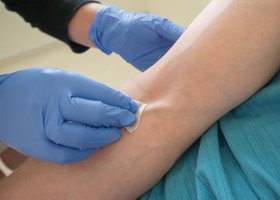
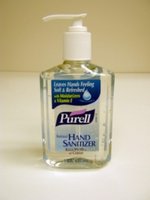
Antiseptic: Chemical used to destroy or inhibit microorganisms on living tissue.
Degerming: Removal of microbes from a limited region, often by mechanical means.
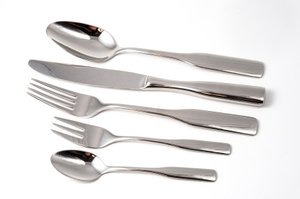
Sanitization: Lowering microbial counts on eating utensils to safe levels, typically by high-temperature washing or chemical disinfectants.
Sepsis: Indicates bacterial contamination.
Aseptic: Free of bacterial contamination.
-cide: Suffix meaning 'kill' (e.g., bactericide).
-stat/-stasis: Suffix meaning 'stop/steady' (e.g., bacteriostatic).
Rate of Microbial Death
Microbial Death Kinetics
The effectiveness of antimicrobial treatments is often measured by the rate at which microbes are killed.
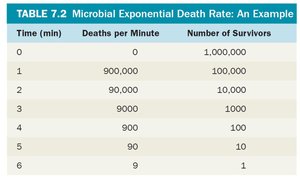
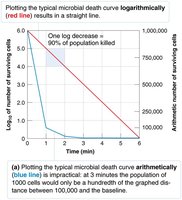
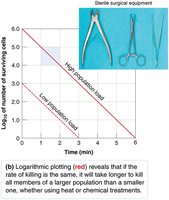
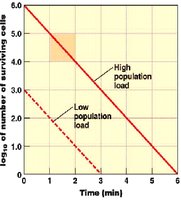
Microbial death occurs at a logarithmic rate.
Key parameters: Thermal Death Point (TDP), Thermal Death Time (TDT), and Decimal Reduction Time (DRT or D value).
DRT: Time in minutes in which 90% of a bacterial population will be killed at a given temperature.
Example Table:
Time (min) | Deaths per Minute | Number of Survivors |
|---|---|---|
0 | 0 | 1,000,000 |
1 | 900,000 | 100,000 |
2 | 90,000 | 10,000 |
3 | 9,000 | 1,000 |
4 | 900 | 100 |
5 | 90 | 10 |
6 | 9 | 1 |
Factors Affecting Antimicrobial Effectiveness
Key Determinants
Several factors influence the effectiveness of antimicrobial treatments:
Number of microbes: Higher populations require longer treatment times.
Environmental influences: Presence of organic matter, biofilms, and temperature can affect efficacy.
Time of exposure: Longer exposure increases effectiveness.
Microbial characteristics: Some microbes (e.g., endospores, mycobacteria) are more resistant.
Actions of Microbial Control Agents
Targeted Structures
Antimicrobial agents act by damaging key microbial structures:
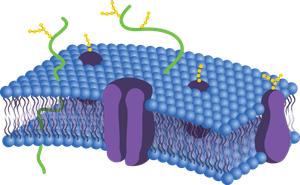
Plasma membrane: Agents disrupt lipids or proteins, altering permeability.
Proteins: Agents denature proteins by breaking hydrogen and covalent bonds.
Nucleic acids: Agents damage DNA or RNA, interfering with replication and protein synthesis.
Physical Methods of Microbial Control
Heat-Based Methods
Heat is a widely used method for microbial control, with several applications:
Moist Heat: Denatures proteins by breaking hydrogen bonds. Includes boiling, autoclaving (steam under pressure).
Boiling: Kills most bacteria, viruses, and fungi in 10 minutes; endospores may survive.
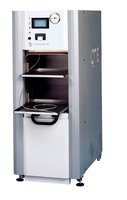
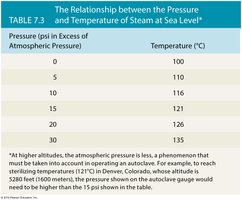
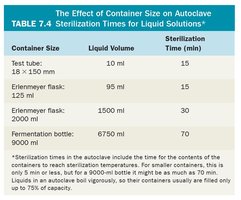
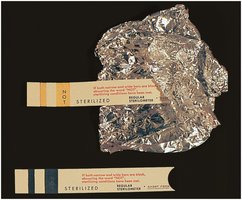
Autoclave: Preferred method for sterilization; kills all organisms and endospores in ~15 minutes at 121°C and 15 psi.
Pasteurization: Reduces spoilage organisms and pathogens by heating materials for a short time (e.g., milk at 72°C for 15 seconds).
Ultra-high-temperature (UHT): Sterilizes milk for storage without refrigeration (140°C for 4 seconds).
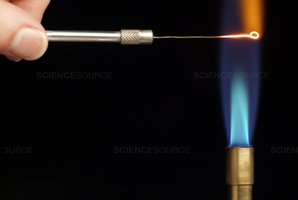
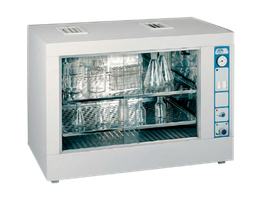
Dry Heat: Includes direct flaming, incineration, and hot-air sterilization (~170°C for 2 hours).
Other Physical Methods
Filtration: Removes microbes from liquids and air using HEPA and membrane filters.
Low Temperatures: Refrigeration slows microbial growth; freezing renders microbes dormant.
High Pressure: Alters molecular structures of carbohydrates and proteins; used for some fruit juices.
Desiccation: Absence of water prevents growth and reproduction.
Osmotic Pressure: High salt or sugar concentrations create hypertonic environments, inhibiting microbial growth.
Radiation: Ionizing (gamma rays, X-rays) and nonionizing (UV light) radiation damage DNA.
Chemical Methods of Microbial Control
Types of Disinfectants
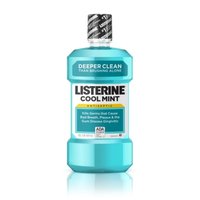
Chemical agents are used for disinfection, antisepsis, and preservation.
Phenol and Phenolics: Target lipid membranes; used historically in surgery.
Bisphenols: Two phenol molecules bridged together; used in disinfectants.
Biguanides (Chlorhexidine): Used for skin and mucous membrane microbial control.
Essential Oils: Plant extracts with antimicrobial properties.
Halogens (Iodine and Chlorine): Impair protein synthesis and alter cell membranes; chlorine forms hypochlorous acid, a strong oxidizer.
Alcohols: Denature proteins and disrupt membranes; effective against bacteria and fungi, not endospores.
Heavy Metals: Silver, mercury, copper, zinc; denature proteins via oligodynamic action.
Surface-Active Agents: Soaps and detergents for degerming; quaternary ammonium compounds (Quats) kill gram-positive bacteria, fungi, amoeba, and viruses.
Chemical Food Preservatives: Sulfur dioxide, sorbic acid, sodium benzoate, calcium propionate, sodium nitrate/nitrite; prevent spoilage and mold growth.
Antibiotics: Nisin and natamycin used in food preservation.
Aldehydes: Inactivate proteins by forming covalent crosslinks.
Gaseous Chemosterilizers: Sterilize in closed chambers.
Peroxygens: Hydrogen peroxide, peracetic acid, benzoyl peroxide, ozone; used for disinfection and sterilization.
Evaluating Disinfectant Effectiveness
Testing Methods
Use-Dilution Test: Metal cylinders dipped in test bacteria, exposed to disinfectant, then transferred to culture media to assess survival.
Disk-Diffusion Method: Agar plate inoculated with bacteria; filter paper soaked with disinfectant placed on agar; clear zone indicates effectiveness.
Microbial Characteristics and Resistance
Microbial Resistance
Microbial characteristics influence susceptibility to control methods.
Endospores: Highly resistant to heat, chemicals, and radiation.
Mycobacteria: Resistant due to waxy cell wall.
Viruses: Nonenveloped viruses are more resistant than enveloped viruses.
Applications and Historical Context
Historical Advances in Microbial Control
The development of microbial control methods has transformed healthcare and food safety.
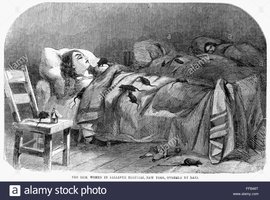
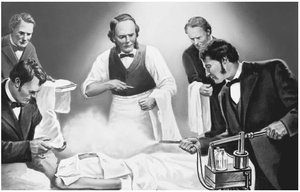
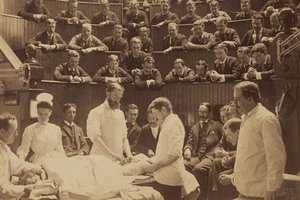
Early hospitals and wards suffered from poor sanitation and high infection rates.
Introduction of antiseptic techniques and sterilization revolutionized surgery and patient care.


Summary Table: Methods of Microbial Control
Method | Target | Application |
|---|---|---|
Heat (Moist/Dry) | Proteins, membranes | Sterilization, pasteurization |
Filtration | Microbes in liquids/air | Sterilization of heat-sensitive materials |
Radiation | DNA | Sterilization, disinfection |
Chemicals | Proteins, membranes, DNA | Disinfection, antisepsis, preservation |
Osmotic Pressure | Water availability | Food preservation |
Review Questions
Which is a limitation of the autoclave? Answer: It cannot be used for materials sensitive to heat.
Which is true of pasteurization? Answer: It is meant to eliminate pathogenic microbes.
Conclusion
Importance of Microbial Control
Effective microbial control is vital for preventing disease, ensuring food safety, and maintaining sterile environments in healthcare. Understanding the principles, methods, and factors influencing microbial control enables informed application in diverse settings. Additional info: Historical images included to illustrate the evolution of microbial control practices in healthcare.
