 뒤로
Controlling Microbial Growth in the Environment: Methods and Principles
스터디 가이드 - 스마트 노트
 자료에 맞춘 맞춤형 노트, 핵심 정의, 예시, 맥락을 확장해 제공합니다.
Controlling Microbial Growth in the Environment
The Selection of Microbial Control Methods
Microbial control methods are chosen based on their effectiveness, safety, and practicality. The ideal agent should be inexpensive, fast-acting, stable during storage, and capable of controlling microbial growth without harming humans, animals, or objects.
Key Point 1: Selection depends on the site to be treated; harsh chemicals and extreme heat are unsuitable for living tissues and delicate materials.
Key Point 2: The method is also determined by the type of medical procedure and the nature of the object or surface.
Factors Affecting the Efficacy of Antimicrobial Methods
The effectiveness of antimicrobial methods is influenced by several factors, including the site to be treated, the relative susceptibility of microorganisms, and environmental conditions.
Site to be Treated: Medical procedures require methods that are safe for patients and equipment.
Relative Susceptibility: Microorganisms vary in their resistance to antimicrobial agents. Prions and bacterial endospores are among the most resistant, while enveloped viruses are most susceptible.
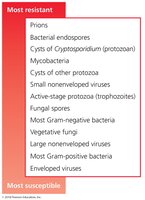
Germicide Classification:
High-level germicides: Kill all pathogens, including endospores.
Intermediate-level germicides: Kill fungal spores, protozoan cysts, viruses, and pathogenic bacteria.
Low-level germicides: Kill vegetative bacteria, fungi, protozoa, and some viruses.
Environmental Conditions: Temperature and pH affect microbial death rates and the efficacy of antimicrobial methods. Organic materials can interfere with the penetration of heat, chemicals, and radiation, and may inactivate chemical disinfectants.
Biosafety Levels
Biosafety levels (BSL) are established to ensure safe handling of pathogens in laboratory settings. There are four levels, each with increasing precautions.
BSL-1: Handling pathogens that do not cause disease in healthy humans.
BSL-2: Handling moderately hazardous agents.
BSL-3: Handling microbes in safety cabinets.
BSL-4: Handling microbes that cause severe or fatal disease. Workers use pressurized suits to prevent exposure to dangerous pathogens such as Ebola virus.
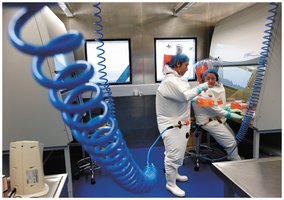
Example: BSL-4 laboratories are used for research on highly infectious viruses like Ebola, requiring maximum containment.
Physical Methods of Microbial Control
Heat-Related Methods
Heat is a common method for controlling microbial growth. High temperatures denature proteins, disrupt cell membranes and walls, and damage nucleic acids.
Thermal Death Point: The lowest temperature that kills all cells in a broth in 10 minutes.
Thermal Death Time: The time required to sterilize a volume of liquid at a set temperature.
Decimal Reduction Time (D): The time required to reduce the microbial population by 90% at a given temperature.
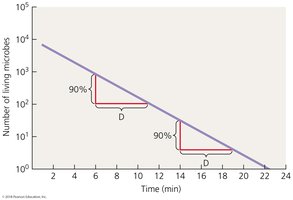
Moist Heat
Moist heat is more effective than dry heat for microbial control, as it denatures proteins and destroys cytoplasmic membranes. Common methods include boiling, autoclaving, pasteurization, and ultra-high-temperature sterilization.
Boiling: Kills vegetative cells of bacteria and fungi, protozoan trophozoites, and most viruses. Boiling time is critical and varies with elevation. Some endospores, protozoan cysts, and viruses can survive boiling.
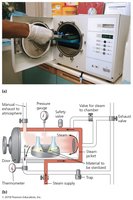
Autoclaving: Uses pressure to increase boiling temperature, allowing for sterilization. Standard conditions are 121°C, 15 psi, for 15 minutes.
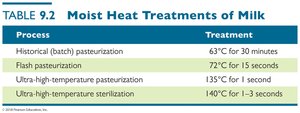
Pasteurization: Used for milk, ice cream, yogurt, and fruit juices. It is not sterilization; heat-tolerant microbes survive. Methods include batch, flash, and ultra-high-temperature pasteurization.
Ultra-high-temperature Sterilization: 140°C for 1–3 seconds, followed by rapid cooling. Treated liquids can be stored at room temperature.
Process | Treatment |
|---|---|
Historical (batch) pasteurization | 63°C for 30 minutes |
Flash pasteurization | 72°C for 15 seconds |
Ultra-high-temperature pasteurization | 135°C for 1 second |
Ultra-high-temperature sterilization | 140°C for 1–3 seconds |
Dry Heat
Dry heat is used for materials that cannot be sterilized with moist heat. It denatures proteins and oxidizes metabolic and structural chemicals, requiring higher temperatures and longer times. Incineration is the ultimate means of sterilization.
Refrigeration and Freezing
Low temperatures decrease microbial metabolism, growth, and reproduction. Refrigeration halts growth of most pathogens, but some microbes can multiply in refrigerated foods. Slow freezing is more effective than quick freezing, and organisms vary in susceptibility.
Desiccation and Lyophilization
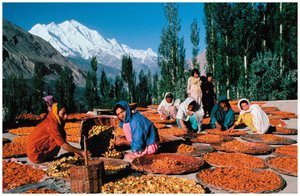
Desiccation (drying) inhibits microbial growth by removing water. Lyophilization (freeze-drying) is used for long-term preservation of microbial cultures, preventing the formation of damaging ice crystals.
Filtration
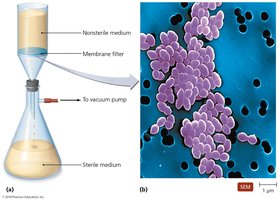
Filtration removes microbes from liquids and air by passing them through a filter with pores small enough to trap microorganisms. Membrane filters are used for sterilizing heat-sensitive fluids.
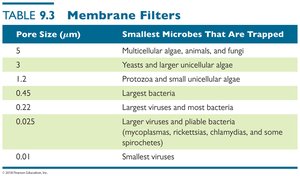
Pore Size (µm) | Smallest Microbes That Are Trapped |
|---|---|
5 | Multicellular algae, animals, and fungi |
3 | Yeasts and larger unicellular algae |
1.2 | Protozoa and small unicellular algae |
0.45 | Largest bacteria |
0.22 | Largest viruses and most bacteria |
0.025 | Larger viruses and pliable bacteria (mycoplasmas, rickettsias, chlamydias, and some spirochetes) |
0.01 | Smallest viruses |
HEPA Filters
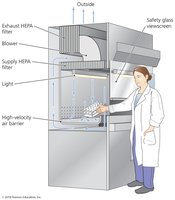
High-efficiency particulate air (HEPA) filters are used in biological safety cabinets to remove airborne microbes, providing a sterile environment for laboratory work.
Osmotic Pressure
High concentrations of salt or sugar inhibit microbial growth by creating a hypertonic environment, causing cells to lose water. Fungi are more resistant to osmotic pressure than bacteria.
