 뒤로
뒤로Controlling Microbial Growth: Physical and Chemical Methods
스터디 가이드 - 스마트 노트
 자료에 맞춘 맞춤형 노트, 핵심 정의, 예시, 맥락을 확장해 제공합니다.
Controlling Microbial Growth in the Environment
Growth Control Terminology
Understanding the terminology of microbial control is essential for effective application in clinical, laboratory, and industrial settings.
Sterilization: The complete destruction or removal of all forms of microbial life, including endospores and prions.
Aseptic: Refers to an environment or procedure free of pathogenic contaminants.
Disinfection/Disinfectants: The use of physical or chemical agents to destroy most microbes on inanimate objects; does not guarantee elimination of all pathogens.
Antisepsis/Antiseptic: Reduction in the number of microorganisms and viruses, particularly potential pathogens, on living tissue.
Degerming: Removal of microbes from a surface by mechanical means (e.g., handwashing, swabbing skin with alcohol).
Sanitization: The process of disinfecting places and utensils used by the public to reduce the number of pathogens to meet accepted public health standards.
Pasteurization: The use of heat to kill pathogens and reduce the number of spoilage microorganisms in foods and beverages.
Suffix –stasis/-static: Indicates inhibition but not complete destruction of a type of microbe (e.g., bacteriostatic).
Suffix –cide/-cidal: Indicates destruction of a type of microbe (e.g., bactericidal).
Microbial Death Rates
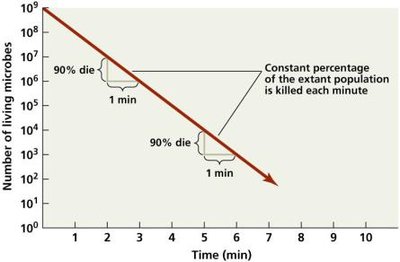
Microbial agents kill a constant percentage of cells over time, rather than simultaneously killing all cells. This is described by the microbial death rate, which is logarithmic.
Death rate is typically expressed as the percentage of the population killed per unit time.
Fewer organisms present = faster achievement of sterility.
Selection and Effectiveness of Antimicrobial Agents
The ideal antimicrobial agent is inexpensive, fast-acting, stable during storage, broad-spectrum, and harmless to humans, animals, and objects. Effectiveness depends on:
Nature of the site to be treated (e.g., skin, surgical instruments, surfaces).
Susceptibility and number of microbes involved.
Environmental conditions during application (e.g., temperature, pH, organic matter).
Susceptibility of Microorganisms
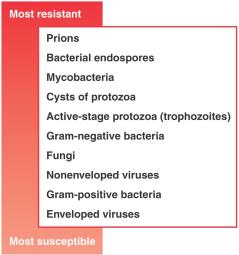
Microorganisms vary in their resistance to antimicrobial agents. The following table summarizes the relative resistance of different types:
Most Resistant | Most Susceptible |
|---|---|
Prions | Enveloped viruses |
Bacterial endospores | Gram-positive bacteria |
Mycobacteria | Nonenveloped viruses |
Cysts of protozoa | Fungi |
Active-stage protozoa (trophozoites) | Gram-negative bacteria |
Mode of Action: Antimicrobial Agents
Antimicrobial agents act by targeting essential cellular structures and functions:
Cell wall damage: Weakens rigidity, leading to cell lysis due to osmotic effects.
Cell membrane damage: Disrupts selective permeability, loss of proton gradient, and ATP production; enveloped viruses lose infectivity.
Protein damage: Denaturation or misfolding of enzymes halts metabolism and replication.
Nucleic acid damage: Inhibits DNA/RNA replication and protein synthesis, preventing cell division.
Evaluating Disinfectants and Antiseptics
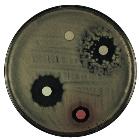
Effectiveness is commonly tested using diffusion susceptibility tests (e.g., disk diffusion method):
Swabs are taken before and after application, inoculated into growth medium, and monitored for microbial growth.
Zones of inhibition indicate effectiveness.
Physical Methods of Microbial Control
Heat-Related Methods
Heat is one of the most common physical methods for controlling microbial growth. It denatures proteins, disrupts cell membranes, and damages nucleic acids.
Moist heat (e.g., autoclaving, boiling, pasteurization) is more effective than dry heat due to better heat transfer.
Dry heat (e.g., hot air ovens, incineration) is used for materials that cannot be sterilized by moist heat.
Moist Heat Sterilization
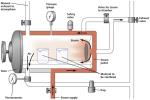
Autoclaving: Uses pressurized steam (121°C, 15 psi) to sterilize media and equipment.
Boiling: Kills most vegetative cells but not endospores or some viruses.
Pasteurization: Reduces microbial load in foods and beverages without sterilizing.
Dry Heat Sterilization
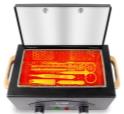
Requires higher temperatures and longer times (e.g., 2 hours at ≥180°C).
Suitable for glassware and metal instruments, but not plastics or rubber.
Incineration
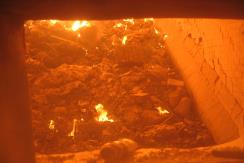
Ultimate means of sterilization; destroys all forms of life, including prions.
Used for disposal of contaminated materials and carcasses (e.g., prion-infected animals).
Low Temperature Methods
Refrigeration: Inhibits growth by slowing metabolism; bacteriostatic, not bactericidal.
Freezing: Further inhibits growth; ice crystals can cause cell lysis upon thawing.
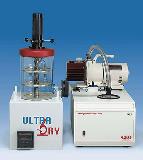
Lyophilization (freeze-drying): Removes water under vacuum at low temperature, preventing ice crystal formation and preserving cultures long-term.

Desiccation
Desiccation inhibits microbial growth by removing water, creating a hypertonic environment. It is a static process, not cidal. Some microbes (e.g., endospores, cysts) can survive and be rehydrated.
Filtration
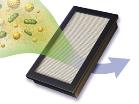
Filtration is used to sterilize heat-sensitive fluids and air by physically removing microbes based on pore size. High-Efficiency Particulate Air (HEPA) filters are used in biological safety cabinets and hospital settings.
Pore Size (μm) | Microbes Trapped |
|---|---|
5 | Multicellular algae, animals, fungi |
0.45 | Largest bacteria |
0.22 | Most bacteria, largest viruses |
0.01 | Smallest viruses |

Radiation
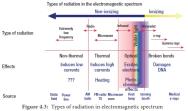
Radiation is used to sterilize heat-sensitive materials. It is divided into ionizing and nonionizing forms:
Ionizing radiation (e.g., gamma rays, X-rays): Damages DNA and creates free radicals, leading to microbial death.
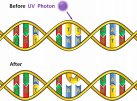
Nonionizing radiation (e.g., UV light): Causes thymine dimers in DNA, inhibiting replication and transcription.
Chemical Methods of Microbial Control
Major Categories of Chemical Agents
Phenols and Phenolics: Denature proteins and disrupt membranes; effective in presence of organic matter.
Alcohols: Denature proteins and disrupt membranes; rapid evaporation limits contact time.
Halogens: Damage enzymes by denaturation; broad-spectrum (e.g., chlorine, iodine).
Oxidizing Agents: Kill by oxidation of enzymes and membrane lipids (e.g., hydrogen peroxide, ozone).
Surfactants: Reduce surface tension; soaps are degerming agents, detergents (quats) disrupt membranes.
Heavy Metals: Denature proteins (e.g., silver nitrate, thimerosal, copper sulfate).
Aldehydes: Cross-link functional groups in proteins and nucleic acids (e.g., formaldehyde, glutaraldehyde).
Gaseous Agents: Denature proteins and DNA (e.g., ethylene oxide); used in closed chambers.
Enzymes: Digest microbial cell walls (e.g., lysozyme in tears, prionzyme for prion removal).
Antimicrobics: Antibiotics, semisynthetics, and synthetics; used for treatment and sometimes for environmental control.
Examples and Applications
Phenolics: Used in healthcare and household disinfectants (e.g., Lysol, triclosan).
Alcohols: 70% ethanol or isopropanol for skin antisepsis before injections.
Halogens: Iodine for skin disinfection, chlorine for water treatment, bleach for surfaces.
Heavy Metals: Silver nitrate for neonatal eye prophylaxis, copper sulfate for algal control.
Surfactants: Soaps for handwashing, quats for surface disinfection.
Oxidizing Agents: Hydrogen peroxide for surface sterilization, ozone for water treatment.
Aldehydes: Glutaraldehyde for instrument sterilization, formalin for tissue preservation.
Gaseous Agents: Ethylene oxide for sterilizing medical equipment.
Enzymes: Lysozyme in tears, prionzyme for decontaminating surgical instruments.
Antimicrobial Agents and Selective Toxicity
Good antimicrobial agents exhibit selective toxicity, targeting structures or enzymes unique to microorganisms (e.g., cell wall synthesis, protein synthesis, membrane structure, nucleic acid synthesis, metabolic pathways).
Cell wall synthesis inhibitors: Penicillins, cephalosporins, bacitracin
Protein synthesis inhibitors: Erythromycin, tetracycline, streptomycin
Membrane disruptors: Polymyxins
Nucleic acid synthesis inhibitors: Rifampicin, novobiocin, quinolones
Metabolic pathway inhibitors: Trimethoprim, sulfanilamide
