 뒤로
Diversity and Molecular Biology of Archaea: Structure, Metabolism, and Adaptations chapter 17
스터디 가이드 - 스마트 노트
 자료에 맞춘 맞춤형 노트, 핵심 정의, 예시, 맥락을 확장해 제공합니다.
Ch17
Diversity of Archaea
Tree of Life
Domain (very well organized, 3 main)
Kingdom (plant animal or fungus)
Phylum - has an -es in old times but now often -ota
Class -
Order - ends in -ales
Family - ends in -aceae
Species
Genus
(strain) - strain vary a lot for their characteristic for bacteria - ends in ATCC 123
Major Groups of Archaea
The domain Archaea comprises several distinct groups, each adapted to extreme environments and possessing unique metabolic pathways. The main phyla include Euarchaeota, Crenarchaeota, Thaumarchaeota, Korarchaeota, and Nanoarchaeota. These groups are phylogenetically diverse and exhibit a range of ecological and physiological traits.
Extreme Halophiles: Thrive in high-salt environments, such as salt lakes.
Methanogens: Produce methane as a metabolic byproduct, often found in anaerobic environments.
Extreme Thermophiles: Survive at very high temperatures, including hot springs and hydrothermal vents.
Thaumarchaeota: Ammonia-oxidizing archaea, important in nitrogen cycling.
Korarchaeota: Not cultured, found in hot springs, possibly close to the ancestor of Archaea.
Nanoarchaeota: Smallest known archaeal genome, often parasitic.
Prokaryotic Cell Structure: Bacteria and Archaea
General Cell Structure
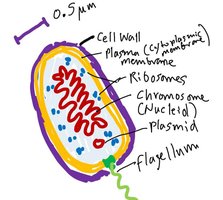
Both Bacteria and Archaea are prokaryotes, lacking a membrane-bound nucleus. Their cell structure includes a cell wall, plasma membrane, ribosomes, chromosome (nucleoid), plasmids, and flagella.In archaea the flagella is replaced by the archaella.
Cell Wall: Provides structural support and protection.
Plasma Membrane: Controls transport of substances in and out of the cell.
Ribosomes: Sites of protein synthesis.
Chromosome (Nucleoid): Contains the genetic material.
Plasmid: Small, circular DNA molecules with additional genes.
Flagellum: Enables motility.
Archaeal Cell Membranes
Unique Membrane Lipids
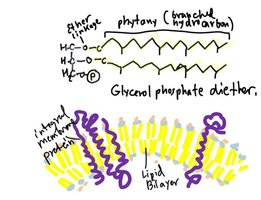
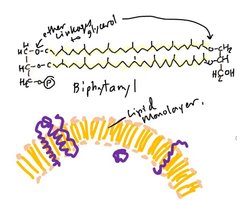
Archaea possess distinctive membrane lipids compared to Bacteria and Eukarya. Their membranes are composed of ether-linked lipids, which confer stability in extreme environments. Memebrane monolayer Biphytanyl ether layer.
Glycerol phosphate diether: Forms a lipid bilayer with branched phytanyl chains.
Biphytanyl monolayer: Found in extreme thermophiles, provides additional stability.
Integral membrane proteins: Embedded within the lipid bilayer or monolayer.
Cell Wall Structure in Archaea
Pseudomurein (Pseudopeptidoglycan)
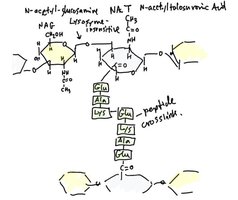
Many Archaea have cell walls composed of pseudomurein, which differs from bacterial peptidoglycan becuase it has a different modified carbohydrate. Pseudomurein is resistant to lysozyme and consists of N-acetylglucosamine and N-acetyltalosaminuronic acid, cross-linked by peptides.
Lysozyme resistance: Due to unique sugar linkages.
Peptide crosslinks: Provide structural integrity.
S-Layer Glycoproteins
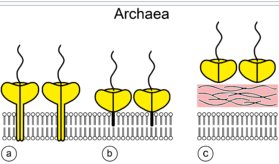
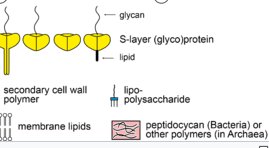
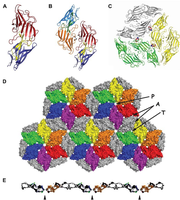
Many Archaea possess a glycoprotein S-layer as their main cell wall component, which provides protection and structural support. Forms a hexagonal layer on the surface of the cell.
S-layer: Composed of glycoproteins, forms a crystalline lattice.
Secondary cell wall polymers: May be present in some species.
Molecular Biology of Archaea
Genome Organization
Archaeal genomes are typically circular, haploid, and densely packed with genes organized in operons. Genome sizes range from 0.5 to 5.8 million base pairs.
Chromosomes: Circular, haploid.
Operons: Genes grouped for coordinated expression, often dense.
DNA Gyrase: Similar to bacteria, helps in supercoiling DNA.
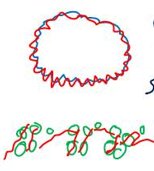
Histones: Euarchaeota have histones forming tetramers in nucleosomes (often 4).
Origins of replication: 1-3 per genome.
Dna polymeasre and helicase resemble Eukarya
Share general transricition factors with eukarya.
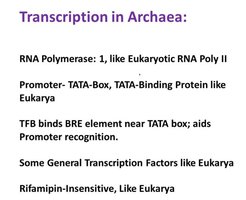
Transcription in Archaea
Archaeal transcription machinery shares similarities with Eukarya, including the use of TATA-box promoters and general transcription factors.
RNA Polymerase: Single type, similar to eukaryotic RNA polymerase II.
Promoter: TATA-box, TATA-binding protein (TBP).
TFB: Binds BRE element near TATA box, aids promoter recognition.
General transcription factors: Similar to Eukarya.
Rifampicin-insensitive: Like Eukarya.
Translation in Archaea
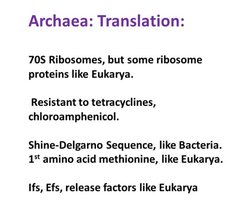
Archaeal translation combines features of both Bacteria and Eukarya. Ribosomes are 70S, but some ribosomal proteins are eukaryotic-like.
Ribosomes: 70S, resistant to tetracyclines and chloramphenicol.
Shine-Dalgarno sequence: Used for translation initiation, like Bacteria.
First amino acid: Methionine, like Eukarya.
Translation factors: IFs, EFs, release factors similar to Eukarya.
Metabolic Diversity in Archaea
Chemoheterotrophs and Chemoautotrophs
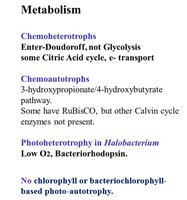
Archaea exhibit diverse metabolic strategies, including chemoheterotrophy and chemoautotrophy. Some utilize the Entner-Doudoroff pathway instead of glycolysis, and certain citric acid cycle variants.
Chemoheterotrophs: Use organic compounds for energy; Entner-Doudoroff pathway for oxocidsing glucose, not glycolysis. Some do have a citric acid cycle, and some e-transport
Chemoautotrophs: Fix CO2 via 3-hydroxypropionate/4-hydroxybutyrate pathway; some have RuBisCO but other Calvin cycle enzymes are not present.
Photoheterotrophy: In Halobacterium, uses bacteriorhodopsin under low O2 conditions.
No chlorophyll-based photoautotrophy: Unlike Bacteria and Eukarya.
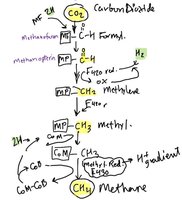
Methanogens- producing methane fro CO2
Halobacterium and Extreme Halophiles
Adaptations to High Salt
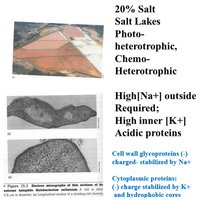
Halobacterium salinarum (relatively easy to culture) is a model extreme halophile, thriving in environments with up to 20% salt concentration (salt lkaes that are highly concentrated seawater). These organisms are photoheterotrophic and chemoheterotrophic (organic acids for a source of carbon), requiring high external Na+ and maintaining high internal K+ concentrations (like 3 or 4 molar).
Cell wall glycoproteins (negatively charged): Stabilized by Na+.
Cytoplasmic proteins: Stabilized by K+ and hydrophobic cores.
Acidic proteins: Adapted to high salt.
energy from sunlight used for ATP synthesis
Bacteriorhodopsin-Based Photosynthesis
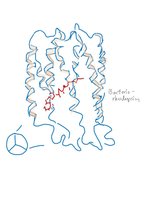
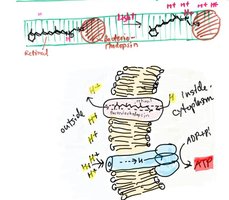
Halobacterium uses bacteriorhodopsin for a unique form of photosynthesis. When retinal in bacteriorhodopsin absorbs a photon, it changes conformation, moving H+ across the membrane and generating a proton gradient for ATP synthesis.
Bacteriorhodopsin: Light-driven proton pump.
Retinal: Chromophore that changes from trans to cis upon photon absorption.
ATP synthase: Utilizes the proton gradient to produce ATP.
Retinal goes from trans to cis across plasma membrane and then go back through ATP synthesis to create .
Methanogens and Methanogenesis
Methanogenic Pathways
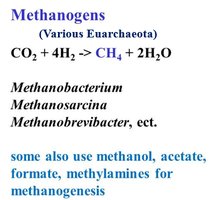
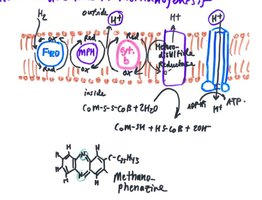
Methanogens are a group of Archaea that produce methane from CO2 and H2, or from other C-compounds such as methanol, acetate, formate, and methylamines. (various Euarchaeota) The process involves unique cofactors and generates a proton gradient for ATP synthesis.
Key reaction:
In Methanogenesis, a cO2 molecule is reduced and attached to an enzyme cofactor, then reduced further, via addition of H, to methane, which is released.
Unique cofactors: Found only in methanogens and some methylotrophs.
Proton gradient: Drives ATP synthase.
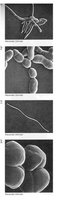
Example genera: Methanobacterium, Methanosarcina, Methanobrevibacter.
Hyperthermophilic Archaea
Adaptations to High Temperature
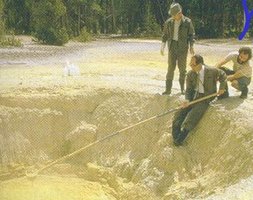
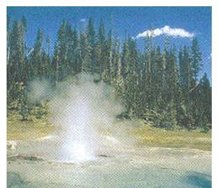
Hyperthermophilic Archaea thrive at temperatures between 70-110°C. They are mainly chemoautotrophs, some are anaerobic chemoheterotrophs, and some are extreme acidophiles. Adaptations include high GC content in DNA, reverse gyrase, and DNA-stabilizing proteins. think Yellowstone National Park.
High GC content: Increases DNA stability.
Reverse gyrase: Introduces positive supercoils, stabilizing DNA.
Very high C-G verus A-T content in DNA
Chaperon proteins, Gro-el Gro-es
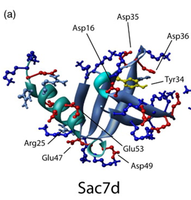
DNA-stabilizing proteins: Such as Sac7d in Sulfolobus.
Korarchaeota and Nanoarchaeota
Korarchaeota
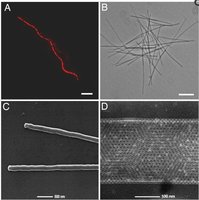
Korarchaeota are not cultured but have been found in hot springs. The genome of Candidatus Korarchaeum cryptofilum has been sequenced, revealing long, thin cells with an S-layer and a genome size of 1.59 MBP. They are likely chemoheterotrophs, possibly close to the ancestor of Archaea.
Nanoarchaeota
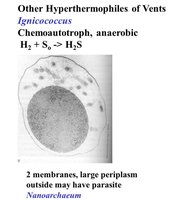
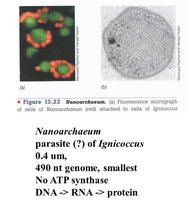
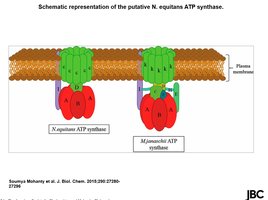
Nanoarchaeum is a parasite of Ignicoccus, with a very small genome (490 nt) and no ATP synthase. It relies on its host for energy and basic metabolic functions. Sulfur resperation.
Thaumarchaeota: Ammonia-Oxidizing Archaea
Metabolic Pathways
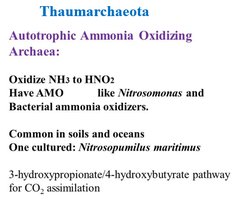
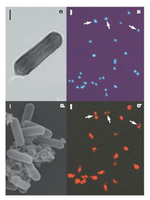
Thaumarchaeota are autotrophic ammonia oxidizers, converting NH3 to HNO2 using ammonia monooxygenase (AMO), similar to Nitrosomonas and bacterial ammonia oxidizers. They are common in soils and oceans, with Nitrosopumilus maritimus as a cultured example.
CO2 assimilation: 3-hydroxypropionate/4-hydroxybutyrate pathway.
Origgin of Eukarya: Asgardian Archaeota (Thorarchaeota, Lokiachaeota and others)? (marvel Thor and Loki)
not cultured, reconstructed from metagenomic DNA libraries from deep undersea hot water vents
Proteins involved in vesicular transport?
close homologues of eukaryotic actin and tubulin
Questions for Discussion
Compare the system for photosynthesis in Halobacterium with that for photosynthesis in Cyanobacteria. Halobacterium uses bacteriorhodopsin, a light-driven proton pump, while Cyanobacteria use chlorophyll-based photosystems. No chlorophyll or bacteriochlorophyll-based photoautotrophy occurs in Halobacterium. The only similarity is the use of a proton gradient for ATP synthesis.
What C-compounds may be used by methanogens, and what do they produce? Methanogens use CO2, methanol, acetate, formate, and methylamines, producing methane. Bacteria supply these compounds via fermentation and decomposition, while other bacteria and archaea may use methane as a substrate.
What adaptations to high temperature are found in hyperthermophiles? High GC content, reverse gyrase, and DNA-stabilizing proteins. The highest temperature likely for life is around 110°C.
What sorts of chemoautotrophic metabolism are prevalent in many Archaea, especially hyperthermophiles? CO2 fixation via 3-hydroxypropionate/4-hydroxybutyrate pathway, sulfur respiration, and hydrogen oxidation.
What sorts of bacterial metabolic pathways (catabolic and biosynthetic) are not present in Archaea? Archaea lack glycolysis (use Entner-Doudoroff pathway), and some Calvin cycle enzymes are absent.
Define methylotrophs and methanotrophs. What enzymes do these microbes have, and what is their importance? Methylotrophs use single-carbon compounds (e.g., methanol) for growth; methanotrophs use methane. They possess enzymes such as methanol dehydrogenase and methane monooxygenase, important for carbon cycling.
What group of bacteria does Nitrosopumilus resemble in terms of its metabolism and habitats? What metabolic enzymes do the bacteria have that are absent in Nitrosopumilus? Nitrosopumilus resembles Nitrosomonas (ammonia oxidizers). Bacteria have some Calvin cycle enzymes absent in Nitrosopumilus.
Summary Table: Key Features of Archaeal Groups
Group | Habitat | Metabolism | Cell Wall | Genome |
|---|---|---|---|---|
Halobacterium | Salt lakes | Photoheterotrophic, chemoheterotrophic | S-layer, glycoproteins | ~2-5 MBP |
Methanogens | Anaerobic environments | Methanogenesis (CO2 + H2 → CH4) | Pseudomurein, S-layer | ~1-3 MBP |
Hyperthermophiles | Hot springs, vents | Chemoautotrophic, sulfur respiration | S-layer, monolayer membrane | ~1-2 MBP |
Thaumarchaeota | Soils, oceans | Ammonia oxidation | S-layer | ~1-2 MBP |
Korarchaeota | Hot springs | Chemoheterotrophic | S-layer | 1.59 MBP |
Nanoarchaeota | Marine vents | Parasitic | S-layer | 490 nt |
Additional info: Some details were inferred from context and standard microbiology knowledge to ensure completeness and clarity.
