 뒤로
뒤로Domain Archaea: Structure, Function, and Unique Features
스터디 가이드 - 스마트 노트
 자료에 맞춘 맞춤형 노트, 핵심 정의, 예시, 맥락을 확장해 제공합니다.
Domain Archaea
Introduction to Archaea
The domain Archaea represents a distinct group of prokaryotic microorganisms that share characteristics with both Bacteria and Eukarya, yet possess unique features that set them apart. Archaea are best known for their ability to thrive in extreme environments, but they are also found in more moderate habitats.
Shared features with Eukarya: Similarities in protein-coding gene structure, including mechanisms of replication, transcription, and translation.
Shared features with Bacteria: Presence of common genes for metabolism.
Unique features: Distinct rRNA gene structure and the ability to perform methanogenesis (production of methane).
Habitats and Ecological Roles
Archaea are renowned for their ability to inhabit extreme environments, but they are also present in more temperate ecosystems.
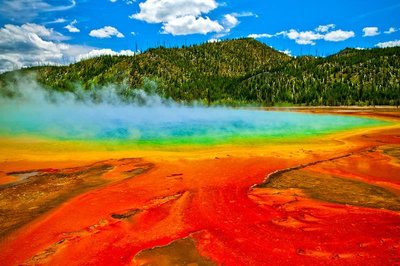
Extreme environments: Hypersaline lakes, acidic hot springs, and high-temperature habitats such as hydrothermal vents.
Other environments: Marine arctic waters and tropical seas.
Archaeal Morphology
Size, Shape, and Arrangement
Archaea display a variety of shapes and sizes, some of which are similar to those found in Bacteria, while others are unique.
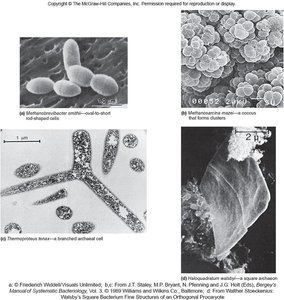
Common shapes: Cocci (spherical) and bacilli (rod-shaped).
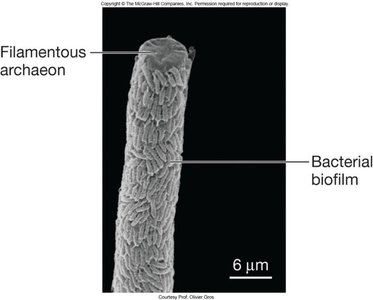
Other shapes: Branched, flat, and filamentous forms; no spirochetes or mycelial forms have been observed.
Size range: Typically 1–2 × 1–5 μm for rods, 1–5 μm in diameter for cocci; smallest observed is 0.2 μm, largest multicellular forms can reach 30 mm in length.
Cell Envelope Structure
General Features
The cell envelopes of Archaea differ significantly from those of Bacteria in both composition and organization.
S-layer: May be the only component outside the cell membrane.
Cell wall: Some Archaea lack a cell wall entirely; capsules and slime layers are rare.
Archaeal Cell Membranes
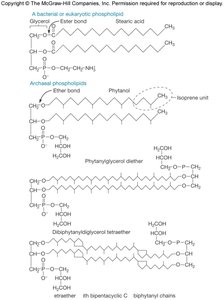
Archaeal membranes are composed of unique phospholipids that distinguish them from bacterial and eukaryotic membranes.
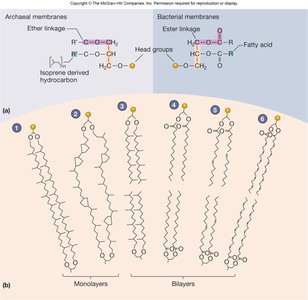
Phospholipid structure: Contain isoprene units (branched five-carbon molecules) instead of fatty acids.
Linkages: Ether linkages to glycerol, rather than the ester linkages found in Bacteria and Eukarya.
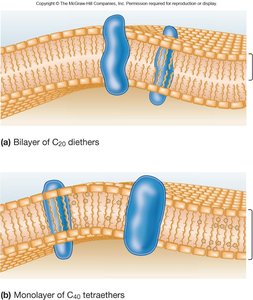
Membrane structure: Some Archaea have a phospholipid monolayer instead of a bilayer, which increases membrane stability in extreme environments.
Cell Wall Composition
Archaeal cell walls are distinct from those of Bacteria, lacking peptidoglycan and often featuring unique components.
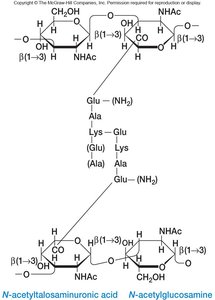
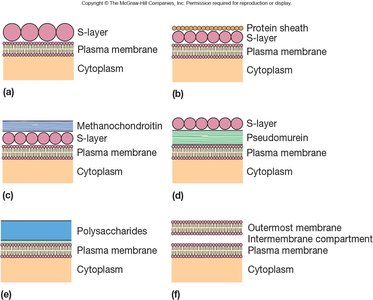
Absence of peptidoglycan: Instead, some Archaea possess pseudopeptidoglycan (pseudomurein), S-layers, or protein sheaths.
S-layer: The most common cell wall component, sometimes separated from the membrane by pseudopeptidoglycan.
Other components: Some Archaea have polysaccharide or protein sheaths external to the S-layer.
Internal Structures
Cytoplasm and Nucleoid
Archaeal cytoplasm contains structures similar to those found in Bacteria, with some unique features.
Ribosomes: 70S in size, similar to Bacteria.
Nucleoid: Irregularly shaped region containing the chromosome and associated proteins; not membrane-bound.
Chromosome: Usually a single, circular double-stranded DNA molecule.
Inclusion bodies: Present in some Archaea for storage of nutrients.
Nucleoid proteins: Includes histones (unlike Bacteria), Alba, and condensins, which aid in DNA folding and supercoiling.
Surface Structures and Motility
Flagella
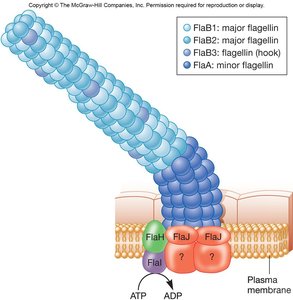
Archaeal flagella are structurally and functionally distinct from bacterial flagella.
Structure: Thinner than bacterial flagella, composed of multiple types of flagellin proteins, and not hollow.
Basal body and hook: Less distinct than in Bacteria.
Related systems: More closely related to Type IV secretion systems than to bacterial flagella.
Comparison of Bacterial and Archaeal Cells
Key Differences and Similarities
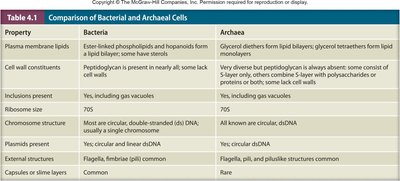
The following table summarizes the main differences and similarities between Bacteria and Archaea in terms of cell structure and function.
Property | Bacteria | Archaea |
|---|---|---|
Plasma membrane lipids | Ester-linked phospholipids and hopanoids form lipid bilayers; some have sterols | Glycerol diethers form lipid bilayers; glycerol tetraethers form lipid monolayers |
Cell wall constituents | Peptidoglycan is present in nearly all; some lack cell walls | Very diverse but peptidoglycan is always absent; some consist of S-layer only, some combine S-layer with polysaccharides or proteins; some lack cell walls |
Inclusions present | Yes, including gas vesicles | Yes, including gas vesicles |
Ribosome size | 70S | 70S |
Chromosome structure | Most are circular, double-stranded (ds) DNA; usually a single chromosome | All known are circular, dsDNA |
Plasmids present | Yes; circular and linear dsDNA | Yes; circular dsDNA |
External structures | Flagella, fimbriae (pili) common | Flagella, pili, and piluslike structures common |
Capsules or slime layers | Common | Rare |
Summary
Archaea are a unique domain of life with distinct structural, biochemical, and genetic features. Their adaptations allow them to thrive in some of the most extreme environments on Earth, and their study provides insight into the diversity and evolution of cellular life.
