 뒤로
뒤로Ecological Diversity of Bacteria: Metabolic Strategies and Functional Roles Ch 15
스터디 가이드 - 스마트 노트
 자료에 맞춘 맞춤형 노트, 핵심 정의, 예시, 맥락을 확장해 제공합니다.
Ecological Diversity of Bacteria Ch 11
Phylogenetic vs. Ecological Diversity
Bacterial diversity can be described both phylogenetically (evolutionary relationships) and ecologically (functional roles and metabolisms). However, these two types of diversity do not always correspond: a single taxon may encompass a wide range of metabolic capabilities due to convergent evolution and horizontal gene transfer.
Convergent evolution: Different enzymes or pathways evolve independently to perform similar functions.
Horizontal gene transfer: Genes are transferred between unrelated bacteria, spreading metabolic traits.
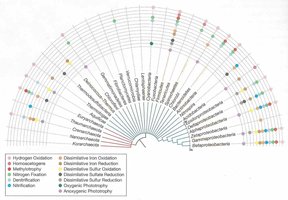
Ecological Niches (ways of life) of Major Microbial Phyla
Bacteria occupy a wide range of ecological niches, with major phyla such as Proteobacteria (know called Pseudomonacdata) and Firmicutes (know know as Bacilliote) displaying diverse metabolic strategies. However, oxygenic photosynthesis is restricted to Cyanobacteria. Figure Above
Photosynthetic Metabolisms in Bacteria
Oxygenic Photosynthesis
Oxygenic photosynthesis is the process by which light energy is used to convert CO2 and H2O into organic molecules and O2. Has electrons from water going into the electron transport chain prducing oxygen, prtons and electron, which produces energy that can be used in Kelin cycle. This process is unique to Cyanobacteria among prokaryotes.
Key pigments: Chlorophyll a and phycobilins
Primary producers: Abundant in aquatic environments
Nitrogen fixation: Some can fix atmospheric N2
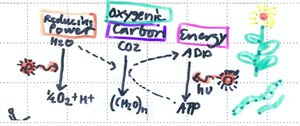
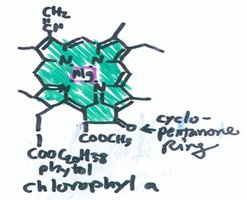
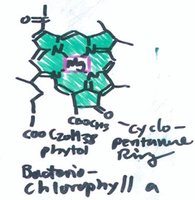
Photosynthetic Pigments
Chlorophyll a: Main pigment in oxygenic photosynthesis
Bacteriochlorophyll: Used in anoxygenic photosynthesis
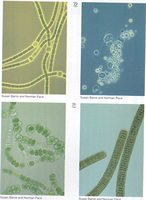
Cyanobacteria
Cyanobacteria are photoautotrophic bacteria that perform oxygenic photosynthesis. They are important primary producers in aquatic systems and can also fix nitrogen.
Contain chlorophyll a and phycobilins (blue green pigemnt)
Abundant in freshwater and sea
Can form blooms that affect water quality making it poor
primary producers that everybody feeds on
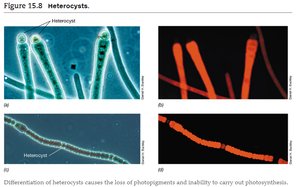
Some species form specialized cells called heterocysts for nitrogen fixation
Heterocysts in Cyanobacteria
Heterocysts are specialized cells in some cyanobacteria where nitrogen fixation occurs. These cells lack photosystem II activity to protect the nitrogenase enzyme from oxygen. Figure below.
Nitrogenase: Enzyme complex responsible for N2 fixation. Nitrogenase in inhibited by the O2 generated by oxygenic photosythesis.
Heterocysts are clear, thick-walled cells interspersed among vegetative cells
Heterocystas lack choorphyl and don't floursence.
Anoxygenic Photosynthesis
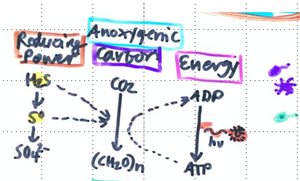
Anoxygenic photosynthesis is carried out by several groups of bacteria using electron donors other than water (e.g., H2S), and does not produce oxygen. Source electrons is H2S (sulfide) which is oxidiased to sulfur and eventually to sulfate, in some cases the electron can come from organic molecules like organic acids. Lots of variablity in anoxygenic photosynthesis.
Pigments: Bacteriochlorophylls
Electron donors: H2S, organic acids, Fe2+
Purple Sulfur Bacteria
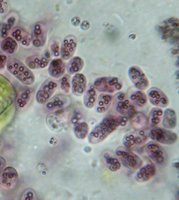
These bacteria (e.g., Chromatium) perform anoxygenic photosynthesis using H2S as an electron donor, forming intracellular sulfur granules. They are found in sunlit, anaerobic environments rich in sulfide (and Winogradsky Columns the swamp water things we did). Coverts H2S to elementental sulfur and then to sulfate.
Fix CO2 via the Calvin cycle
Store elemental sulfur (S0) inside cells
Purple Non-Sulfur Bacteria
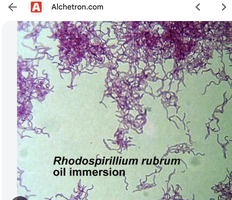
These bacteria (e.g., Rhodobacter, Rhodospirillum) are facultative anaerobes that can use organic acids as electron donors for anoxygenic photosynthesis. They are found in sunlit, organic-rich aquatic environments (like swamps with lower sulfate and sulfide) and can fix nitrogen. Their electron donor is often organic acids dissolved in water over H2S . They are photheterotrophic.
Green Sulfur Bacteria
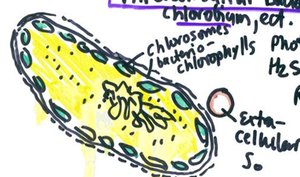
Green sulfur bacteria (e.g., Chlorobium) perform anoxygenic photosynthesis with H2S as the electron donor, resulting in forming extracellular sulfur outside the cell. They contain bacteriochlorophyll in chlorosomes (the green oval in the figure below) and fix CO2 via the reverse citric acid cycle. fixes carbon dioxide with reverse citric acid cycle
Chemoautotrophic and Mixotrophic Bacteria
Sulfur-Oxidizing Bacteria
These bacteria oxidize reduced sulfur compounds (e.g., H2S, S0, S2O32-) to sulfate, often storing sulfur intracellularly. Some are mixotrophic, capable of both autotrophic and heterotrophic growth if it is avalible. Very impressive cell morphologies.
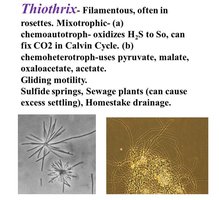
Genera: Thiobacillus, Beggiatoa, Thiothrix (pillimentaous cells, veyr long, inside of whcih sulfur granules may form, bright under phase contrast) Figure below left picture, Thioploca
Can fix CO2 via the Calvin cycle
Thiothrix can be found in sulfide springs, sewage plants, and homestake drainage, and guliding motility
Iron-Oxidizing Bacteria
These bacteria (mainly Proteobacteria) oxidize Fe2+ to Fe3+, often forming iron oxide deposits. They are important in bogs, springs, and biofilms.
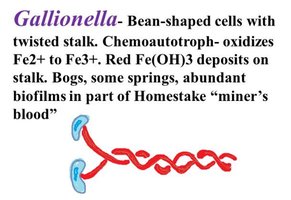
Example: Gallionella forms twisted stalks with Fe(OH)3 deposits
Chemautotrophpic
cells are bean shaped things that secrete long stalks or polysaccharides and iron participates on the making these twisted bright red stalks
ofetn making puddles of water look like blood--old minors reffered to them beings "miner's blood"
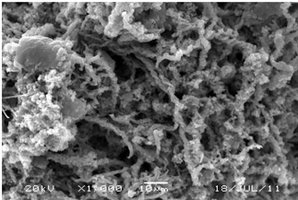
Nitrogen Cycle Bacteria
Nitrogen-Fixing Bacteria (Diazotrophs)
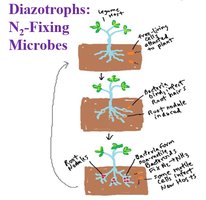
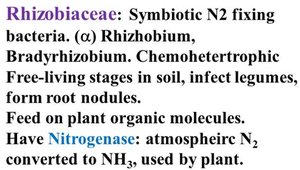
Diazotrophs are bacteria capable of converting atmospheric N2 to NH3 using the enzyme nitrogenase. They may be free-living or form symbiotic relationships with plants (e.g., legumes).Chemoheterotrophic, attracted to plant roots of legumes, and then infect plant root of legumes, tranformsing into root nodules where they live, fixing notrogen for the plant and in return get ammonia
Symbiotic genera: Rhizobium, Bradyrhizobium
Form root nodules in legumes
Autotrophic Ammonia-Oxidizing Bacteria
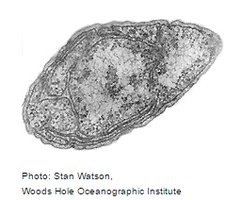
These bacteria (e.g., Nitrosomonas, Nitrosospira, Nitrosococcus) oxidize ammonia (NH3) to nitrite (NO2-) for energy and fix CO2 via the Calvin cycle.
Key enzymes: Ammonia monooxygenase, hydroxylamine oxidoreductase autotrophs who fix carbon through the calvin cycle
Often found in soil and aquatic environments, rich in ammonia and poor in nitrogen
Nitrite-Oxidizing Bacteria
These bacteria oxidize nitrite (NO2-) to nitrate (NO3-). They often live in consortia with ammonia oxidizers and may use organic compounds.
Key enzyme: Nitrite oxidoreductase
Major groups: Nitrospira (Phylum Nitrospira) found in its own phylum, Nitrobacter (Phylum Proteobacteria) Found among psuedomonatdota (both are very slow growing)
Methylotrophic and Methanotrophic Bacteria
Methylotrophs
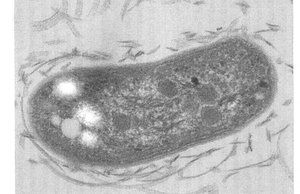
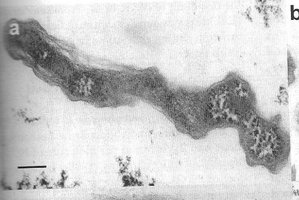
Methylotrophic bacteria can oxidize reduced one-carbon (C-1) compounds such as methane, methanol, and methylamine for energy and carbon. They assimilate C-1 compounds as formaldehyde for organic molecules via the ribulose monophosphate or serine pathways
Key enzymes: Methanol/methylamine dehydrogenase, formaldehyde dehydrogenase, sometimes methane itself
Example: Methylobacter (common on plant leaves) can use complex organic molecules
Methanotrophs
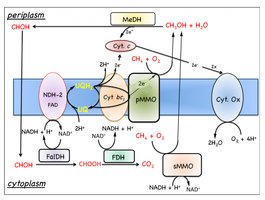
Methanotrophs are a subset of methylotrophs that specifically use methane as their carbon and energy source. They are important in reducing atmospheric methane and are found in aerobic habitats such as water and soil. Oxidise CH4 (methane) to CO2, assimilate C as CH2O.
Key enzyme: Methane monooxygenase (MMO)
Other enzyme: MeDH=methanol dehydrogenase, FalDH= formaldehyde dehydrogenase, FDH=formate dehydrogenase.
can reduce atmospheric methane
Example: Methylococcus capsulatus
Other Ecological Functional Groups
Dissimilative Sulfate-Reducing Bacteria
These bacteria (mainly "gamma"δ-Proteobacteria, e.g., Desulfovibrio) are chemoheterotrophic, obligate anaerobes that use sulfate as a terminal electron acceptor, reducing it to H2S.
Dissimilative Ferric Iron Reduction
Certain chemoheterotrophic bacteria (e.g., Geobacter, Shewanella) reduce Fe3+ to Fe2+ under anaerobic conditions in respiration, playing a role in iron cycling in aquifers. Have reduced also other metals inculding uranium.
Chemoheterotrophic Nitrate Respiration (Denitrification)
Facultative anaerobes (e.g., Pseudomonas, Paracoccus) reduce nitrate (NO3-) to nitrogen gas (N2) via a series of intermediates, resulting in the loss of nitrogen from soils and water to the atmosphere.
NO3- > NO2- >N2O>NO>N2
Myxobacteria
Myxobacteria are chemoheterotrophic bacteria with a unique life cycle involving gliding motility, aggregation, and formation of multicellular fruiting bodies (myxospores). Their life cycle is reminiscent of some eukaryotic slime molds.
Summary Table: Major Bacterial Functional Groups and Their Metabolisms
Group | Metabolism | Electron Donor | Electron Acceptor | Key Enzymes/Pigments | Ecological Role |
|---|---|---|---|---|---|
Cyanobacteria | Oxygenic photosynthesis | H2O | CO2 | Chlorophyll a, phycobilins | Primary producers, N2 fixation |
Purple Sulfur Bacteria | Anoxygenic photosynthesis | H2S | CO2 | Bacteriochlorophyll | Sulfur cycling |
Purple Non-Sulfur Bacteria | Anoxygenic photosynthesis | Organic acids | CO2 | Bacteriochlorophyll | Organic matter turnover |
Green Sulfur Bacteria | Anoxygenic photosynthesis | H2S | CO2 | Bacteriochlorophyll (chlorosomes) | Sulfur cycling |
Sulfur-oxidizing Bacteria | Chemoautotrophy | H2S, S0, S2O32- | O2 | Various oxidases | Sulfur cycling |
Iron-oxidizing Bacteria | Chemoautotrophy | Fe2+ | O2 | Iron oxidases | Iron cycling |
Ammonia-oxidizing Bacteria | Chemoautotrophy | NH3 | O2 | Ammonia monooxygenase | Nitrification |
Nitrite-oxidizing Bacteria | Chemoautotrophy | NO2- | O2 | Nitrite oxidoreductase | Nitrification |
Methylotrophs | C-1 compound oxidation | Methanol, methylamine | O2 | Methanol/methylamine dehydrogenase | C-1 cycling |
Methanotrophs | Methane oxidation | CH4 | O2 | Methane monooxygenase | Methane cycling |
Sulfate-reducing Bacteria | Sulfate respiration | Organic compounds | SO42- | Sulfate reductase | Sulfur cycling |
Denitrifying Bacteria | Nitrate respiration | Organic compounds | NO3- | Nitrate reductase | Nitrogen cycling |
Key Equations
Oxygenic photosynthesis:
Anoxygenic photosynthesis (using H2S):
Ammonia oxidation:
Nitrite oxidation:
Methane oxidation:
Sulfate reduction:
Denitrification:
Discussion Questions
What photosynthetic and accessory pigments are present in Cyanobacteria? What sort of electron transport system (ETS) do they have?
What three unique subcellular structures are often present within the cells of Cyanobacteria?
What is the function of the heterocyst cells of Cyanobacteria, and how do they differ from normal cells?
Where are purple sulfur bacteria, such as Chromatium, found? What do their cells contain? What kind of ETS do they have?
Where are the purple non-sulfur bacteria found? What is their source of carbon, and what kind of photosynthetic ETS do they have?
What kinds of bacteria are diazotrophs, and what habitats are they found in? What kinds of symbioses do some of them have with other organisms?
Where are the autotrophic ammonia oxidizing bacteria found? What enzymes do they possess? What other microbes often live in consortia with them?
What is a methylotroph, and what are some examples of them? Where do they live and what key enzymes do they have?
What is a methanotroph? What unique enzyme do they have, and what is their relation to other methylotrophs? What habitats do they occupy, and what is their environmental importance?
Describe the unique life cycle of Myxobacteria. What eukaryotic organism does it remind you of?
