 뒤로
뒤로Genetic Regulation in Microbial Systems: Operons, Regulons, and Control Mechanisms
스터디 가이드 - 스마트 노트
 자료에 맞춘 맞춤형 노트, 핵심 정의, 예시, 맥락을 확장해 제공합니다.
Genetic Regulation in Microbial Systems
Overview of Genetic Regulation
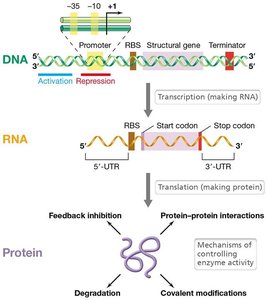
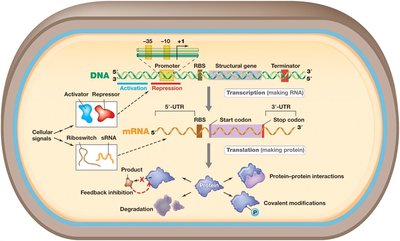
Microbial cells regulate gene expression at multiple levels to adapt to environmental changes and optimize cellular function. Regulation can occur during transcription, translation, and post-translational modification, affecting the amount and activity of proteins produced.
Transcriptional Control: Regulation of RNA synthesis from DNA.
Translational Control: Regulation of protein synthesis from mRNA.
Post-translational Control: Regulation of protein activity after synthesis.
Genetic Organization in Bacteria and Archaea
Bacterial and archaeal genomes are organized differently from eukaryotes. They often lack introns and can arrange genes in operons, allowing coordinated expression of multiple genes under a single promoter.
Operons: Clusters of genes transcribed together, controlled by a single promoter.
Promoters: DNA sequences recognized by RNA polymerase and regulatory proteins.
Regulatory Sites: Upstream regions where DNA-binding proteins modulate transcription.
DNA-Binding Proteins and Regulatory Sequences
Protein–Nucleic Acid Interactions
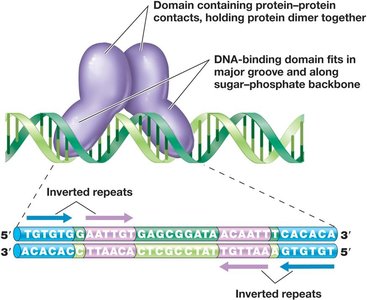
Regulatory proteins interact with DNA to control gene expression. These interactions are often sequence-specific, with proteins binding to particular DNA motifs such as inverted repeats.
Site-specific Binding: Most regulatory proteins bind to specific DNA sequences.
Inverted Repeats: Common binding sites for homodimeric regulatory proteins.
Major Groove: Primary site for protein-DNA interaction.
Transcription Initiation
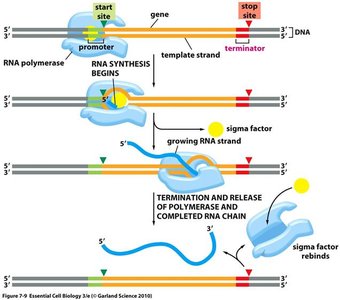
Transcription begins when RNA polymerase binds to the promoter region. Sigma factors assist in recognizing promoters, and transcription is terminated at specific sequences.
Promoter Recognition: Initiated by RNA polymerase and sigma factors.
Termination: Release of RNA polymerase and completed RNA chain.
Mechanisms of Transcriptional Control
Positive vs. Negative Control
Transcriptional control can be positive (activation) or negative (repression), depending on the regulatory proteins and small molecules involved.
Positive Control: Activator proteins enhance transcription.
Negative Control: Repressor proteins inhibit transcription.
Inducers: Small molecules that promote transcription by inactivating repressors or activating activators.
Corepressors: Small molecules that enable repressors to block transcription.
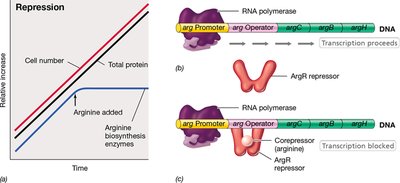
Enzyme Repression: Arginine Operon
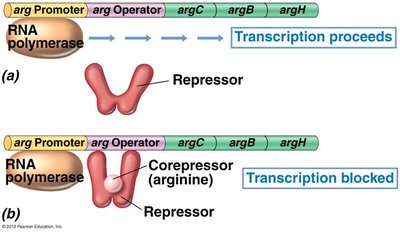
Enzyme repression is a form of negative control where the presence of a corepressor (e.g., arginine) enables a repressor protein to block transcription of biosynthetic enzymes.
Arginine Operon: Repressed when arginine is present; corepressor binds to repressor, blocking transcription.
Repression Curve: Addition of arginine decreases biosynthetic enzyme production.
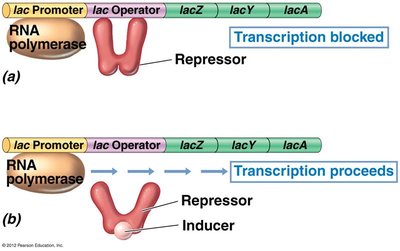
Enzyme Induction: Lac Operon
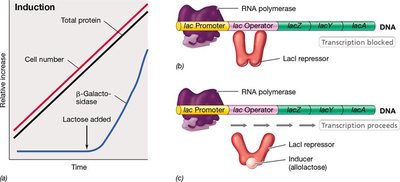
Enzyme induction is a form of negative control where the presence of an inducer (e.g., lactose) inactivates the repressor, allowing transcription of catabolic enzymes.
Lac Operon: Induced when lactose is present; inducer binds to repressor, allowing transcription.
Induction Curve: Addition of lactose increases β-galactosidase production.
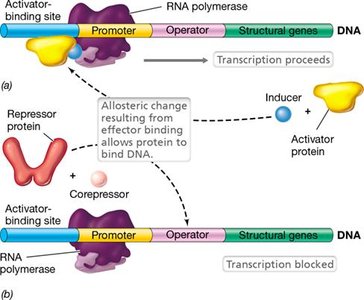
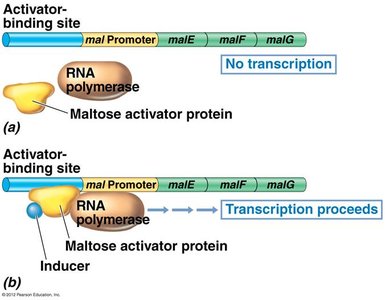
Positive Control: Maltose Operon
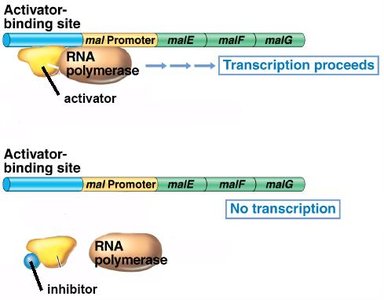
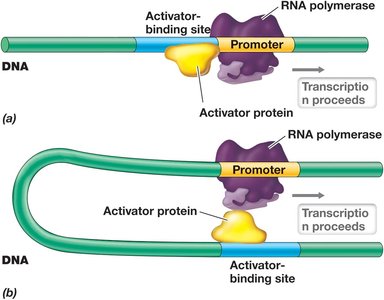
Positive control involves activator proteins that facilitate transcription. The maltose operon is activated when maltose binds to the activator protein, enabling RNA polymerase to initiate transcription.
Maltose Operon: Activated by maltose-bound activator protein.
Activator Binding: Required for transcription initiation.
Operons and Regulons
Operons vs. Regulons
Operons and regulons are organizational units for gene regulation in prokaryotes. Operons are groups of genes transcribed together, while regulons are sets of operons or genes controlled by the same regulatory protein.
Operon: Multiple genes under one promoter, producing a single mRNA.
Regulon: Multiple operons/genes regulated by a common protein.
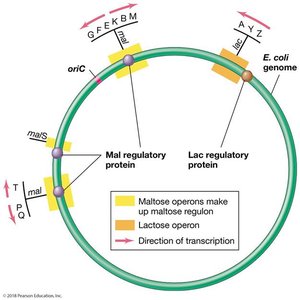
Gene Regulation in Archaea
Archaeal Regulation
Archaea share transcription machinery similarities with eukaryotes, but their regulatory mechanisms resemble those of bacteria, including promoter recognition and transcriptional control.
Promoter Structure: Similar to eukaryotes.
Regulatory Mechanisms: Similar to bacteria; can promote or block transcription.
Two-Component Systems
Signal Transduction in Microbes
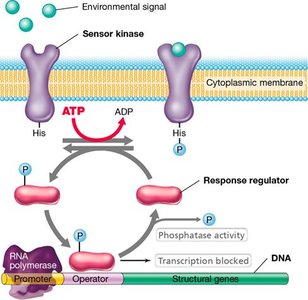
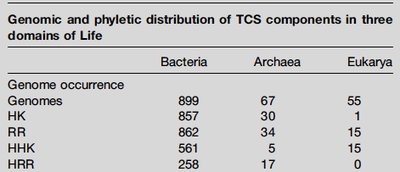
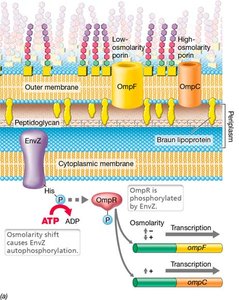
Two-component systems are widespread in bacteria and archaea, enabling cells to sense and respond to environmental signals. These systems consist of a sensor kinase and a response regulator.
Sensor Kinase: Detects environmental signals and autophosphorylates.
Response Regulator: Receives phosphate group and modulates gene expression.
Distribution: Present in bacteria and archaea; rare in eukaryotes.
RNA-Based Regulation
Regulatory RNAs
Noncoding RNAs (ncRNAs), including small RNAs (sRNAs), regulate gene expression by base pairing with target mRNAs, affecting translation and stability.
sRNAs: 40–400 nucleotides; modulate translation and mRNA stability.
Mechanisms: Block or expose ribosome binding sites, alter mRNA degradation.
Riboswitches
Riboswitches are regulatory segments within mRNAs that bind metabolites, causing structural changes that affect transcription or translation.
Aptamer Region: Binds small molecules, switching between alternative structures.
Regulation: Can control gene expression at transcriptional or translational level.
Quorum Sensing
Population Density Sensing
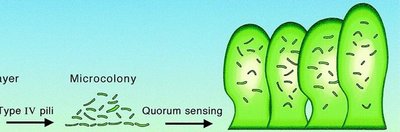
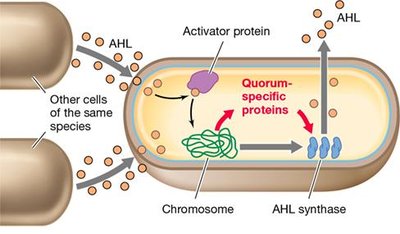
Quorum sensing is a mechanism by which microbes regulate gene expression in response to cell density, using signaling molecules to coordinate behaviors such as biofilm formation and pathogenesis.
Signaling Molecules: Accumulate as cell density increases, activating gene expression.
Positive Feedback: Genes for signaling molecule production are activated by the signal itself.
Applications: Biofilm formation, virulence factor production.
Viral Pathogenesis: Influenza and Hepatitis
Influenza Virus
Influenza virus causes disease through its life cycle and genome variability. Antigenic shift and drift alter its genome, enabling immune evasion and new outbreaks.
Antigenic Drift: Gradual mutations in viral genes.
Antigenic Shift: Reassortment of genome segments, leading to new strains.
Hepatitis Viruses
Hepatitis viruses cause liver inflammation and disease. They differ in transmission, severity, and chronicity.
Hepatitis A: Mild, acute disease.
Hepatitis B: Acute, severe disease; can lead to liver failure.
Hepatitis C: Chronic disease; often leads to chronic liver damage.
Hepatitis D: Defective virus; requires co-infection with hepatitis B.
Hepatitis E: Acute, self-limiting disease.
Virus | Transmission | Severity | Chronicity |
|---|---|---|---|
Hepatitis A | Fecal-oral | Mild/Acute | No |
Hepatitis B | Blood/body fluids | Severe/Acute | Sometimes |
Hepatitis C | Blood/body fluids | Mild/Chronic | Yes |
Hepatitis D | Blood/body fluids | Severe (with HBV) | Yes (with HBV) |
Hepatitis E | Fecal-oral | Acute | No |
Vaccines: Available for hepatitis A and B.
Universal Precautions: All bodily fluids treated as potentially infectious due to high infectivity.
Summary Table: Key Regulatory Mechanisms
Mechanism | Regulatory Protein | Small Molecule | Effect |
|---|---|---|---|
Negative Control (Repression) | Repressor | Corepressor | Blocks transcription |
Negative Control (Induction) | Repressor | Inducer | Allows transcription |
Positive Control | Activator | Inducer | Enhances transcription |
Two-Component System | Sensor kinase/Response regulator | Environmental signal | Modulates gene expression |
Regulatory RNA | sRNA/Riboswitch | Metabolite | Modulates translation |
Quorum Sensing | Activator | Signaling molecule | Coordinates group behavior |
