 뒤로
Introduction to Microbiology: The Microbial World and You
스터디 가이드 - 스마트 노트
 자료에 맞춘 맞춤형 노트, 핵심 정의, 예시, 맥락을 확장해 제공합니다.
Introduction to Microbiology
Microbes in Our Lives
Microbiology is the study of organisms too small to be seen with the unaided eye, known as microorganisms or microbes. These include bacteria, fungi, protozoa, microscopic algae, viruses, and prions. Microbes play essential roles in ecological balance, human health, and biotechnology.
Destructive roles: Cause diseases in humans, animals, and plants; food spoilage.
Beneficial roles: Decomposition, nutrient recycling, sewage treatment, bioremediation, food production, and biotechnology.
Biotechnology: Use of microbes for practical applications, such as producing antibiotics, chemicals, and genetically engineered products.
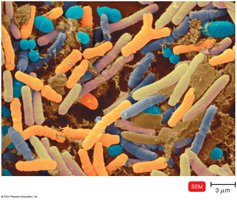
Example: Escherichia coli synthesizes vitamins B and K in the human intestine.
Additional info: Only about 1% of known bacteria are pathogenic to humans; the majority are harmless or beneficial.
Microbes Benefit Humans
Decomposition: Bacteria and yeast recycle elements (carbon, nitrogen, sulfur, phosphorus).
Sewage treatment: Microbes degrade organic matter in sewage.
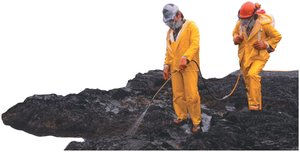
Bioremediation: Microbes detoxify pollutants (e.g., oil spills, mercury).
Producers: Photosynthetic microbes form the base of aquatic food chains.
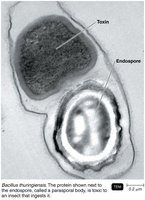
Insect pest control: Bacillus thuringiensis produces toxins fatal to insects but harmless to animals and plants.
Microbes in Food and Industry
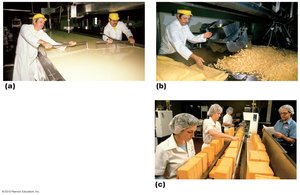
Fermentation: Microbes produce cheese, yogurt, bread, beer, wine, and other foods.
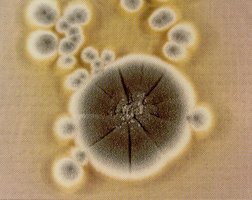
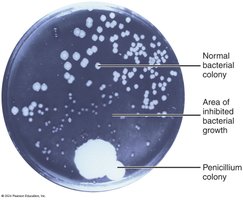
Antibiotics: Penicillium notatum produces penicillin, the first antibiotic discovered by Alexander Fleming in 1928.
Industrial chemicals: Microbes produce ethanol, acetone, and other chemicals used in manufacturing.
Recombinant DNA Technology and Genetic Engineering
Recombinant DNA technology enables the insertion of genes from one organism into another, allowing microbes to produce proteins such as insulin, human growth hormone, and interferon. Gene therapy uses similar techniques to replace defective genes in humans.
Naming and Classifying Microorganisms
Scientific Nomenclature
Carolus Linnaeus established the binomial system of nomenclature in 1735. Each organism is given a two-part name: the genus (capitalized) and the specific epithet (lowercase), both italicized or underlined (e.g., Escherichia coli).
Genus: Group of closely related species.
Specific epithet: Identifies the species within the genus.
Abbreviation: After first use, genus may be abbreviated (e.g., E. coli).
Example: Staphylococcus aureus (clustered, spherical, gold-colored colonies).
Classification of Microorganisms
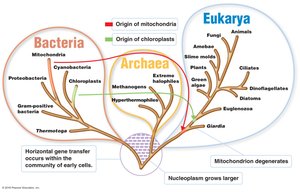
Carl Woese developed the three-domain system in 1978, based on cellular organization:
Bacteria: Prokaryotes with peptidoglycan cell walls.
Archaea: Prokaryotes lacking peptidoglycan, often extremophiles.
Eukarya: Eukaryotes, including protists, fungi, plants, and animals.
Types of Microorganisms
Bacteria
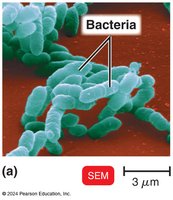
Bacteria are unicellular prokaryotes with peptidoglycan cell walls. They reproduce by binary fission and obtain energy from organic or inorganic chemicals or photosynthesis. Some are motile via flagella.
Archaea
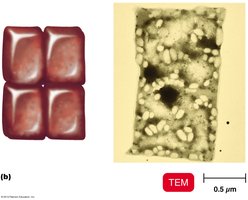
Archaea are prokaryotes that lack peptidoglycan in their cell walls and often inhabit extreme environments. Major groups include methanogens, extreme halophiles, and extreme thermophiles. Archaea are not known to cause human disease.
Fungi
Fungi are eukaryotes with chitin cell walls. They absorb organic nutrients and may be unicellular (yeasts) or multicellular (molds, mushrooms). Molds consist of mycelia made of hyphae.
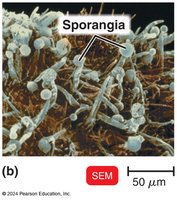
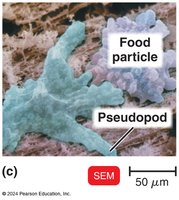
Protozoa
Protozoa are unicellular eukaryotes that absorb or ingest organic chemicals. They may be motile via pseudopods, cilia, or flagella, and can be free-living or parasitic. Some are photosynthetic.
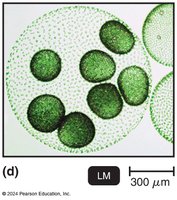
Algae
Algae are eukaryotes with cellulose cell walls, found in aquatic and terrestrial environments. They use photosynthesis for energy and produce oxygen and carbohydrates.
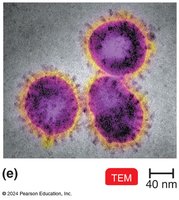
Viruses
Viruses are acellular entities consisting of a DNA or RNA core surrounded by a protein coat, sometimes with a lipid envelope. They replicate only inside living host cells and are inert outside hosts.
Multicellular Animal Parasites
These are eukaryotic multicellular organisms, such as flatworms and roundworms (helminths), with some microscopic life stages.
Disproving Spontaneous Generation
Historical Experiments
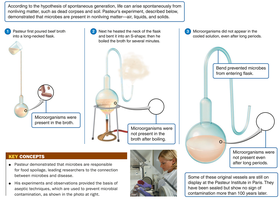
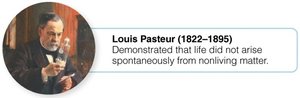
Spontaneous generation was the belief that life could arise from nonliving matter. Biogenesis, in contrast, states that living cells arise only from preexisting cells.
Redi (1668): Showed that maggots do not arise from decaying meat unless flies lay eggs on it.
Needham (1745): Claimed that boiled broth in covered flasks still produced microbes (supporting spontaneous generation).
Spallanzani (1765): Showed that sealed, boiled broth did not produce microbes (supporting biogenesis).
Virchow (1858): Proposed the theory of biogenesis.
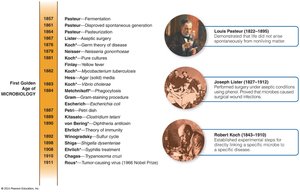
Pasteur (1861): Demonstrated that microbes are present in the air and do not arise spontaneously using S-shaped flasks.
The Golden Age of Microbiology
Major Discoveries and Techniques
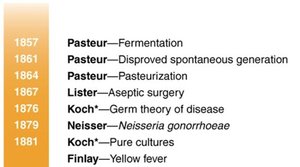
Fermentation: Pasteur showed microbes convert sugar to alcohol; spoilage is due to bacteria producing acids.
Pasteurization: Heating liquids to kill harmful microbes without damaging the product.
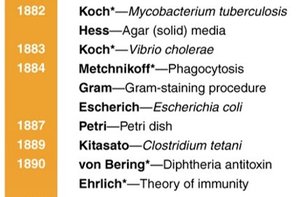
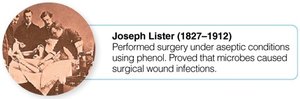
Germ Theory of Disease: Microorganisms can cause disease (Pasteur, Lister, Koch).
Aseptic techniques: Prevent contamination in medical and laboratory settings.
Koch's Postulates
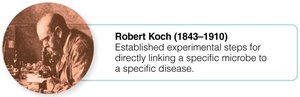
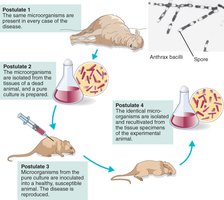
Koch established a series of experimental steps to prove that a specific microbe causes a specific disease:
The microorganism must be found in all cases of the disease.
It must be isolated and grown in pure culture.
The cultured microbe must cause the disease when introduced into a healthy host.
The same microbe must be re-isolated from the experimentally infected host.
Vaccination
Edward Jenner developed the first vaccine by inoculating a person with cowpox virus, providing immunity to smallpox. Vaccination derives from the Latin 'vacca' (cow).

Antibiotics and Chemotherapy
Antibiotics: Chemicals produced by microbes that inhibit or kill other microbes (e.g., penicillin).
Chemotherapy: Treatment of disease with chemicals, including synthetic drugs and antibiotics.
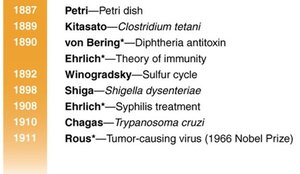
Magic bullet: Paul Ehrlich's concept of a drug that destroys pathogens without harming the host.
Branches of Microbiology
Bacteriology, Mycology, Parasitology, Immunology, Virology
Bacteriology: Study of bacteria.
Mycology: Study of fungi.
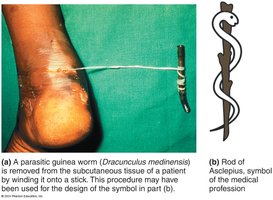
Parasitology: Study of protozoa and parasitic worms.
Immunology: Study of immunity; includes vaccines and interferons.
Virology: Study of viruses.
Microbial Genetics, Molecular Biology, and Genomics
Microbial genetics: Study of inheritance in microbes.
Molecular biology: Study of how genetic information is carried in DNA molecules.
Genomics: Study of an organism's genes; enables study of microbiomes and their roles in health and disease.

Microbes and Human Disease
Normal Microbiota
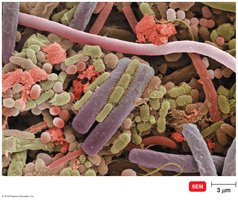
Normal microbiota (formerly called flora) are microbes that reside in and on the human body, preventing the growth of pathogens and producing essential growth factors such as vitamins B and K. Resistance is the body's ability to ward off disease, aided by physical barriers and antimicrobial chemicals.
Biofilms
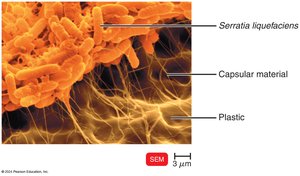
Biofilms are complex communities of microbes attached to surfaces. They can be beneficial (protecting mucous membranes, providing food in aquatic systems) or harmful (clogging pipes, causing infections on medical implants, and increasing antibiotic resistance).
Emerging Infectious Diseases (EIDs)
Emerging infectious diseases are new or increasing in incidence. Factors include microbial evolution (e.g., antibiotic resistance), global travel, and increased human exposure to pathogens. Examples include COVID-19, H1N1 influenza, MRSA, Ebola, and Zika virus.
COVID-19: Caused by SARS-CoV-2, first identified in 2019.
Monkeypox (Mpox): Orthopoxvirus, outbreaks in nonendemic countries in 2022.
Zika virus: Spread by Aedes mosquitoes; infection during pregnancy can cause birth defects.
Antibiotic resistance: MRSA, multidrug-resistant Mycobacterium tuberculosis, and others.
Ebola and Marburg viruses: Cause severe hemorrhagic fevers with high mortality rates.
