 뒤로
Introduction to Microbiology: The Microbial World and You
스터디 가이드 - 스마트 노트
 자료에 맞춘 맞춤형 노트, 핵심 정의, 예시, 맥락을 확장해 제공합니다.
Chapter 1: The Microbial World and You
What is a Microbe?
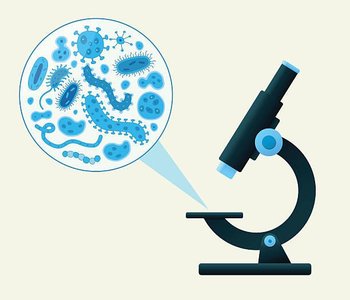
Microbes, also known as microorganisms, are living organisms that are too small to be seen with the unaided eye. They include bacteria, archaea, fungi, protozoa, algae, and viruses. Microbes play essential roles in ecosystems, human health, and industry.
Definition: Microbe = Microorganism; 'Micro' means small, 'bios' means life.
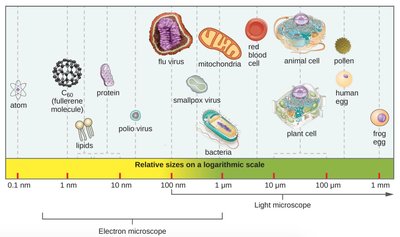
Visibility: Most microbes require a microscope for observation due to their small size.
Relative Size: Viruses (~100 nm) are much smaller than bacteria (~1 μm), which are smaller than plant or animal cells (~10–100 μm).
Roles of Microbes
Microbes are involved in a wide range of processes that impact both the environment and human society. While some are pathogenic, most are beneficial or neutral.
Pathogenic Microbes: Less than 1% cause disease.
Food Spoilage: Some microbes spoil food.
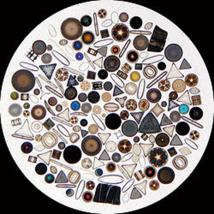
Ecological Roles: Basis of aquatic food chains, decomposition of organic waste, nitrogen fixation, and oxygen generation via photosynthesis.
Industrial Roles: Production of chemicals (ethanol, acetone, vitamins), fermented foods (cheese, yogurt, bread), and products for manufacturing and disease treatment (e.g., insulin).

The Microbiome
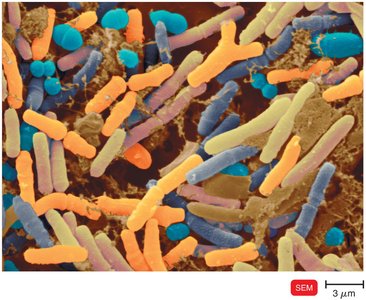
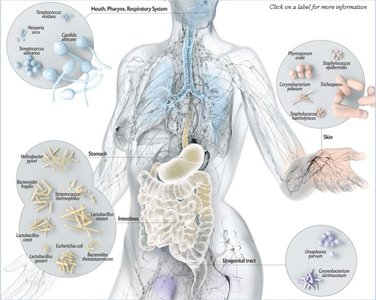
The microbiome refers to the collective community of microorganisms living in a specific habitat, such as the human body. It includes commensal, symbiotic, and pathogenic microbes, and their interactions with the host.
Microbiota: All prokaryotic and eukaryotic organisms living stably in/on the human body.
Resident Microbiota: Colonize the body indefinitely.
Transient Microbiota: Colonize the body temporarily.
Microbiome and Health
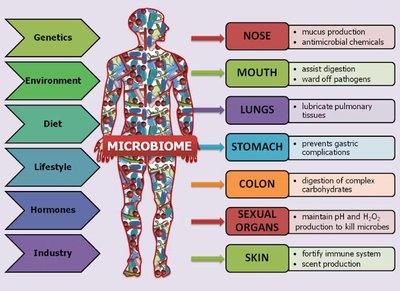
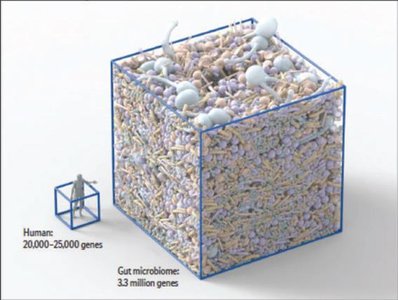
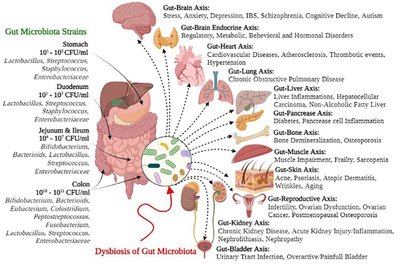
The human microbiome is crucial for immune development, nutrition, behavior, and resistance to pathogens. Changes in the microbiome can influence disease susceptibility and overall health.
Immune System: Educates and develops immune responses; distinguishes good vs. bad microbes.
Pathogen Resistance: Competes with pathogens for resources.
Nutrition: Provides essential nutrients (e.g., E. coli produces vitamin K2 and B12).
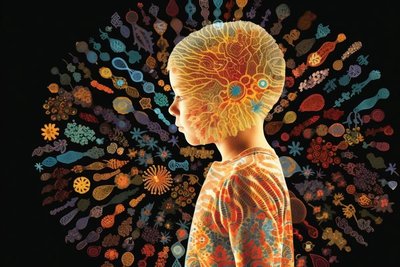
Behavior and Mental Health: Microbes can stimulate nerve endings affecting the brain.

Microbiome and Diet
Diet significantly influences the composition and function of the microbiome. Westernized diets high in fat and low in fiber can negatively impact microbiome diversity and health.
Dietary Impact: High-fat, low-fiber diets with low vitamin D levels are associated with less diverse microbiomes.
Microbial Reprogramming: Altering the microbiome can inhibit diet-associated obesity.
Taxonomy and Classification
Taxonomy: The Science of Classification
Taxonomy is the classification, description, identification, and naming of living organisms. It provides a hierarchical structure for organizing biological diversity.
Carolus Linnaeus: Established the first taxonomic hierarchy: Kingdom, Class, Order, Family, Genus, Species.
Modern Taxonomy: Continually refined with advances in technology.
Three Domains of Life
Carl Woese and George Fox introduced the three-domain system based on ribosomal RNA (rRNA) analysis, replacing the two-empire system.
Bacteria: Prokaryotic, ester-linked membrane lipids, 70S ribosomes.
Archaea: Prokaryotic, ether-linked membrane lipids, unique rDNA, 70S ribosomes.
Eukarya: Eukaryotic, linear chromosomes, membrane-bound organelles, 80S ribosomes.
Characteristic | Bacteria | Archaea | Eukarya |
|---|---|---|---|
Chromosome Structure | Usually circular | Usually circular | Usually linear |
Operons | Present | Present | Absent |
mRNA introns | Absent | Absent | Present |
Membrane lipids | Ester-linked | Ether-linked | Ester-linked |
Plasmids | Common | Occasional | Rare |
Ribosome Size | 70S (50S + 30S) | 70S (50S + 30S) | 80S (60S + 40S) |
Binomial Naming System
The binomial naming system assigns each organism a two-part scientific name: genus and species. This system ensures clarity and consistency in biological classification.
Format: Genus (capitalized), species (lowercase), both italicized or underlined if handwritten.
Example: Escherichia coli (genus: Escherichia, species: coli)
Rules: Names must not be offensive, use only Latin alphabet, and may derive from any language.
History of Microbiology
Spontaneous Generation and Its Disproof
The theory of spontaneous generation posited that life could arise from nonliving matter. This was challenged and ultimately disproved by experiments from Redi, Spallanzani, and Pasteur.
Abiogenesis: Life arises from nonliving matter.
Redi's Experiment: Maggots only appeared when flies could lay eggs, disproving spontaneous generation for larger organisms.
Pasteur's Experiment: Demonstrated that microbes in the air cause contamination, not spontaneous generation.
Contributions of Early Microbiologists
Key figures in microbiology include Antonie van Leeuwenhoek, Robert Hooke, Louis Pasteur, and Robert Koch, who advanced the understanding of microbes, disease, and cell theory.
Cell Theory: All living organisms are composed of cells; cells arise from pre-existing cells.
Germ Theory: Disease is caused by microbes.
Koch's Postulates: Protocol for identifying causative agents of disease.
Microbes and Human Welfare
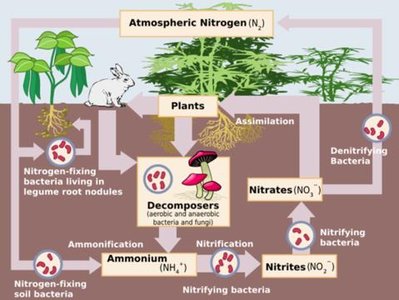
Recycling Vital Elements
Microbial ecology studies the relationship between microorganisms and their environment. Microbes recycle elements such as carbon, oxygen, nitrogen, sulfur, and phosphorus, making them available for plants and animals.
Sewage Treatment: Microbes convert organic materials in sewage into by-products like CO2, nitrates, and methane.
Bioremediation: Microbes degrade pollutants such as oil and mercury.
Insect Pest Control by Microorganisms
Microbes pathogenic to insects are used as alternatives to chemical pesticides. For example, Bacillus thuringiensis produces protein crystals toxic to insects but harmless to animals and plants.
Biotechnology and Recombinant DNA Technology
Biotechnology uses microbes for practical applications, such as producing foods, chemicals, and pharmaceuticals. Recombinant DNA technology enables the production of proteins, vaccines, and enzymes, and is used in gene therapy and agriculture.
Microbes and Human Disease
Pathogenicity and Infection
Pathogenic microbes can cause disease by successfully colonizing a host. Infections may lead to disease, which manifests as signs and symptoms deviating from normal host function.
Portal of Entry: The route by which a microbe enters the host.
Stages of Pathogenicity: Adhesion, biofilm formation, and virulence factors.
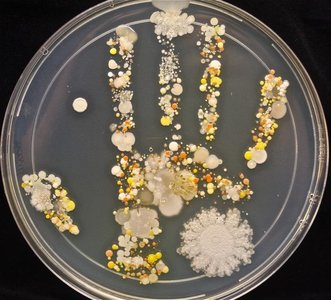
Biofilms: Complex masses of microbes attached to surfaces; can be beneficial or harmful.
Emerging Infectious Diseases
New diseases and those increasing in incidence are termed emerging infectious diseases. Factors contributing to their emergence include evolutionary changes, antibiotic resistance, modern transportation, and increased human exposure to infectious agents.
Examples: Coronaviruses, Monkeypox, Zika virus, Influenza, Ebola virus.
Microbes in the Environment
Ubiquity of Microbes
Microbes are found everywhere: deep in the earth’s crust, polar ice caps, oceans, inside plants and animals, oil wells, and even clouds.
Microbial Diversity: Microbes adapt to extreme environments and play vital roles in ecosystem functioning.
Summary Table: Domains of Life
Domain | Cell Type | Membrane Lipids | Ribosome Size | Examples |
|---|---|---|---|---|
Bacteria | Prokaryotic | Ester-linked | 70S | Escherichia coli |
Archaea | Prokaryotic | Ether-linked | 70S | Halophiles, Thermophiles |
Eukarya | Eukaryotic | Ester-linked | 80S | Animals, Plants, Fungi |
Key Terms
Microbe: A microscopic organism.
Microbiome: The community of microorganisms in a particular environment.
Pathogen: A microorganism that causes disease.
Taxonomy: The science of classification of organisms.
Binomial Nomenclature: The two-part scientific naming system for organisms.
Biofilm: A complex aggregation of microbes growing on a surface.
Bioremediation: The use of microbes to clean up environmental pollutants.
