 뒤로
Microbial Diseases of the Nervous System: Structure, Pathogenesis, and Major Bacterial Infections
스터디 가이드 - 스마트 노트
 자료에 맞춘 맞춤형 노트, 핵심 정의, 예시, 맥락을 확장해 제공합니다.
Diseases of the Nervous System
Structure and Function of the Nervous System
The nervous system is divided into two main components: the central nervous system (CNS) and the peripheral nervous system (PNS). The CNS consists of the brain and spinal cord, while the PNS comprises nerves branching from the CNS. The nervous system is protected by specialized membranes called meninges and by the blood-brain barrier, which restricts the passage of pathogens and chemicals from the blood into the CNS.
Meninges: Three layers—dura mater (outer), arachnoid mater (middle), and pia mater (innermost)—protect the brain and spinal cord.
Subarachnoid space: Contains cerebrospinal fluid (CSF), which cushions the CNS and provides nutrients.
Blood-brain barrier: Limits entry of substances, including microbes, into the CNS.
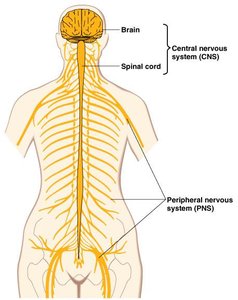
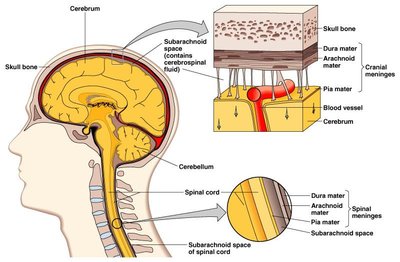
Types and Mechanisms of Nervous System Infections
Microbial infections of the nervous system can occur through various mechanisms and result in different types of inflammation. The most common routes include direct entry via fractures, medical procedures, peripheral nerves, or through the blood and lymphatic systems.
Meningitis: Inflammation of the meninges.
Encephalitis: Inflammation of the brain tissue.
Meningoencephalitis: Inflammation of both the brain and meninges.

Bacterial Meningitis
Overview and Symptoms
Bacterial meningitis is a severe infection of the meninges, often presenting with fever, headache, and stiff neck, followed by nausea, vomiting, and potentially progressing to convulsions and coma. Rapid diagnosis and treatment are critical due to the high mortality rate.
Diagnosis: Gram stain of CSF obtained via lumbar puncture (spinal tap).
Treatment: Immediate administration of broad-spectrum antibiotics (e.g., cephalosporins or vancomycin), followed by sensitivity testing.
Viral meningitis: More common and generally milder than bacterial forms.
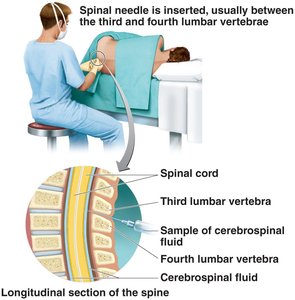
Major Bacterial Pathogens and Epidemiology
Several bacteria are responsible for most cases of bacterial meningitis. The table below summarizes their prevalence and fatality rates:
Bacterium | Percentage of Cases | Fatality Rate (%) |
|---|---|---|
Streptococcus pneumoniae | 30–50 | 19–46 |
Neisseria meningitidis | 15–40 | 3–17 |
Haemophilus influenzae | 2–7* | 3–11 |
Other bacteria | 6–8 | Varies |
Additional info: Before the Hib vaccine, H. influenzae accounted for about 45% of cases, mostly in children under age 5.
Haemophilus influenzae Meningitis
Haemophilus influenzae is a Gram-negative aerobic bacterium, part of the normal throat microbiota, but can cause meningitis, otitis media, and pneumonia. The disease primarily affects children aged 6 months to 4 years and is prevented by the Hib vaccine.
Capsule antigen type b: Responsible for invasive disease.
Prevention: Hib vaccine introduced in 1988 significantly reduced incidence.
Neisseria meningitidis (Meningococcal Meningitis)
Neisseria meningitidis is a Gram-negative aerobic cocci with a capsule. It is carried asymptomatically by up to 40% of people in the nasopharynx. The disease often begins as a throat infection and can rapidly progress to bacteremia and meningitis, especially in young children and in crowded settings.
Symptoms: Rash that does not fade when pressed, rapid onset of fever, high mortality without treatment.
Prevention: Vaccination against multiple serotypes (except X).
Streptococcus pneumoniae (Pneumococcal Meningitis)
Streptococcus pneumoniae is a Gram-positive encapsulated diplococcus, commonly found in the nasopharynx. It is the most frequent cause of meningitis in children (1 month to 4 years) and has a higher mortality rate in the elderly.
Prevention: Vaccination with polysaccharide vaccine.
Symptoms: Meningitis and pneumonia.
Listeriosis
Listeria monocytogenes is a Gram-positive rod, widely found in soil and water. Listeriosis is usually foodborne and asymptomatic in healthy adults but can cause meningitis in immunocompromised individuals and severe outcomes in pregnant women and newborns.
Transmission: Ingestion of contaminated food (e.g., deli meats, dairy).
Pathogenesis: Invades bloodstream, reproduces in phagocytes, can cross placenta.
Prevention: Pasteurization and proper cooking of food.
Tetanus
Clostridium tetani is a Gram-positive, endospore-forming, obligate anaerobe. Infection occurs through deep wounds, and the neurotoxin tetanospasmin blocks muscle relaxation, causing spasms and lockjaw. Death results from respiratory muscle spasms.
Prevention: Vaccination with tetanus toxoid (DTaP), boosters every 10 years.
Treatment: Tetanus immune globulin (TIG), wound debridement, antibiotics.
Botulism
Clostridium botulinum is a Gram-positive, endospore-forming, obligate anaerobe. Botulism results from ingestion of botulinal toxin, which blocks neurotransmitter release, causing flaccid paralysis. The disease is associated with improperly canned foods and can be fatal.
Types: Type A (heat resistant, high fatality), Type B, Type E (less heat resistant, associated with lake/marine environments).
Prevention: Proper canning, nitrites in sausages.
Medical use: Botox for various conditions.
