 뒤로
Microbial Genetics: Structure, Function, and Regulation of Genetic Material
스터디 가이드 - 스마트 노트
 자료에 맞춘 맞춤형 노트, 핵심 정의, 예시, 맥락을 확장해 제공합니다.
Structure and Function of Genetic Material
Key Definitions and Concepts
The genetic material of microorganisms is central to their function, inheritance, and adaptation. Understanding the structure and function of DNA, RNA, and proteins is foundational in microbiology.
Genetics: The study of genes, how they carry information, how information is expressed, and how genes are replicated.
Genome: All the genetic information in a cell.
Chromosome: Structure containing DNA that physically carries hereditary information.
Gene: Segment of DNA that encodes a functional product, usually a protein.
Genotype: The genetic makeup of an organism.
Phenotype: The expression of the genes.
Genomics: Sequencing and molecular characterization of genomes.
DNA Structure
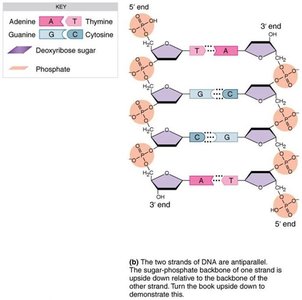
DNA is a double helix composed of two antiparallel strands held together by hydrogen bonds between complementary bases: adenine (A) pairs with thymine (T), and cytosine (C) pairs with guanine (G).
Backbone: Deoxyribose-phosphate.
Antiparallel: Strands run in opposite directions (5' to 3' and 3' to 5').
Supercoiling: Bacterial chromosomes are highly twisted for compact storage.
Central Dogma and Flow of Genetic Information
Central Dogma
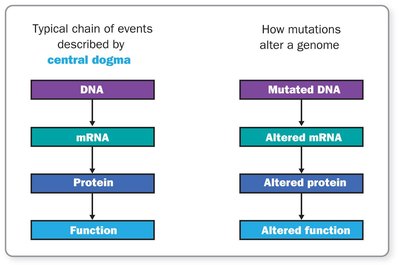
The central dogma describes the flow of genetic information: DNA is transcribed into mRNA, which is then translated into protein, resulting in cellular function.
Replication: DNA duplicates itself.
Transcription: DNA is copied to mRNA.
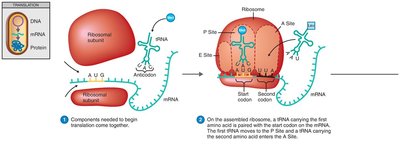
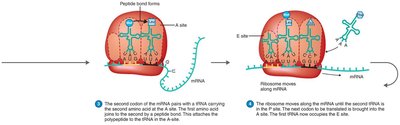
Translation: mRNA directs protein synthesis.

Expression, Recombination, and Replication
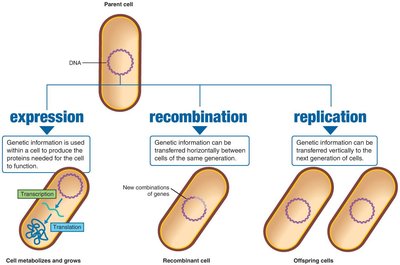
Genetic information can be used for expression (making proteins), recombination (horizontal gene transfer), and replication (vertical gene transfer).
Expression: Genes are used to produce proteins for cell function.
Recombination: Exchange of genes between DNA molecules, increasing diversity.
Replication: Transfer of genetic information to offspring.
DNA Replication
Mechanism of Replication
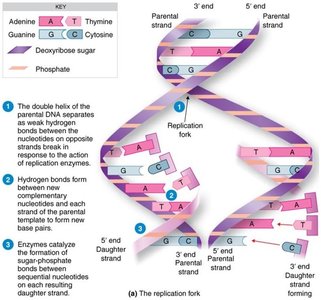
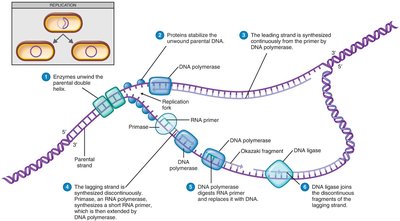
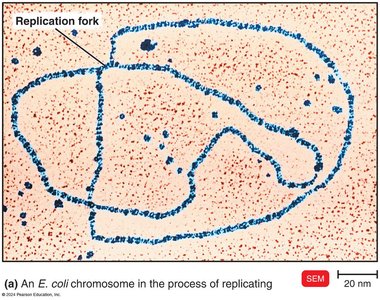
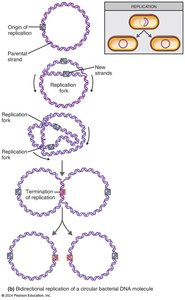
DNA replication is a semi-conservative process where each strand serves as a template for a new strand. Key enzymes include DNA polymerase, helicase, primase, ligase, and gyrase.
Initiation: Helicase unwinds DNA; primase synthesizes RNA primer.
Elongation: DNA polymerase adds nucleotides in the 5' to 3' direction.
Leading Strand: Synthesized continuously.
Lagging Strand: Synthesized discontinuously as Okazaki fragments.
Termination: DNA ligase joins fragments; replication ends.
RNA and Protein Synthesis
Types of RNA
mRNA: Carries genetic code from DNA to ribosomes.
rRNA: Integral part of ribosomes.
tRNA: Transports amino acids during protein synthesis.
Transcription in Prokaryotes
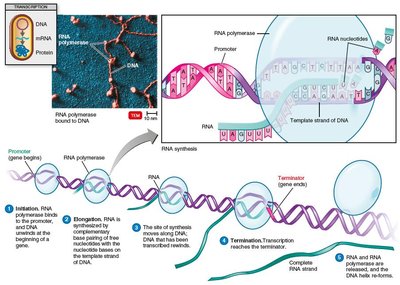
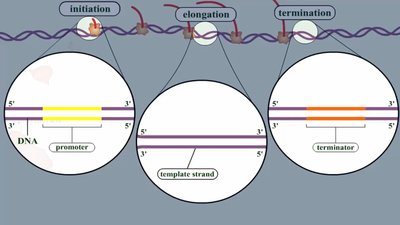
Transcription is the synthesis of a complementary mRNA strand from a DNA template. It involves initiation (RNA polymerase binds promoter), elongation (RNA synthesis), and termination (reaching terminator sequence).
Translation and the Genetic Code
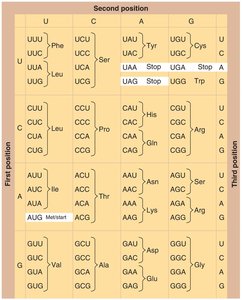
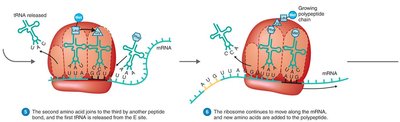
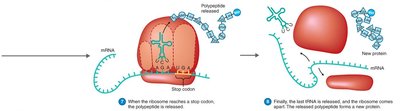
Translation converts mRNA into protein. Codons (three-nucleotide sequences) specify amino acids. The genetic code is degenerate, meaning multiple codons can code for the same amino acid.
Start codon: AUG (methionine)
Stop codons: UAA, UAG, UGA
Simultaneous Transcription and Translation in Bacteria
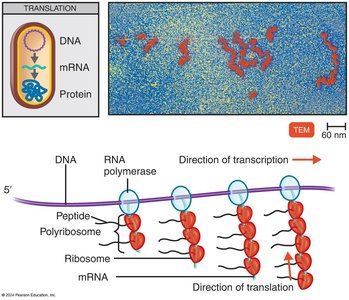
In prokaryotes, translation can begin before transcription is complete due to the absence of a nuclear membrane.
Transcription in Eukaryotes
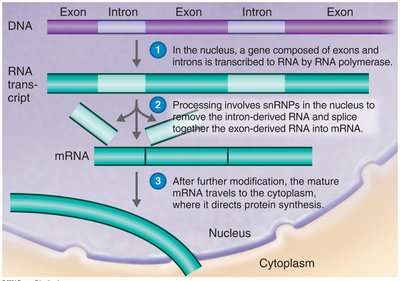
In eukaryotes, transcription occurs in the nucleus and translation in the cytoplasm. Genes contain exons (coding regions) and introns (noncoding regions). Introns are removed by snRNPs, and exons are spliced together.
Regulation of Bacterial Gene Expression
Operons and Gene Regulation
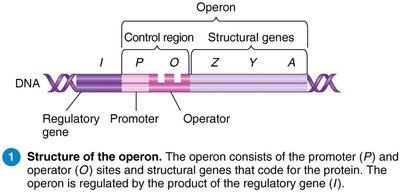
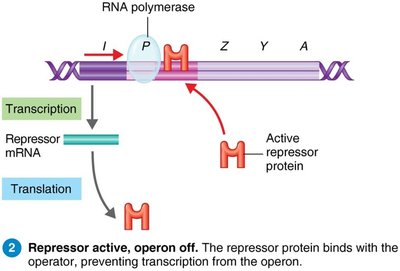
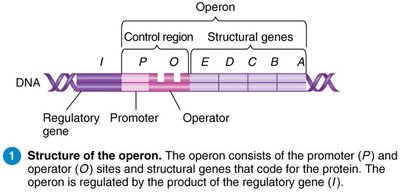
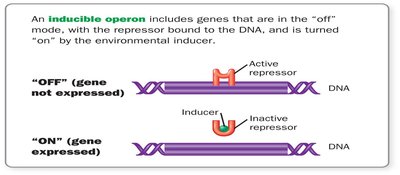
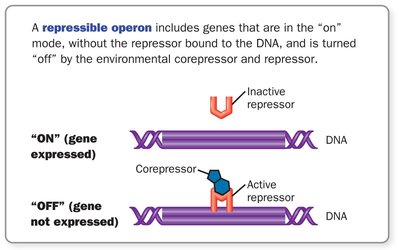
Bacterial genes are often organized in operons, which are regulated by promoters, operators, and regulatory genes. Gene expression can be constitutive, inducible, or repressible.
Constitutive genes: Always expressed.
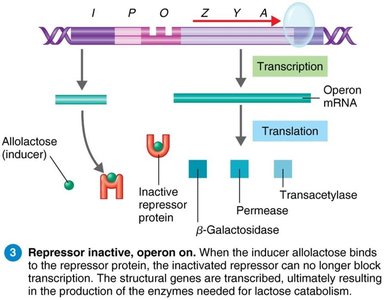
Inducible genes: Expressed only when an inducer is present.
Repressible genes: Turned off by a corepressor.
Inducible and Repressible Operons
Inducible operons (e.g., lac operon) are turned on by environmental inducers. Repressible operons (e.g., trp operon) are turned off by corepressors.
Mutations and Genetic Variation
Types of Mutations
Mutations are permanent changes in DNA sequence. They can be silent, missense, nonsense, or frameshift mutations.
Silent mutation: No effect on protein function.
Missense mutation: Changes one amino acid.
Nonsense mutation: Creates a stop codon.
Frameshift mutation: Alters reading frame by insertion or deletion.
Mutagens and Repair
Mutagens (chemical or physical agents) increase mutation rates. Cells have repair mechanisms such as photolyase and nucleotide excision repair.
Genetic Transfer and Recombination
Horizontal and Vertical Gene Transfer
Genetic information can be transferred vertically (parent to offspring) or horizontally (between cells of the same generation). Horizontal transfer mechanisms include transformation, conjugation, and transduction.
Plasmids and Transposons
Plasmids: Self-replicating circular DNA, often carrying antibiotic resistance genes.
Transposons: Segments of DNA that move between locations, sometimes carrying resistance or toxin genes.
Applications and Clinical Relevance
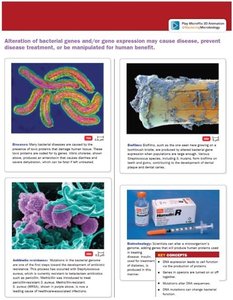
Alteration of bacterial genes and gene expression can cause disease, prevent disease treatment, or be manipulated for human benefit (e.g., antibiotic resistance, biotechnology).
Summary Table: Important Enzymes in DNA Replication, Expression, and Repair
Enzyme | Function |
|---|---|
DNA Gyrase | Relaxes supercoiling ahead of the replication fork |
DNA Ligase | Joins DNA strands; Okazaki fragments and excision repair |
DNA Polymerase | Synthesizes DNA; proofreads and repairs |
Helicase | Unwinds double-stranded DNA |
Primase | Makes RNA primers from DNA template |
Photolyase | Uses light to repair UV-induced thymine dimers |
RNA Polymerase | Copies RNA from DNA template |
snRNP | Removes introns and splices exons together |
Additional info: This summary covers the structure, function, regulation, mutation, and transfer of genetic material in microorganisms, with emphasis on bacterial systems. It integrates definitions, mechanisms, and clinical relevance for exam preparation.
