 뒤로
뒤로Microbial Genetics: Structure, Function, and Regulation of Genetic Material
스터디 가이드 - 스마트 노트
 자료에 맞춘 맞춤형 노트, 핵심 정의, 예시, 맥락을 확장해 제공합니다.
Microbial Genetics
Introduction to Microbial Genetics
Microbial genetics is the study of the mechanisms of heritable information in microorganisms. It encompasses the structure, function, replication, and regulation of genetic material, as well as the processes by which genetic information is expressed and transferred.
Genetic Material: DNA and RNA
Genome, Genotype, and Phenotype
Genome: The entire genetic complement of an organism, including all nucleotide sequences and genes. It contains instructions for the synthesis of RNA and proteins, which are essential for cellular function.
Genotype: The complete set of genes in the genome.
Phenotype: The observable physical and functional traits resulting from gene expression.
Nucleotide Structure
Nucleotides are the monomers of nucleic acids, composed of three parts:
Phosphate group: Provides a negative charge.
Pentose sugar: Deoxyribose in DNA (lacks an OH group at the 2' carbon), ribose in RNA.
Nitrogenous base: Adenine (A), Guanine (G), Cytosine (C), Thymine (T, in DNA), or Uracil (U, in RNA).
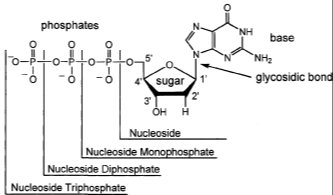
Nucleic Acid Structure
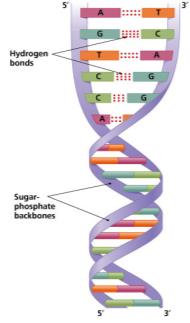
Nucleotides are linked in a 5' to 3' direction, forming the backbone of DNA and RNA.
Energy for polymerization comes from nucleotide triphosphates.
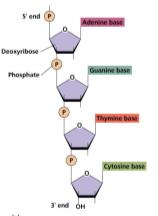
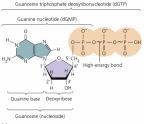
DNA Double Helix
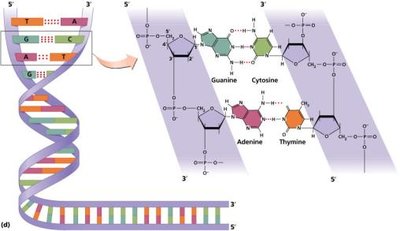
DNA consists of two antiparallel strands forming a double helix.
Hydrogen bonds form between complementary bases: C-G and A-T (in DNA); in RNA, U replaces T.
Key features: complementary base pairing and antiparallel orientation.
Organization of Prokaryotic and Eukaryotic Genomes
Prokaryotic Genomes
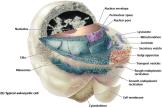
Contained in chromosomes (main DNA, usually circular, located in the nucleoid) and sometimes plasmids (small, circular, independently replicating DNA).
Plasmids often carry non-essential but advantageous genes (e.g., antibiotic resistance, virulence factors).
Eukaryotic Genomes
Located in nuclear chromosomes (linear, within a membrane-bound nucleus) and extranuclear DNA (mitochondria and chloroplasts, circular DNA).
DNA Replication
Overview and Semiconservative Replication
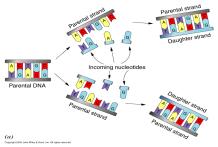
DNA replication is an anabolic process requiring nucleotide monomers and energy. It is semiconservative: each new DNA helix contains one original (parental) and one newly synthesized (daughter) strand.
Steps of DNA Replication
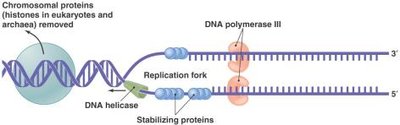
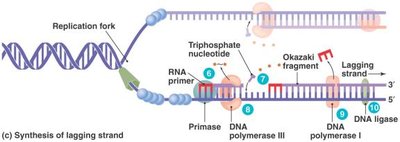
Remove DNA-associated proteins.
Unwind and separate template strands (DNA helicase).
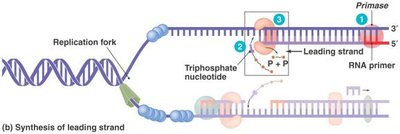
Synthesize RNA primers (primase).
Extend primers with DNA polymerase III (synthesizes DNA in the 5' to 3' direction).
Degrade RNA primers and fill gaps with DNA polymerase I.
Rewind new hybrid strands.
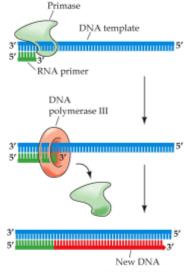
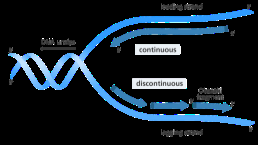
Leading vs. Lagging Strand Synthesis
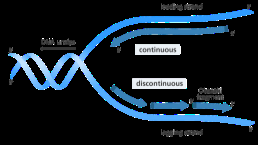
Leading strand: Synthesized continuously toward the replication fork.
Lagging strand: Synthesized discontinuously away from the fork in short fragments (Okazaki fragments).
Replication of Circular Chromosomes
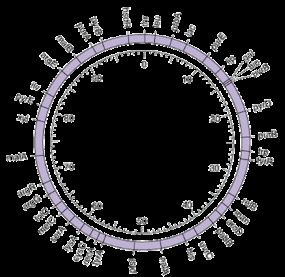
Replication begins at the origin of replication (ori) and proceeds bidirectionally around the circular chromosome.
Topoisomerases relieve torsional strain during replication.
Gene Expression: Transcription and Translation
Transcription (DNA to RNA)
Occurs in the nucleoid (prokaryotes) or nucleus/organelles (eukaryotes).
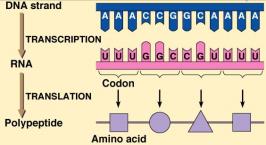
Three main types of RNA: messenger RNA (mRNA), ribosomal RNA (rRNA), and transfer RNA (tRNA).
Transcription Steps
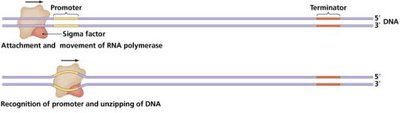
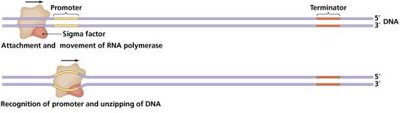
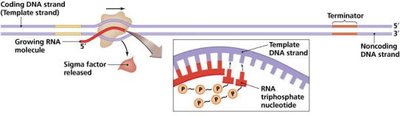
Initiation: RNA polymerase binds to the promoter with the help of sigma factor.
Elongation: RNA polymerase synthesizes RNA in the 5' to 3' direction, complementary to the DNA template.
Termination: RNA polymerase releases the RNA transcript upon reaching a terminator sequence (can be rho-dependent or independent).

Translation (RNA to Protein)
Translation is the synthesis of polypeptides (proteins) from mRNA templates, occurring in the cytosol.
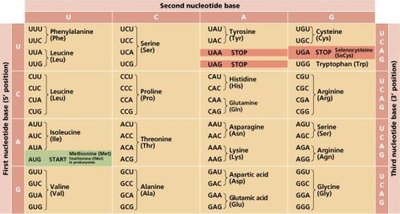
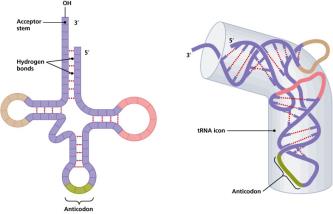
Involves mRNA (codons), tRNA (anticodons and amino acid transport), and rRNA (ribosome structure and function).
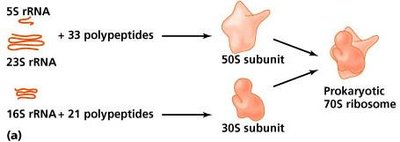
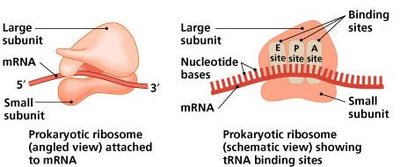
Translation Steps
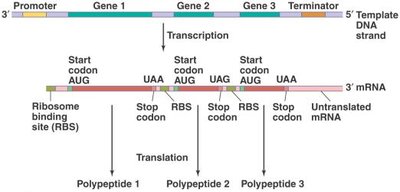
Initiation: Ribosomal subunits assemble on the mRNA at the ribosomal binding site (RBS), recruiting the initiator tRNA.
Elongation: Ribosome recruits aminoacyl-tRNAs according to the mRNA codon sequence, forming peptide bonds between amino acids.
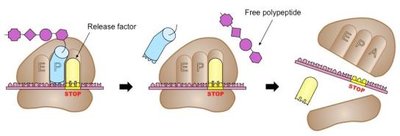
Termination: Release factors recognize stop codons, prompting the ribosome to release the completed polypeptide and dissociate.
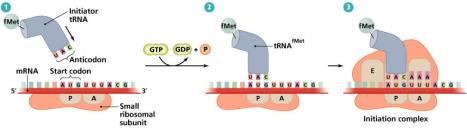
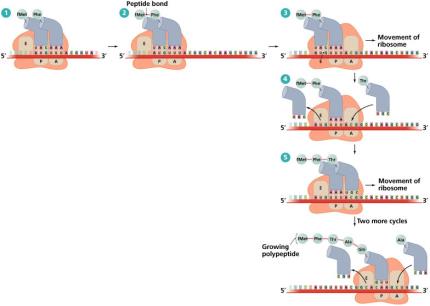
Coupled Transcription and Translation in Prokaryotes
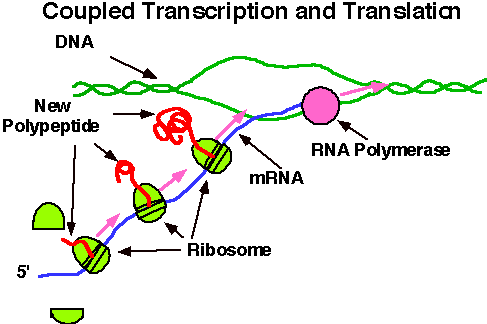
In prokaryotes, transcription and translation can occur simultaneously on the same mRNA molecule.
Polyribosomes (multiple ribosomes) can translate a single mRNA at once.
Regulation of Gene Expression
Gene Regulation in Prokaryotes: Operons
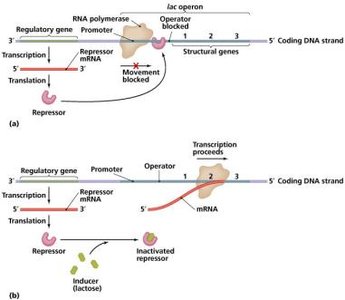
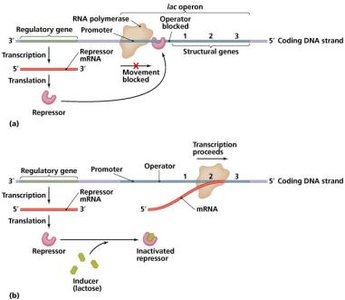
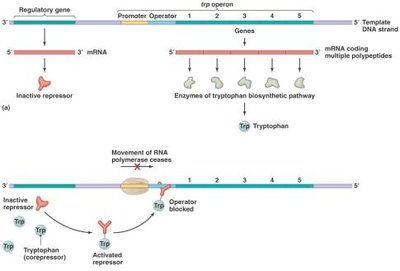
Genes with related functions are often organized into operons, regulated by common promoter and operator elements.
Inducible operons: Activated by inducers (e.g., lac operon for lactose metabolism).
Repressible operons: Transcribed continually until deactivated by repressors (e.g., trp operon for tryptophan synthesis).
Mutations and DNA Repair
Types of Mutations
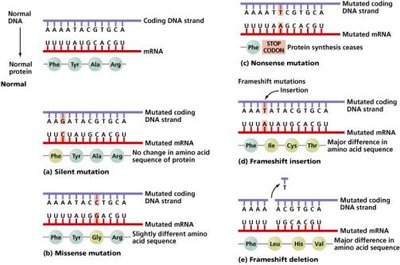
Point mutations: Affect one or a few base pairs (e.g., silent, missense, nonsense mutations).
Frameshift mutations: Insertions or deletions that alter the reading frame of codons.
Mutagens
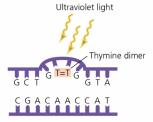
Radiation: Ionizing (e.g., X-rays) and nonionizing (e.g., UV light) can cause DNA damage such as breaks or thymine dimers.
Chemical mutagens: Nucleotide analogs, nucleotide-altering chemicals, and frameshift mutagens can disrupt DNA replication and cause mutations.
DNA Repair Mechanisms
Direct repair: Enzymatic removal of damage (e.g., thymine dimers).
Excision repair: Removal of damaged DNA followed by synthesis of new DNA.
Postreplication repair: Retrieval of missing information by recombination.
SOS response: Induction of multiple genes after DNA damage.
Error-prone repair: Last-resort mechanism filling gaps with random sequences.
Genetic Recombination and Horizontal Gene Transfer
Genetic Recombination
Exchange of DNA segments with homologous sequences, resulting in new genetic combinations.
Vertical gene transfer: Genes passed to descendants.
Horizontal gene transfer: Genes transferred between cells by transformation, transduction, or conjugation.
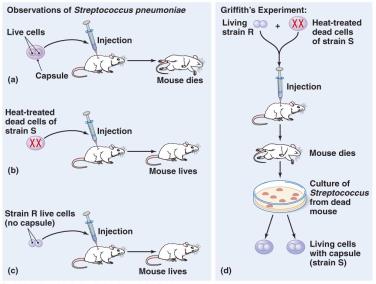
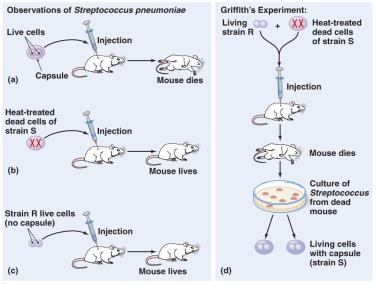
Transformation
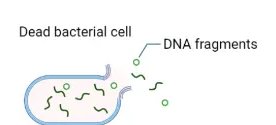
Uptake of free DNA from the environment by competent cells.
Demonstrated by Griffith's experiments with Streptococcus pneumoniae.
Transduction
Transfer of DNA from one cell to another via bacteriophages (viruses that infect bacteria).
Generalized transduction: Random DNA segments transferred.
Specialized transduction: Only specific DNA sequences transferred, often involving toxin genes.
Conjugation
Direct transfer of DNA between bacterial cells in physical contact, mediated by conjugation pili (sex pili) or adhesions.
Ability to conjugate is conferred by the F plasmid (fertility factor).
Additional info: This guide covers the core concepts of microbial genetics, including the structure and function of genetic material, mechanisms of gene expression, regulation, mutation, DNA repair, and horizontal gene transfer. These topics are foundational for understanding microbial physiology, evolution, and biotechnology applications.
