 뒤로
Microbial Genetics: Structure, Function, and Regulation of Genetic Material
스터디 가이드 - 스마트 노트
 자료에 맞춘 맞춤형 노트, 핵심 정의, 예시, 맥락을 확장해 제공합니다.
Microbial Genetics
Structure and Function of Genetic Material
Microbial genetics explores the nature, expression, and regulation of genes in microorganisms. Understanding the structure and function of genetic material is fundamental to microbiology.
Genetics: The study of genes, their information, expression, and replication.
Chromosomes: DNA-containing structures that carry hereditary information.
Genes: Segments of DNA encoding functional products, usually proteins.
Genome: All genetic information in a cell.
Genomics: Sequencing and molecular characterization of genomes.
The genetic code is a set of rules for converting nucleotide sequences into amino acid sequences of proteins. The central dogma describes the flow of genetic information: DNA is transcribed to RNA, which is translated into protein.

Genotype refers to the genetic makeup, while phenotype is the expression of those genes.
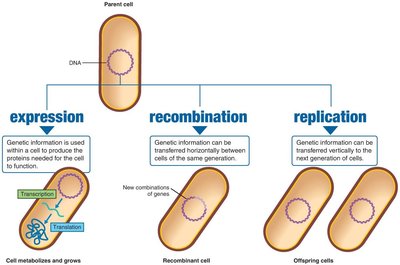
DNA and Chromosomes
Bacterial chromosomes are typically single, circular DNA molecules with associated proteins. The genome includes both protein-encoding genes and noncoding regions such as short tandem repeats (STRs).
Example: E. coli chromosome contains 4.6 million base pairs, highly supercoiled.
STRs: Repeating sequences (2-5 base pairs) of noncoding DNA.
DNA Structure and Replication
DNA forms a double helix with antiparallel strands. The backbone consists of deoxyribose-phosphate, and nitrogenous bases pair via hydrogen bonds (A-T, C-G).
Strands are complementary; each can serve as a template for new synthesis.
Replication is semiconservative: each new DNA molecule contains one old and one new strand.
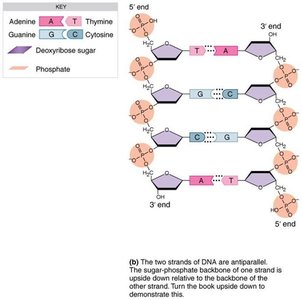
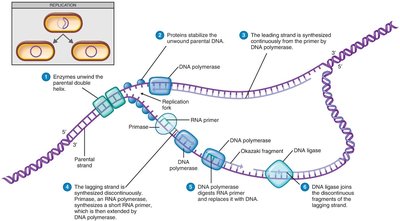
Key enzymes in replication include topoisomerase, gyrase (relax strands), helicase (separates strands), DNA polymerase (adds nucleotides), and DNA ligase (joins fragments).
Replication fork is created as strands separate.
Leading strand is synthesized continuously; lagging strand is synthesized discontinuously (Okazaki fragments).
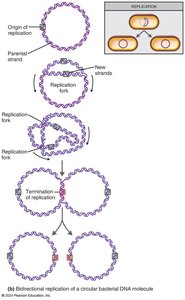
Most bacterial DNA replication is bidirectional, ensuring each offspring cell receives one copy. DNA polymerase proofreads for high accuracy.
RNA and Protein Synthesis
RNA is a single-stranded nucleic acid with ribose sugar and uracil instead of thymine. Types include:
rRNA: Integral part of ribosomes.
tRNA: Transports amino acids during protein synthesis.
mRNA: Carries coded information from DNA to ribosomes.
Transcription in Prokaryotes
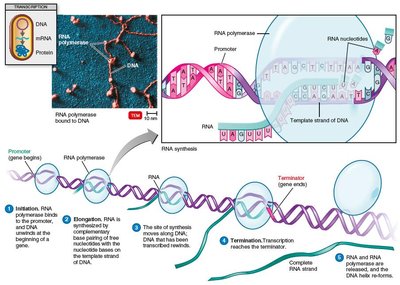
Transcription is the synthesis of a complementary mRNA strand from a DNA template. It involves:
Initiation: RNA polymerase binds to promoter sequence.
Elongation: RNA is synthesized in the 5' → 3' direction.
Termination: Transcription stops at terminator sequence.
Translation and the Genetic Code
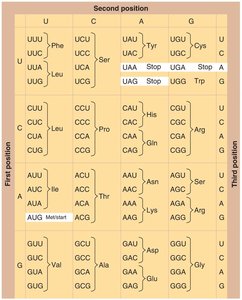
Translation converts mRNA into protein. Codons (three mRNA nucleotides) specify amino acids. The genetic code is degenerate; multiple codons can code for the same amino acid.
Start codon: AUG (methionine)
Stop codons: UAA, UAG, UGA
61 sense codons encode 20 amino acids
Translation Steps
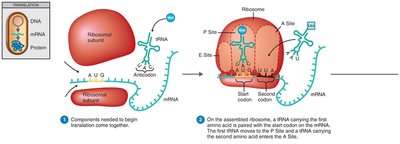
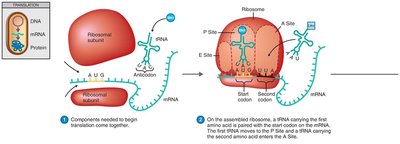
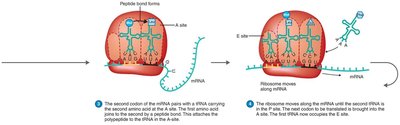
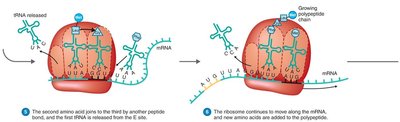
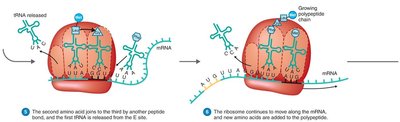
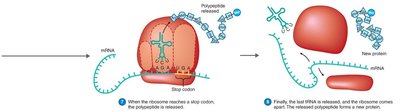
Translation begins at the start codon and ends at a stop codon. tRNA molecules transport amino acids and have anticodons that pair with mRNA codons. Peptide bonds join amino acids.
Initiation: Ribosomal subunits, tRNA, mRNA, and protein factors assemble.
Elongation: tRNA brings amino acids; ribosome forms peptide bonds and moves along mRNA.
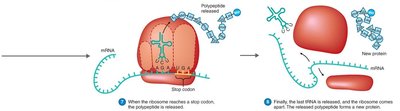
Termination: Translation ends at stop codon; ribosome disassembles.
Transcription and RNA Processing in Eukaryotes
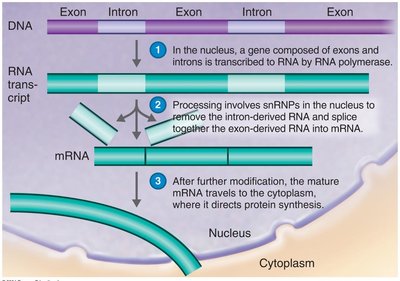
In eukaryotes, transcription occurs in the nucleus and translation in the cytoplasm. Genes contain exons (coding) and introns (noncoding). Introns are removed by snRNPs, and exons are spliced together.
Regulation of Bacterial Gene Expression
Gene expression in bacteria is regulated by constitutive, inducible, and repressible genes. Regulation occurs at the transcriptional level.
Constitutive genes: Always expressed.
Inducible genes: Expressed only when needed.
Repressible genes: Expression inhibited by repressors.
The Operon Model
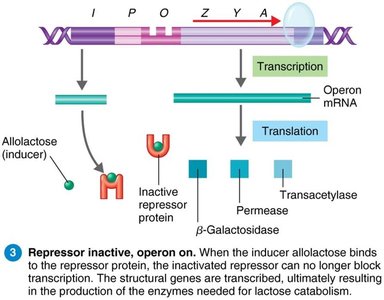
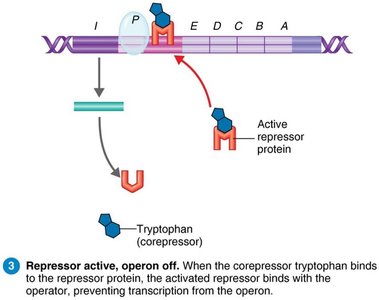
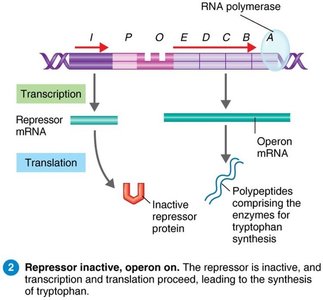
An operon consists of operator and promoter sites and structural genes they control. The promoter is where RNA polymerase initiates transcription; the operator controls transcription.
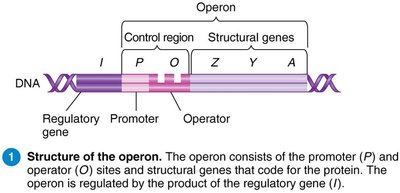
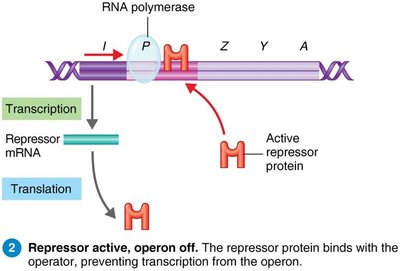
Inducible operons (e.g., lac operon) are not transcribed unless an inducer is present. Repressible operons (e.g., trp operon) are transcribed until turned off by a corepressor.
Mutation
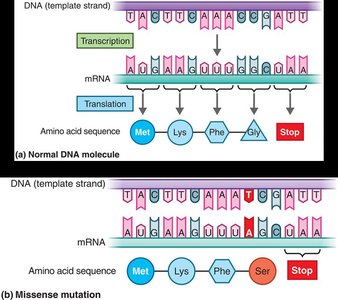
A mutation is a permanent change in the DNA sequence. Mutations may be neutral, beneficial, or harmful. Mutagens are agents that cause mutations; spontaneous mutations occur without mutagens.
Silent mutation: No effect on protein activity.
Missense mutation: Changes one amino acid.
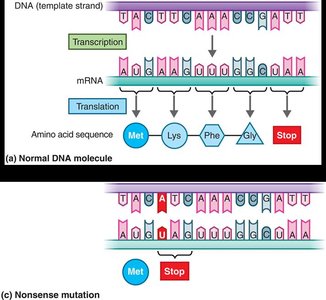
Nonsense mutation: Creates a stop codon.
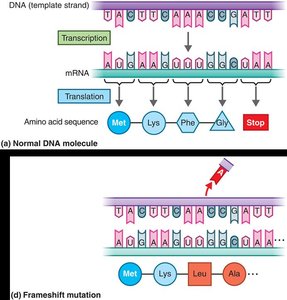
Frameshift mutation: Insertion or deletion shifts reading frame.
Chemical Mutagens
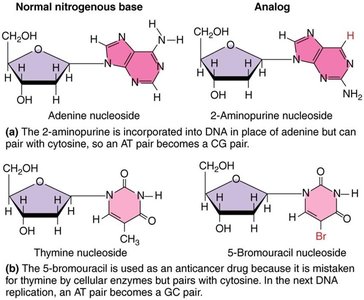
Chemicals such as nucleoside analogs can cause mutations by incorporating into DNA and causing incorrect base pairing.
Radiation
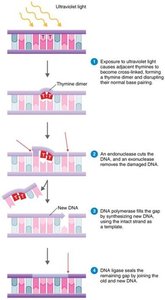
Ionizing radiation (X-rays, gamma rays) and UV radiation can damage DNA. UV causes thymine dimers, which are repaired by nucleotide excision repair.
Genetic Transfer and Recombination
Genetic recombination is the exchange of genes between DNA molecules, contributing to diversity. Vertical gene transfer is from parent to offspring; horizontal gene transfer is between cells of the same generation.
Horizontal transfer mechanisms: conjugation, transformation, transduction.
Recipient cell becomes a recombinant.
Plasmids and Transposons
Plasmids and transposons are mobile genetic elements. Plasmids are self-replicating circular DNA, often carrying genes for antibiotic resistance or toxin production. Transposons can move within and between DNA molecules.
Transformation in Bacteria
Transformation involves uptake of "naked" DNA from the environment, as demonstrated by Griffith's experiment with Streptococcus pneumoniae.
Conjugation in Bacteria
Conjugation is the transfer of plasmids via cell-to-cell contact. Gram-negative bacteria use sex pili; Gram-positive use sticky substances. Donor cells (F+) transfer plasmids to recipients (F-), which then become F+.
Transduction in Bacteria
Transduction is the transfer of DNA via bacteriophages. Generalized transduction transfers random DNA; specialized transduction transfers specific genes.
Type of Genetic Transfer | Mechanism | Key Features |
|---|---|---|
Transformation | Uptake of naked DNA | Requires competent cells; demonstrated by Griffith's experiment |
Conjugation | Cell-to-cell contact | Uses sex pili (Gram-negative) or sticky substances (Gram-positive); F+ to F- transfer |
Transduction | Bacteriophage-mediated | Generalized (random DNA); specialized (specific genes) |
Example: Antibiotic resistance genes can be transferred via plasmids during conjugation, leading to the spread of resistance in bacterial populations.
