 뒤로
Chapter 8
스터디 가이드 - 스마트 노트
 자료에 맞춘 맞춤형 노트, 핵심 정의, 예시, 맥락을 확장해 제공합니다.
Microbial Genetics
Introduction to Microbial Genetics
Microbial genetics is the study of how microorganisms inherit traits, how their genetic information is organized, expressed, and regulated. This field is fundamental for understanding microbial physiology, evolution, and biotechnology applications.
Structure and Function of Genetic Material
Key Definitions
Genetics: The study of genes, how they carry information, how information is expressed, and how genes are replicated.
Genome: All the genetic information in a cell.
Chromosomes: Structures containing DNA that physically carry hereditary information; chromosomes contain genes.
Genes: Segments of DNA that encode functional products, usually proteins.
Genomics: Sequencing and molecular characterization of genomes.
Genetic code: Set of rules that determines how a nucleotide sequence is converted to an amino acid sequence of a protein.
Genotype: The genetic makeup of an organism.
Phenotype: The expression of the genes; observable characteristics.
DNA and Chromosomes in Bacteria
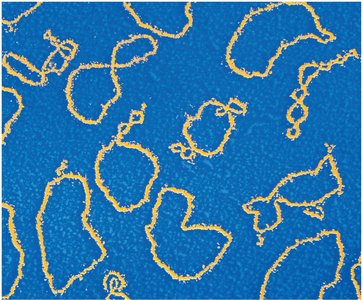
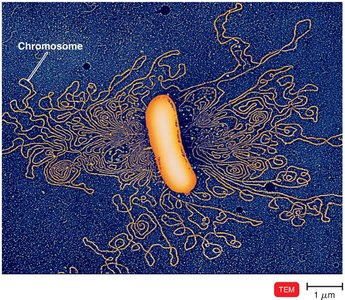
Bacteria usually have a single, circular chromosome made of DNA and associated proteins.
Example: Escherichia coli chromosome contains about 4.6 million base pairs, highly supercoiled for compactness.
The genome includes protein-encoding genes and noncoding regions called short tandem repeats (STRs).
The Central Dogma of Molecular Biology
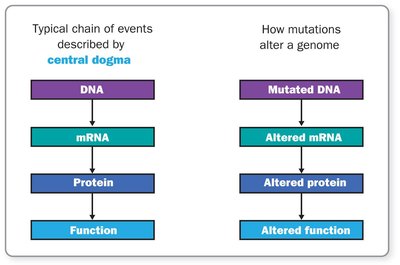
The central dogma describes the flow of genetic information: DNA is transcribed into RNA, which is then translated into protein. Mutations in DNA can alter mRNA, resulting in altered proteins and functions.

Flow of Genetic Information
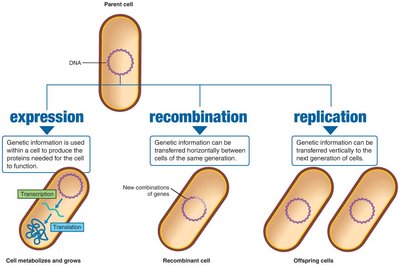
Vertical gene transfer: Transmission of genetic information from one generation to the next.
Expression: Genetic information is used to produce proteins needed for cell function.
Replication: Genetic information is copied for transmission to offspring.
DNA Structure and Replication
DNA Structure
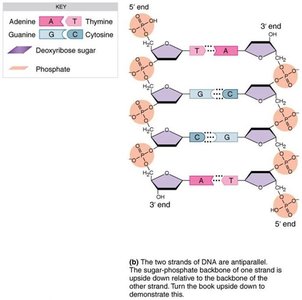
DNA forms a double helix with a backbone of deoxyribose-phosphate.
Strands are held together by hydrogen bonds between complementary bases: Adenine (A) pairs with Thymine (T), and Cytosine (C) pairs with Guanine (G).
Strands are antiparallel (run in opposite directions).
DNA Replication
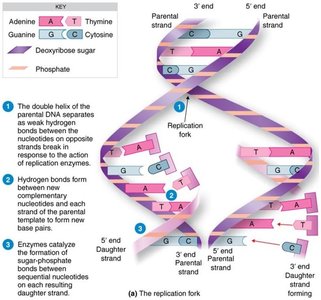
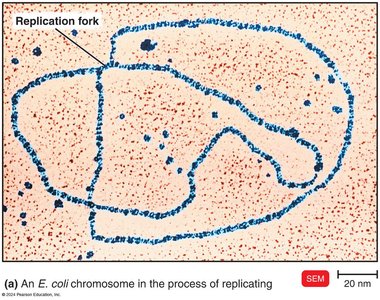
DNA replication is the process by which a cell duplicates its DNA before cell division. It is semiconservative, meaning each new DNA molecule consists of one old and one new strand.
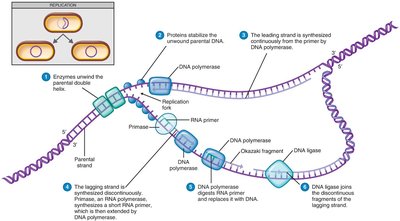
Replication begins at a specific location, creating a replication fork.
Key enzymes:
Helicase: Unwinds the DNA double helix.
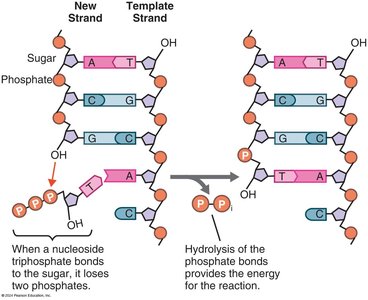
DNA polymerase: Synthesizes new DNA strands and proofreads for errors.
Primase: Synthesizes RNA primers to initiate DNA synthesis.
DNA ligase: Joins Okazaki fragments on the lagging strand.
Topoisomerase/Gyrase: Relaxes supercoiling ahead of the replication fork.
Replication is bidirectional and highly accurate due to proofreading.
Energy for replication is provided by hydrolysis of nucleoside triphosphates (e.g., ATP).
Important Enzymes in DNA Replication, Expression, and Repair
Enzyme | Function |
|---|---|
DNA Gyrase | Relaxes supercoiling ahead of the replication fork |
DNA Ligase | Joins DNA strands; seals Okazaki fragments |
DNA Polymerase | Synthesizes DNA; proofreads and repairs DNA |
Helicase | Unwinds double-stranded DNA |
Primase | Makes RNA primers from a DNA template |
Topoisomerase/Gyrase | Relaxes supercoiling; separates DNA circles at the end of replication |
Endonucleases/Exonucleases | Cut DNA for repair and recombination |
Methylase | Adds methyl groups to DNA bases |
Photolyase | Repairs UV-induced DNA damage |
Ribozyme | Removes introns and splices exons in RNA |
RNA Polymerase | Copies RNA from a DNA template |
snRNP | Removes introns and splices exons in eukaryotic RNA |
Transposase | Cuts DNA backbone, leaving sticky ends |
RNA and Protein Synthesis
Types of RNA
Ribosomal RNA (rRNA): Integral part of ribosomes.
Transfer RNA (tRNA): Transports amino acids during protein synthesis.
Messenger RNA (mRNA): Carries coded information from DNA to ribosomes.
Transcription in Prokaryotes
Transcription is the synthesis of a complementary mRNA strand from a DNA template.
Initiation: RNA polymerase binds to the promoter sequence on DNA.
Elongation: RNA polymerase adds ribonucleotides in the 5' to 3' direction.
Termination: Transcription stops at the terminator sequence.
Translation
Translation is the process by which mRNA is decoded to synthesize proteins.
mRNA codons (groups of three nucleotides) specify amino acids.
There are 64 codons: 61 sense codons for amino acids (including one start codon, AUG) and 3 stop codons (UAA, UAG, UGA).
tRNA molecules bring amino acids to the ribosome, matching codons with anticodons.
Peptide bonds join amino acids into a polypeptide chain.
In bacteria, translation can begin before transcription is complete due to the lack of a nuclear membrane.
Mutations
Types of Mutations
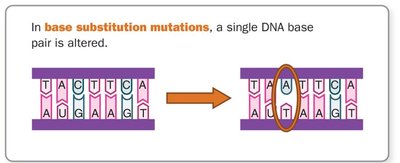
Base substitution mutations: A single DNA base pair is altered, potentially changing one amino acid in a protein.
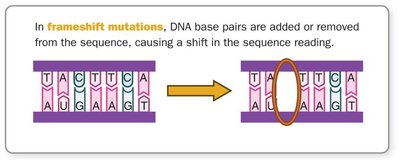
Frameshift mutations: DNA base pairs are added or removed, shifting the reading frame and altering downstream amino acids.
Regulation of Bacterial Gene Expression
Operons and Gene Regulation
Operon: A set of operator and promoter sites and the structural genes they control.
Promoter: DNA segment where RNA polymerase initiates transcription.
Operator: DNA segment that controls transcription of structural genes.
Types of Genes
Constitutive genes: Expressed at a fixed rate; always "on".
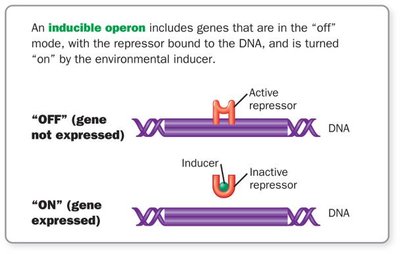
Inducible genes: Expressed only when needed; default state is "off".
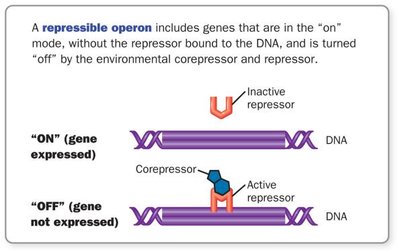
Repressible genes: Expressed until turned "off" by a repressor; default state is "on".
Inducible and Repressible Operons
Inducible operon (e.g., lac operon): Genes are "off" unless an inducer is present. The repressor binds to the operator, blocking transcription. When the inducer binds the repressor, it becomes inactive, allowing transcription.
Repressible operon (e.g., trp operon): Genes are "on" unless a corepressor (end-product) is present. The corepressor activates the repressor, which then binds to the operator and blocks transcription.
Applications and Importance
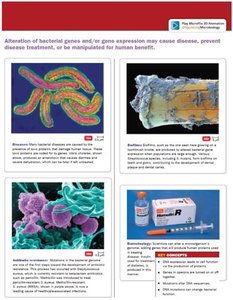
Alteration of bacterial genes and gene expression can cause disease, prevent disease treatment, or be manipulated for human benefit (e.g., antibiotic resistance, biotechnology, and industrial microbiology).
Summary Table: Key Enzymes in DNA Replication and Expression
Enzyme | Function |
|---|---|
DNA Gyrase | Relaxes supercoiling ahead of the replication fork |
DNA Ligase | Joins DNA fragments |
DNA Polymerase | Synthesizes DNA, proofreads, and repairs |
Helicase | Unwinds DNA |
Primase | Creates RNA primers |
Additional info: This guide covers the foundational concepts of microbial genetics, including the structure and function of genetic material, mechanisms of gene expression and regulation, and the impact of mutations. Understanding these principles is essential for advanced studies in microbiology, biotechnology, and medicine.
