 뒤로
Ch 7 Microbial Genetics: Structure, Function, and Regulation of Genetic Material
스터디 가이드 - 스마트 노트
 자료에 맞춘 맞춤형 노트, 핵심 정의, 예시, 맥락을 확장해 제공합니다.
Microbial Genetics
Introduction to Microbial Genetics
Microbial genetics is the study of inheritance and inheritable traits as expressed in an organism’s genetic material. The genome is the entire genetic complement of an organism, including its genes and nucleotide sequences. Understanding microbial genetics is essential for comprehending how microorganisms function, adapt, and evolve.
The Structure of Nucleic Acids
Composition and Base Pairing
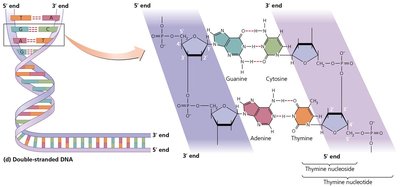
Nucleic acids are polymers of nucleotides, each consisting of a phosphate group, a pentose sugar, and a nitrogenous base. The sequence and pairing of these bases are fundamental to the storage and transmission of genetic information.
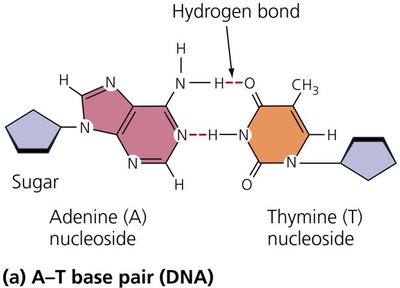
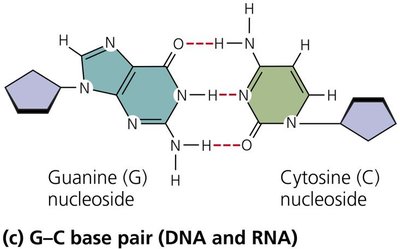
DNA contains the bases adenine (A), thymine (T), guanine (G), and cytosine (C).
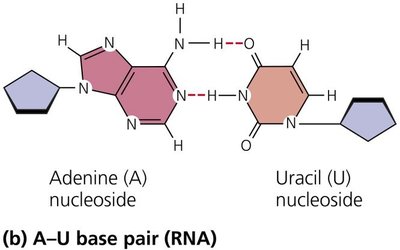
RNA contains uracil (U) instead of thymine.
Base pairing: A pairs with T (or U in RNA), and G pairs with C via hydrogen bonds.
Organization of Microbial Genomes
Prokaryotic Genomes
Prokaryotic cells (bacteria and archaea) typically have a single, circular chromosome located in the nucleoid. They are usually haploid, possessing only one chromosome copy. In addition to chromosomes, prokaryotes may contain plasmids—small, independently replicating DNA molecules that can confer survival advantages such as antibiotic resistance.
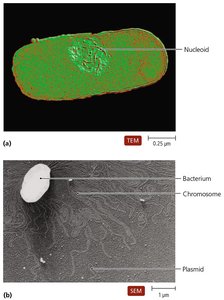
Eukaryotic Genomes
Eukaryotic cells generally have multiple, linear chromosomes contained within a nucleus and are often diploid. Their DNA is tightly packaged with histone proteins into chromatin and further organized into nucleosomes and higher-order structures. Eukaryotes also possess extranuclear DNA in mitochondria and chloroplasts, which resemble prokaryotic chromosomes.
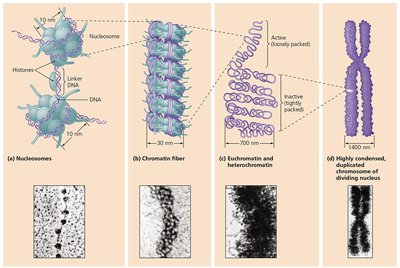
Comparison of Microbial Genomes
Feature | Bacteria | Archaea | Eukarya |
|---|---|---|---|
Number of Chromosomes | Single (haploid), copies of one or more | One (haploid) | Two or more, typically diploid |
Plasmids Present | In some cells, frequently more than one per cell | In some cells | In some fungi, algae, and protozoa |
Type of Nucleic Acid | Circular or linear dsDNA | Circular dsDNA | Linear dsDNA in nucleus, circular dsDNA in organelles and plasmids |
Location of DNA | Nucleoid of cytoplasm and in plasmids | Nucleoid of cytoplasm and in plasmids | In nucleus, mitochondria, chloroplasts, and plasmids in cytosol |
Histones Present? | No, but associated with small amount of protein | Yes | Yes, in nuclear chromosomes |
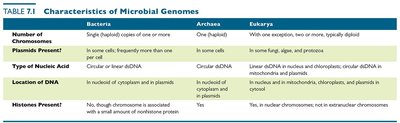
DNA Replication
Semiconservative Replication
DNA replication is semiconservative, meaning each new DNA molecule consists of one original (parental) strand and one newly synthesized (daughter) strand. The process relies on the complementary nature of DNA strands and requires both monomers and energy, provided by triphosphate deoxyribonucleotides.
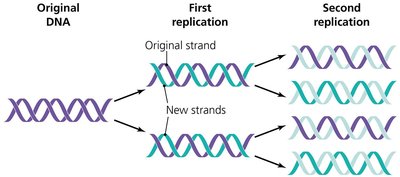
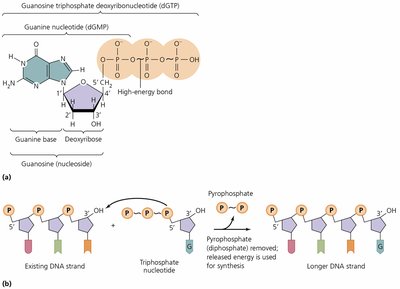
Mechanism of Replication in Prokaryotes
Replication begins at a specific origin and proceeds bidirectionally. DNA polymerase synthesizes new DNA only in the 5′ to 3′ direction. The leading strand is synthesized continuously, while the lagging strand is synthesized discontinuously in Okazaki fragments. Enzymes such as gyrases and topoisomerases relieve supercoiling, and DNA methylation plays roles in gene expression, replication initiation, and DNA repair.
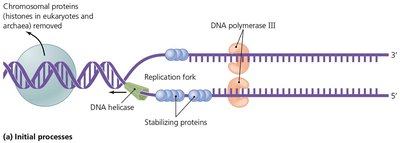
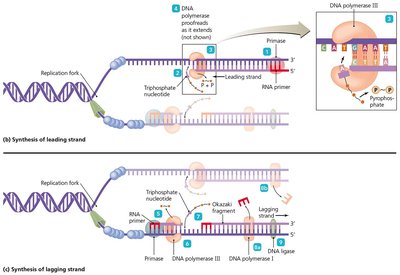
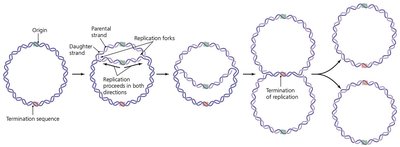
Differences in Eukaryotic DNA Replication
Multiple origins of replication per chromosome
Four types of DNA polymerases
Shorter Okazaki fragments
Methylation occurs only on cytosine bases
Gene Function: Genotype and Phenotype
Relationship Between Genotype and Phenotype
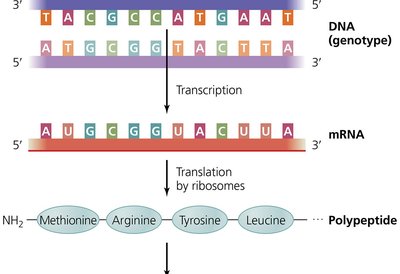
The genotype is the set of genes in the genome, while the phenotype refers to the physical and functional traits expressed by the organism. The genotype determines the phenotype through the processes of transcription and translation.
The Central Dogma: Transcription and Translation
Transcription
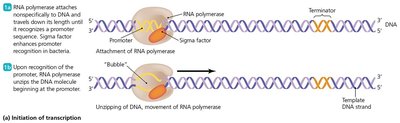
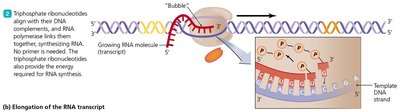
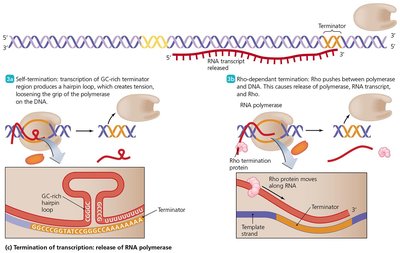
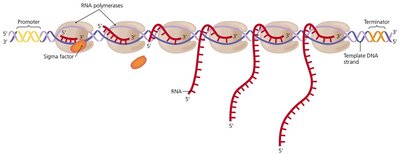
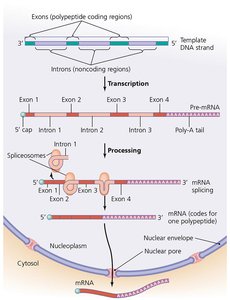
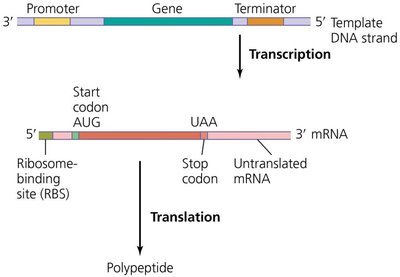
Transcription is the process by which information in DNA is copied into RNA. It involves three main steps: initiation, elongation, and termination. In prokaryotes, transcription occurs in the nucleoid, while in eukaryotes, it occurs in the nucleus and organelles. Eukaryotic mRNA undergoes additional processing, including capping, polyadenylation, and splicing.
Translation
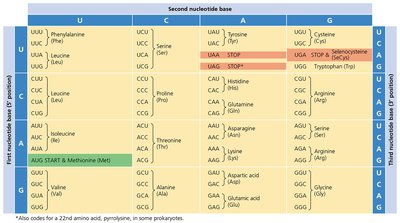
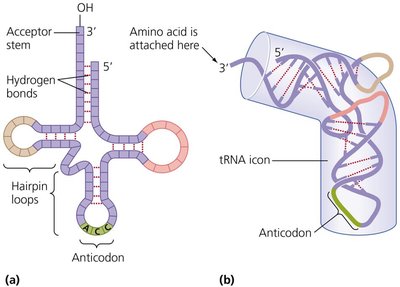
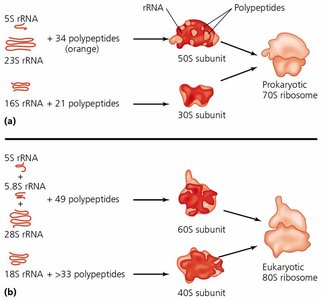
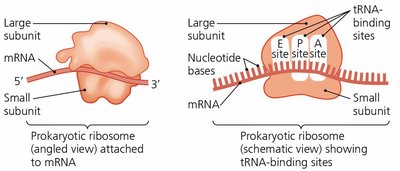
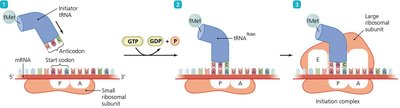
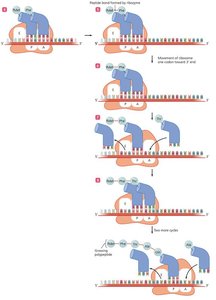
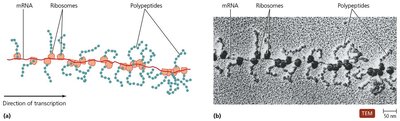
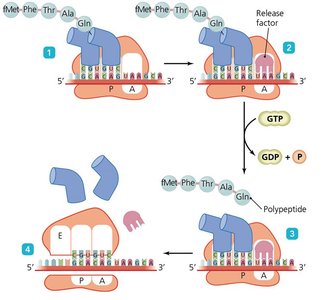
Translation is the process by which ribosomes use the genetic information in mRNA to synthesize polypeptides. The genetic code is read in codons (three-nucleotide sequences), each specifying an amino acid. Three types of RNA are involved: mRNA (messenger), tRNA (transfer), and rRNA (ribosomal).
Comparison of Genetic Processes
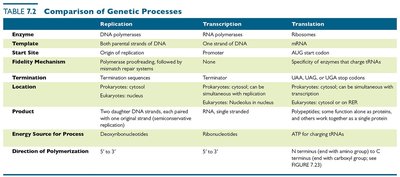
Process | Replication | Transcription | Translation |
|---|---|---|---|
Enzyme | DNA polymerase | RNA polymerase | Ribosome |
Template | Both parental strands of DNA | One strand of DNA | mRNA |
Product | Two daughter DNA strands | RNA (single-stranded) | Polypeptide |
Direction | 5' → 3' | 5' → 3' | N-terminus to C-terminus |
Regulation of Genetic Expression
Operons in Prokaryotes
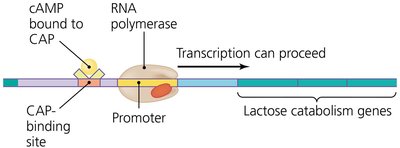
An operon is a cluster of genes under the control of a single promoter and operator, allowing coordinated regulation. Operons can be inducible (e.g., lac operon) or repressible (e.g., trp operon).

Mutations and DNA Repair
Types and Effects of Mutations
A mutation is a change in the nucleotide sequence of a genome. Point mutations affect a single base pair and include substitutions, insertions, and deletions. Gross mutations involve larger changes such as inversions or duplications. Most mutations are deleterious, but some can be beneficial or neutral.
Mutagens and DNA Repair Mechanisms
Mutagens such as radiation and chemicals can increase mutation rates. Cells possess multiple DNA repair mechanisms, including direct repair, single-strand repair, and error-prone repair (e.g., SOS response in E. coli).
Genetic Recombination and Horizontal Gene Transfer
Mechanisms of Genetic Exchange
Genetic recombination involves the exchange of nucleotide sequences between DNA molecules, resulting in new genetic combinations. Horizontal gene transfer in prokaryotes occurs via transformation (uptake of naked DNA), transduction (phage-mediated transfer), and conjugation (direct cell-to-cell transfer).
Additional info: For a deeper understanding, students should review the molecular details of each process, including the specific enzymes involved and the regulatory mechanisms that control gene expression in various microbial systems.
