 뒤로
뒤로Microbial Growth and Its Control: Study Notes
스터디 가이드 - 스마트 노트
 자료에 맞춘 맞춤형 노트, 핵심 정의, 예시, 맥락을 확장해 제공합니다.
Microbial Growth and Its Control
Overview of Microbial Growth
Microbial growth refers to the increase in the number of cells in a population, rather than the size of individual cells. Understanding microbial growth is essential for applications in industry, health, and research, including antibiotic production and laboratory experiments.
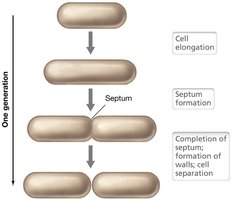
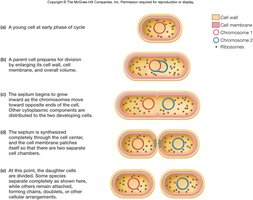
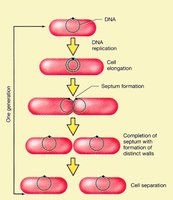
Binary fission is the primary method of reproduction in bacteria and archaea.
Growth is influenced by chemical and physical factors such as nutrients, temperature, and oxygen.
Growth can be measured and controlled for optimal outcomes in industrial and laboratory settings.
Reproductive Strategies of Microbes
Microbes employ various reproductive strategies, which differ between eukaryotic microbes and prokaryotes.
Eukaryotic microbes can reproduce sexually or asexually, and may be haploid or diploid.
Bacteria and Archaea are haploid and reproduce asexually, primarily by binary fission, budding, or filamentous growth.
All must replicate and segregate their genome before cell division.
Phases of Microbial Growth in Batch Culture
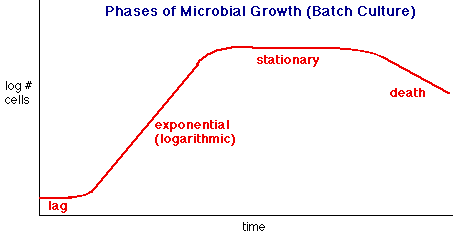
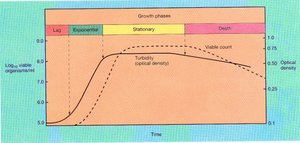
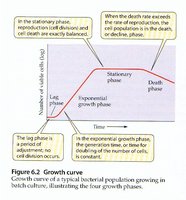
Microbial populations in batch culture exhibit four distinct growth phases: lag, exponential, stationary, and death. Each phase reflects changes in cell physiology and population dynamics.
Lag phase: Cells adapt to new environment, regenerate nutrients, and synthesize enzymes.
Exponential phase: Cells divide at maximal rate; useful for calculating doubling time.
Stationary phase: Growth ceases due to nutrient depletion or waste accumulation.
Death phase: Cell death exceeds reproduction due to toxic conditions.
Mathematical Modeling of Microbial Growth
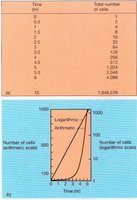
Microbial growth during the exponential phase can be modeled mathematically to estimate generation time and population size.
Generation time (g): The time required for a population to double.
Formula: where is final cell concentration, is initial concentration, and is the number of generations.
To calculate :
Example: If , , then
Batch vs. Continuous Culture Methods
Microbial cultures can be grown in batch or continuous systems, each with distinct advantages.
Batch culture: Inoculate sterile medium and allow growth; typical for laboratory studies.
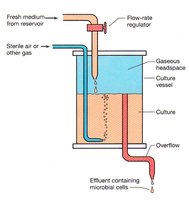
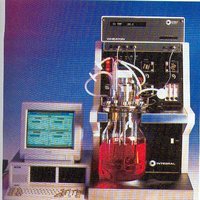
Continuous culture: Use chemostat or turbidostat to maintain cells in exponential phase by steady addition of fresh medium and removal of culture.
Continuous culture allows independent control of growth rate and yield.
Measurement of Microbial Growth
Accurate measurement of microbial growth is essential for research and industrial applications. Several methods are used:
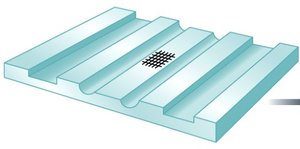
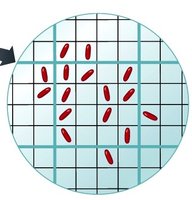
Total cell count: Direct counting using devices like the Petroff-Hauser chamber; cannot distinguish live from dead cells.
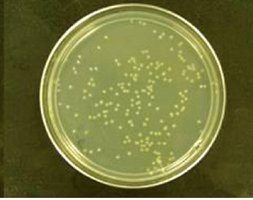
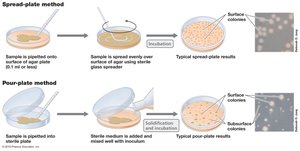
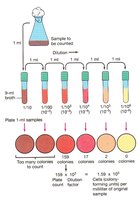
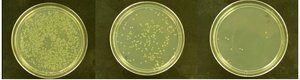
Viable count: Colony-forming units (CFU) assay using dilution series and plating; counts only cells able to reproduce.
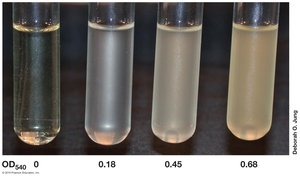
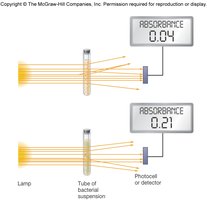
Optical techniques: Turbidity measurement using spectrophotometer; quick and easy estimation of cell concentration.

Physical and Chemical Factors Affecting Growth
Microbial growth is influenced by environmental factors such as temperature and oxygen availability.
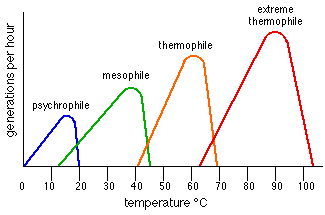
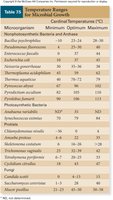
Temperature: Microbes are classified as psychrophiles, mesophiles, thermophiles, or hyperthermophiles based on their optimum growth temperatures.
Oxygen: Microbes may be obligate aerobes, facultative anaerobes, aerotolerant anaerobes, obligate anaerobes, or microaerophiles.
Biofilms and Microbial Communities
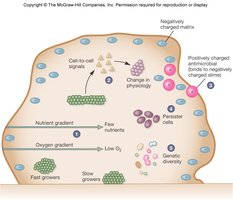
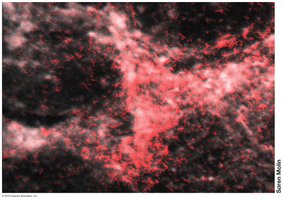
Most microbes grow attached to surfaces in complex, slime-enclosed communities called biofilms. Biofilms are ubiquitous in nature and have significant implications for health and industry.
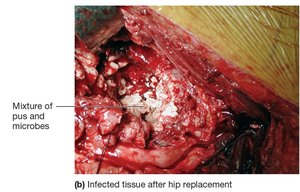
Biofilms form on natural and man-made surfaces, including medical devices and human tissues.
Biofilms are implicated in chronic infections and resistance to antimicrobial agents.
Pseudomonas aeruginosa forms biofilms in the lungs of cystic fibrosis patients.
Quorum Sensing and Cell Communication
Bacterial cells in biofilms communicate via quorum sensing, a density-dependent mechanism that regulates gene expression and community behavior.
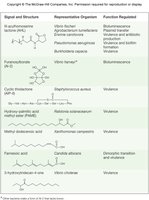
Quorum sensing: Production of autoinducer molecules (e.g., acylhomoserine lactone, AHL) that trigger gene expression when a threshold concentration is reached.
Functions regulated include DNA uptake, bacteriocin release, and virulence.
Summary Table: Generation Times of Microorganisms
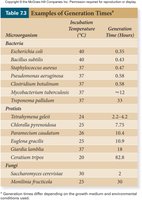
Microorganism | Incubation Temp (°C) | Generation Time (Hours) |
|---|---|---|
Escherichia coli | 40 | 0.40 |
Bacillus subtilis | 40 | 0.43 |
Staphylococcus aureus | 37 | 0.47 |
Pseudomonas aeruginosa | 37 | 0.58 |
Mycobacterium tuberculosis | 37 | 12 |
Trichomonas gallinae | 37 | 2.2 |
Paramecium caudatum | 25 | 10.4 |
Saccharomyces cerevisiae | 30 | 2 |
Neurospora crassa | 30 | 2.5 |
Summary Table: Temperature Ranges for Microbial Growth
Microorganism | Minimum (°C) | Optimum (°C) | Maximum (°C) |
|---|---|---|---|
Neutrophilic bacteria | 10 | 23-24 | 28-30 |
Escherichia coli | 8 | 37 | 45 |
Pseudomonas aeruginosa | 10 | 37 | 42 |
Thermophilic bacteria | 40 | 70 | 80 |
Hyperthermophilic bacteria | 80 | 105 | 113 |
Additional info:
Biofilms are a major concern in medical settings due to their resistance to antibiotics and involvement in chronic infections.
Quorum sensing is a target for novel antimicrobial strategies.
Continuous culture systems are used in biotechnology for large-scale production of microbial products.
