 뒤로
Microbial Growth Control: Physical and Chemical Methods
스터디 가이드 - 스마트 노트
 자료에 맞춘 맞춤형 노트, 핵심 정의, 예시, 맥락을 확장해 제공합니다.
Microbial Growth Control
Terminology of Microbial Control
Understanding the terminology is essential for discussing microbial control methods. These terms describe the processes and outcomes of various treatments applied to microorganisms.
Sterilization: Complete destruction of all microbial life, including endospores.
Commercial Sterilization: Targeted killing of Clostridium botulinum endospores, typically using heat.
Disinfection: Removal of pathogens from inanimate objects.
Antisepsis: Removal of pathogens from living tissue.
Degerming: Removal of microbes from a limited area, such as skin before injection.
Sanitization: Reduction of microbial counts on eating utensils to safe levels.
Biocide/Germicide: Agents that kill microbes.
Bacteriostasis: Inhibition of microbial growth without killing.
Sepsis: Indicates microbial contamination.
Asepsis: Absence of significant contamination; aseptic techniques prevent contamination during procedures.
Patterns of Microbial Death
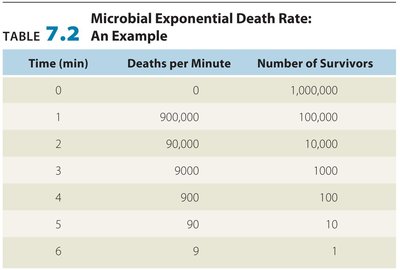
Microbial death occurs at a logarithmic rate when exposed to lethal agents. This pattern is crucial for understanding sterilization and disinfection efficacy.
Microbial death is not instantaneous; it follows an exponential decline.
Each minute, a constant percentage of the population dies, not a constant number.
Time (min) | Deaths per Minute | Number of Survivors |
|---|---|---|
0 | 0 | 1,000,000 |
1 | 900,000 | 100,000 |
2 | 90,000 | 10,000 |
3 | 9,000 | 1,000 |
4 | 900 | 100 |
5 | 90 | 10 |
6 | 9 | 1 |
Effectiveness of Treatment
The effectiveness of microbial control treatments depends on several factors:
Number of microbes: Larger populations require longer treatment times.
Environment: Presence of organic matter, temperature, and biofilms can affect efficacy.
Time of exposure: Longer exposure increases effectiveness.
Microbial characteristics: Some microbes, such as endospores, are more resistant.
Actions of Microbial Control Agents
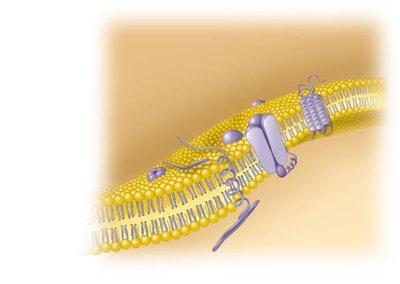
Microbial control agents act by targeting key cellular structures:
Alteration of membrane permeability: Disrupts cell membrane, leading to leakage of cellular contents.
Damage to proteins: Denaturation or inactivation of enzymes and structural proteins.
Damage to nucleic acids: Prevents replication and transcription, leading to cell death.
Physical Methods of Microbial Control
Heat
Heat is a widely used method for sterilization and disinfection. It kills microbes by denaturing proteins and inactivating enzymes.
Thermal Death Point (TDP): Lowest temperature at which all cells in a culture are killed in 10 minutes.
Thermal Death Time (TDT): Time required to kill all cells at a given temperature.
Decimal Reduction Time (DRT or D value): Minutes to kill 90% of a population at a given temperature.
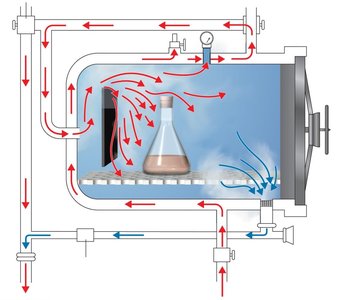
Moist Heat Sterilization
Boiling: Kills most microbes but not endospores.
Autoclaving: Steam under pressure (121°C for 15 min) kills all organisms and endospores. Used for sterilizing media, glassware, and instruments.
Pasteurization
Reduces spoilage organisms and pathogens.
Equivalent treatments: 63°C for 30 min, HTST (72°C for 15 sec), UHT (140°C for <1 sec).
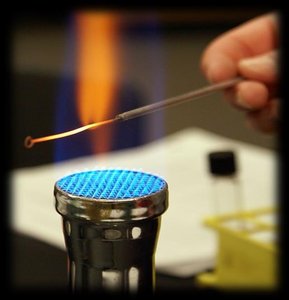
Dry Heat Sterilization
Flaming: Direct exposure to flame.
Incineration: Complete combustion of materials.
Hot-air sterilization: 170°C for 2 hours.
Filtration
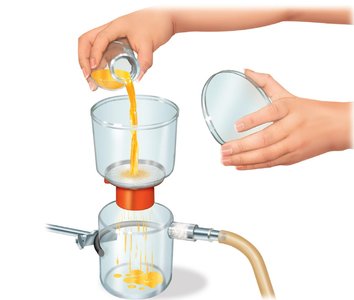
Filtration is used to remove microbes from liquids and gases, especially heat-sensitive solutions.
HEPA filters: Remove microbes >0.3 µm from air.
Membrane filters: Remove microbes >0.22 µm from liquids.
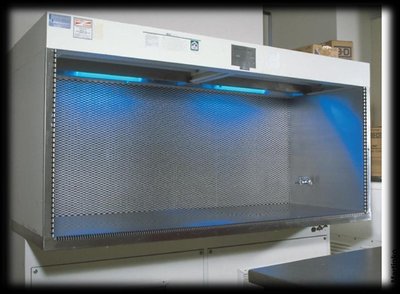
Biological Safety Cabinets
Use HEPA filters to provide sterile air for laboratory work.

Low Temperature
Low temperatures inhibit microbial growth (bacteriostatic effect).
Refrigeration: Slows metabolism.
Deep-freezing: Preserves microbes.
Lyophilization: Freeze-drying for long-term preservation.
High Pressure
High pressure denatures proteins and is used for certain food preservation methods.
Desiccation
Desiccation (drying) prevents metabolism and is used for preservation.
Osmotic Pressure
High concentrations of salt or sugar create hypertonic environments, causing plasmolysis and inhibiting microbial growth.
Radiation
Ionizing radiation: (X rays, gamma rays, electron beams) damages DNA by ionizing water to release OH• radicals.
Nonionizing radiation: (UV, 260 nm) damages DNA, causing thymine dimers.
Microwaves: Kill by heat, not especially antimicrobial.
Chemical Methods of Microbial Control
Principles of Effective Disinfection
Concentration of disinfectant: Higher concentrations are generally more effective.
Organic matter: Can inhibit effectiveness.
pH: Influences activity of disinfectants.
Time: Longer exposure increases effectiveness.
Evaluating Disinfectants
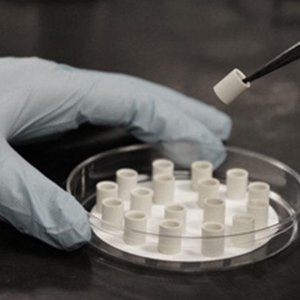
Use-Dilution Test
Used to determine the effectiveness of disinfectants against specific microbes.
Metal rings dipped in test bacteria, dried, then exposed to disinfectant.
Rings transferred to culture media to check for surviving bacteria.
Disc Diffusion Test
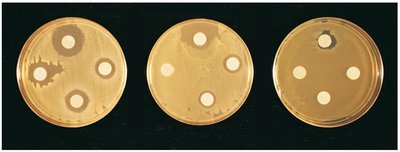
Used to evaluate the efficacy of chemical agents by measuring zones of inhibition on agar plates.
Discs soaked in disinfectant placed on inoculated agar.
Zone of inhibition indicates effectiveness.
Types of Chemical Agents
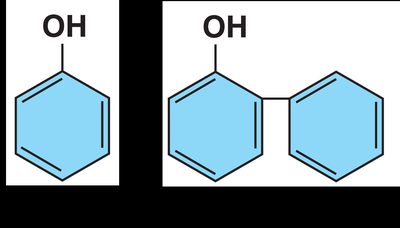
Phenol and Phenolics
Disrupt plasma membranes and denature proteins.
Used in disinfectants and antiseptics.
Halogens
Iodine: Tinctures and iodophors; alter protein synthesis and membranes.
Chlorine: Used in water, utensils, and household disinfectants.
Alcohols
Ethanol, Isopropanol: Denature proteins and dissolve lipids; require water for effectiveness.
Effective against bacteria and fungi, not endospores or non-enveloped viruses.
Heavy Metals
Silver, Mercury, Copper: Denature proteins via oligodynamic action.
Applications include topical creams and algicides.
Surface-Active Agents (Surfactants)
Soaps: Degerming.
Acid-anionic detergents: Sanitizing.
Quaternary ammonium compounds: Bactericidal, fungicidal, virocidal; disrupt membranes.
Aldehydes
Inactivate proteins by cross-linking functional groups.
Used for medical equipment sterilization.
Gaseous Sterilants
Denature proteins; used for heat-sensitive materials (e.g., ethylene oxide).
Microbial Resistance to Chemical Agents
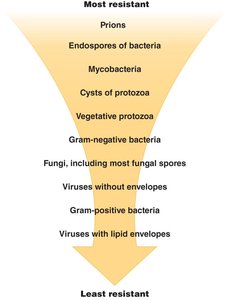
Microbes vary in their resistance to chemical agents. Understanding this hierarchy is crucial for selecting appropriate control methods.
Most resistant: Prions, endospores, mycobacteria.
Least resistant: Viruses with lipid envelopes, gram-positive bacteria.
Summary
Microbial control involves a variety of physical and chemical methods, each with specific applications and limitations. Selection of the appropriate method depends on the type of microorganism, environment, and intended outcome.
