 뒤로
Microbial Growth: Physical and Chemical Requirements, Culture Media, and Measurement Methods
스터디 가이드 - 스마트 노트
 자료에 맞춘 맞춤형 노트, 핵심 정의, 예시, 맥락을 확장해 제공합니다.
The Requirements for Microbial Growth
Physical Requirements
Microbial growth is influenced by several physical factors, including temperature, pH, and osmotic pressure. Each microorganism has specific requirements and tolerances for these factors, which determine its ecological niche and potential for causing disease or spoilage.
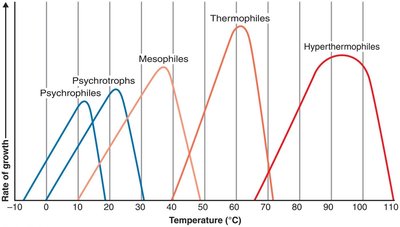
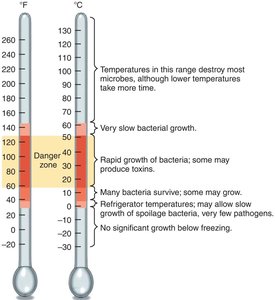
Temperature: Microbes are classified into five groups based on their preferred temperature range:
Psychrophiles: Grow at 0°C, optimum at 15°C; found in deep oceans and polar regions.
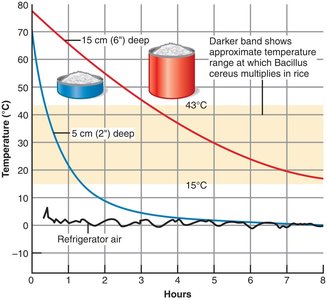
Psychrotrophs: Grow at 0°C, optimum between 20–30°C; responsible for food spoilage in refrigerators.
Mesophiles: Optimum growth at 25–40°C; includes most pathogens and normal microbiota.
Thermophiles: Grow at 70°C, optimum at 50–60°C; found in hot springs, compost piles.
Hyperthermophiles: Optimum at 80°C or higher; often Archaea in hot springs or deep sea vents.
pH: Most bacteria grow best between pH 6.5 and 7.5. Fungi prefer slightly acidic conditions (pH 5–6). Acidophiles thrive in acidic environments.
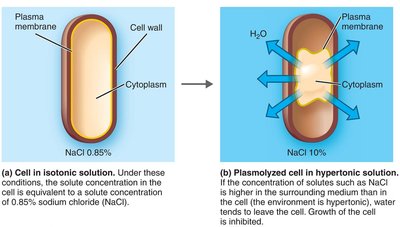
Osmotic Pressure: Hypertonic environments cause plasmolysis, inhibiting growth. Extreme halophiles require high salt concentrations, while facultative halophiles tolerate moderate salt levels.
Adaptations to Temperature Extremes
Microbes have evolved specific adaptations to survive at extreme temperatures. These adaptations can be beneficial in one environment but maladaptive in another.
Low Temperatures: Flexible proteins, fluid membranes, antifreeze compounds.
High Temperatures: Rigid membranes, heat-stable enzymes, DNA-binding proteins.
Chemical Requirements
Microbial growth also depends on the availability of essential chemical elements and compounds.
Carbon: Backbone of organic molecules. Chemoheterotrophs use organic molecules; autotrophs use CO2.
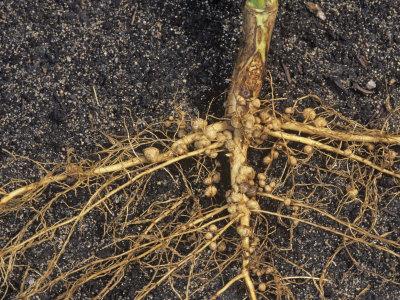
Nitrogen: Needed for proteins, DNA, ATP. Obtained from protein decomposition, NH4+, NO3-, or nitrogen fixation.
Sulfur: Used in amino acids, vitamins. Obtained from protein decomposition, SO42-, or H2S.
Phosphorus: Used in nucleic acids, ATP, phospholipids. Obtained from PO43-.
Trace Elements: Required in small amounts as enzyme cofactors (e.g., iron, copper, zinc).
Organic Growth Factors: Species-specific compounds (e.g., vitamins, amino acids, purines, pyrimidines).
Oxygen Requirements
Microbes are classified based on their oxygen requirements and their ability to detoxify harmful forms of oxygen.
Obligate aerobes: Require oxygen.
Facultative anaerobes: Grow with or without oxygen.
Obligate anaerobes: Cannot tolerate oxygen.
Aerotolerant anaerobes: Tolerate but do not use oxygen.
Microaerophiles: Require low oxygen concentrations.
Enzymes such as superoxide dismutase (SOD), catalase, and peroxidase help detoxify reactive oxygen species.
Category | Obligate Aerobes | Facultative Anaerobes | Obligate Anaerobes | Aerotolerant Anaerobes | Microaerophiles |
|---|---|---|---|---|---|
Effect of Oxygen on Growth | Only aerobic growth; oxygen required | Both aerobic and anaerobic growth; greater growth in presence of oxygen | Only anaerobic growth; growth ceases in presence of oxygen | Only anaerobic growth; but growth continues in presence of oxygen | Only aerobic growth; oxygen required in low concentration |
Growth in Tube | Cluster at top | Cluster at top and throughout | Cluster at bottom | Evenly distributed | Cluster at center |
Enzyme Presence | Catalase, SOD | Catalase, SOD | None | SOD | Produce lethal amounts of toxic oxygen |
Biofilms and Their Role in Infection
Biofilm Formation
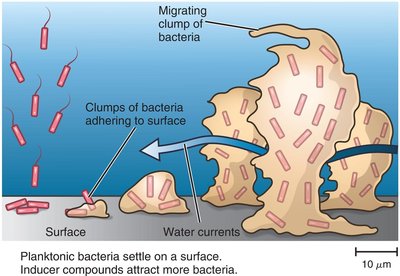
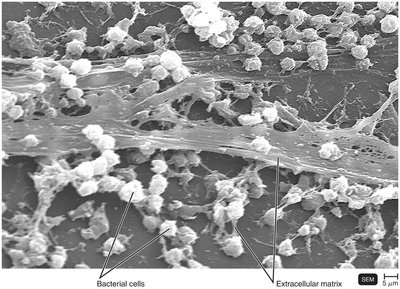
Biofilms are communities of microbes that adhere to surfaces and are embedded in a self-produced matrix. They are important in both environmental and clinical settings.
Microbes communicate via quorum sensing and secrete inducers to attract others.
Biofilms provide protection from environmental hazards and microbicides.
Biofilms are involved in 70% of infections, including those associated with catheters, heart valves, and dental caries.
Culture Media and Techniques
Types of Culture Media
Culture media provide nutrients for microbial growth and can be classified based on their composition and purpose.
Chemically defined media: Exact chemical composition is known; used for fastidious organisms.
Complex media: Contains extracts and digests of natural products; composition varies.
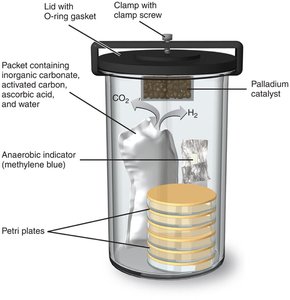
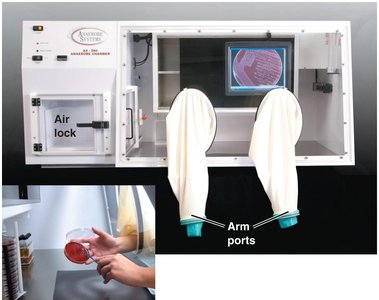
Reducing media: Used for anaerobic bacteria; contains chemicals to remove oxygen.
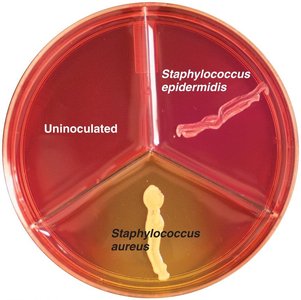
Selective media: Suppresses unwanted microbes, encourages desired ones.
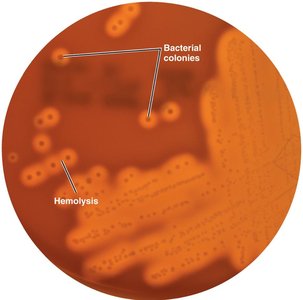
Differential media: Distinguishes colonies of different microbes.
Enrichment culture: Increases numbers of desired microbes to detectable levels.
Type | Purpose |
|---|---|
Chemically Defined | Growth of chemoautotrophs and photoautotrophs; microbiological assays |
Complex | Growth of most chemoheterotrophic organisms |
Reducing | Growth of obligate anaerobes |
Selective | Suppression of unwanted microbes; encouraging desired microbes |
Differential | Differentiation of colonies of desired microbes from others |
Enrichment | Increase numbers of desired microbes to detectable levels |
Biosafety Levels
Biosafety levels (BSL) are defined to protect laboratory workers and the environment from infectious agents.
BSL-1: No special precautions; basic teaching labs.
BSL-2: Lab coat, gloves, eye protection.
BSL-3: Work with highly infectious airborne pathogens; biosafety cabinets, negative pressure.
BSL-4: Sealed, negative pressure; workers wear "space suits"; only four labs in the U.S.
Obtaining and Preserving Pure Cultures
Pure Culture and Isolation
A pure culture contains only one species or strain. The streak plate method is commonly used to isolate pure cultures by spreading bacteria across an agar plate to obtain individual colonies.
Preservation Methods
Microorganisms can be preserved by deep-freezing or lyophilization (freeze-drying) to maintain viability for long-term storage.
Deep-freezing: -50°C to -95°C
Lyophilization: Frozen at -54°C to -72°C and dehydrated in a vacuum
Growth of Bacterial Cultures
Bacterial Growth and Binary Fission
Bacterial growth refers to an increase in cell number, primarily through binary fission. Generation time is the time required for a cell to divide, typically ranging from 20 minutes to 24 hours.
Binary fission: Most bacteria divide by this process, doubling the population each generation.
Growth curves: Represented logarithmically; total number of cells =
Phases of Microbial Growth
The bacterial growth curve consists of four distinct phases:
Lag phase: Intense metabolic activity, no increase in cell number.
Log phase: Exponential increase in population.
Stationary phase: Cell deaths balance new cell production; nutrients diminish, wastes accumulate.
Death phase: Deaths exceed new cell production; population decreases logarithmically.
Measurement of Microbial Growth
Direct Methods
Direct methods count microbial cells and include plate counts, filtration, most probable number (MPN), and direct microscopic count.
Plate count: Colonies counted on plates with 30–300 CFUs; requires serial dilution.
Filtration: Solution passed through a filter; bacteria collected and grown on a plate.
MPN method: Multiple tube test; count positive tubes and compare with statistical tables.
Direct microscopic count: Uses Petroff-Hausser cell counter; calculates number of bacteria per ml.
Indirect Methods
Indirect methods estimate bacterial numbers by measuring turbidity, metabolic activity, or dry weight.
Turbidity: Measurement of cloudiness with a spectrophotometer.
Metabolic activity: Amount of metabolic product is proportional to the number of bacteria.
Dry weight: Bacteria are filtered, dried, and weighed; used for filamentous organisms.
Additional info: These notes provide a comprehensive overview of microbial growth requirements, culture media, and measurement methods, suitable for exam preparation in a college-level microbiology course.
