 뒤로
Microbial Growth: Physical and Chemical Requirements, Culture Methods, and Measurement
스터디 가이드 - 스마트 노트
 자료에 맞춘 맞춤형 노트, 핵심 정의, 예시, 맥락을 확장해 제공합니다.
Microbial Growth
Definition and Overview
Microbial growth refers to the increase in the number of cells, not the size of individual cells. Understanding the requirements and methods for microbial growth is essential for microbiology, as it underpins laboratory culture, environmental studies, and disease control.
Growth is measured by cell number, not cell size.
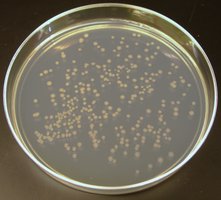
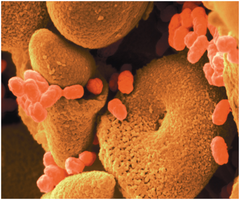
Microbial colonies can be observed on solid media such as agar plates.
Physical Requirements for Microbial Growth
Temperature
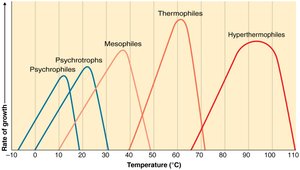
Temperature is a critical factor influencing microbial growth. Microorganisms are classified based on their optimal temperature ranges.
Psychrophiles: Cold-loving microbes, optimal growth at 0–15°C.
Mesophiles: Moderate-temperature-loving microbes, optimal growth at 20–45°C.
Thermophiles: Heat-loving microbes, optimal growth at 45–70°C.
Hyperthermophiles: Grow at temperatures above 80°C.
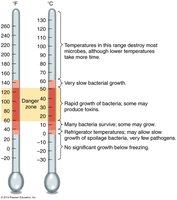
Temperature affects food safety; rapid bacterial growth occurs in the 'danger zone' (approx. 20–50°C).
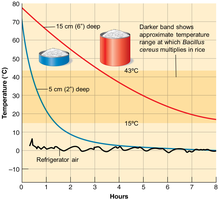
Cooling rates of food can affect microbial multiplication, as shown in rice storage.
pH
Most bacteria grow best at neutral pH (6.5–7.5), but some can tolerate acidic or alkaline environments.
Acidophiles: Grow in acidic environments (pH below 4).
Molds and yeasts: Grow over a wider pH range, optimum pH about 5–6.
Osmotic Pressure
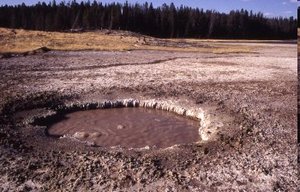
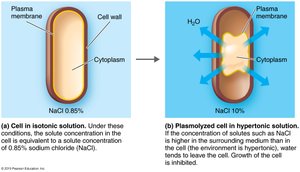
Osmotic pressure affects microbial growth, especially in environments with high salt or sugar concentrations.
Microorganisms in hypertonic solutions undergo plasmolysis, inhibiting growth.
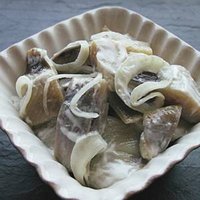
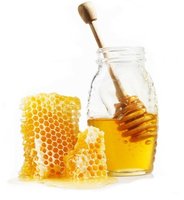
High salt or sugar concentrations are used to preserve foods.
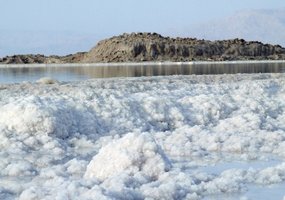
Halophiles: Grow well in high salt environments.
Types: Extreme/Obligate halophiles (require high salt), Facultative halophiles (tolerate high salt).
Chemical Requirements for Microbial Growth
Carbon
Carbon is required for all biomacromolecules and is obtained from organic or inorganic sources.
Essential for cell structure and metabolism.
Nitrogen
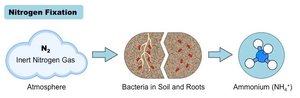
Nitrogen is required for the synthesis of proteins, nucleic acids, and other cellular components.
Obtained from protein decomposition, ammonium ions (NH4+), nitrates, and nitrogen fixation.
Sulfur
Sulfur is required for the synthesis of certain amino acids and vitamins.
Obtained from sulfate, hydrogen sulfide (H2S), and sulfur-containing amino acids.

Phosphorus
Phosphorus is required for the synthesis of nucleic acids, phospholipids, and ATP.
Obtained from phosphate ions (PO43-).
Oxygen
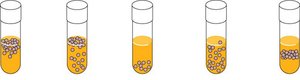
Microorganisms are classified based on their oxygen requirements.
Obligate aerobes: Require oxygen.
Facultative anaerobes: Use oxygen but can grow without it.
Obligate anaerobes: Unable to use oxygen, harmed by it.
Aerotolerant anaerobes: Unable to use oxygen but tolerate it.
Microaerophiles: Require oxygen at lower concentrations.
Toxic Forms of Oxygen
Certain forms of oxygen are toxic to cells and must be neutralized.
Superoxide free radical (O2-): Neutralized by superoxide dismutase (SOD).
Peroxide anion (O22-): Neutralized by catalase or peroxidase.
Hydroxyl radical (OH·): Most reactive, formed by ionizing radiation.

Other Factors Required for Growth
Trace elements: Inorganic elements required in small amounts, often as enzyme cofactors (e.g., iron, copper, zinc).
Organic growth factors: Organic compounds that organisms cannot synthesize (e.g., vitamins, amino acids, purines, pyrimidines).
These are often found in tap water or must be supplied in culture media.
Biofilms
Microbial Communities and Communication
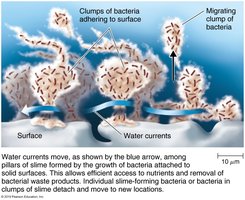
Biofilms are complex microbial communities that form on surfaces, often protected by slime or hydrogels.
Bacteria communicate via quorum sensing and secrete inducers to attract other cells.
Biofilms share nutrients and protect bacteria from environmental hazards.
Culture Media
Types of Media
Culture media are nutrient preparations used for microbial growth. Media must be sterile and contain necessary chemicals.
Solid media: Contains agar, a polysaccharide from marine algae, used in Petri dishes or test tubes.
Chemically Defined Media
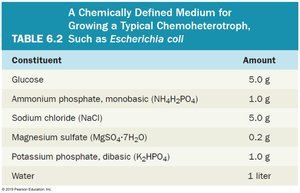
Chemically defined media have a known exact chemical composition, suitable for specific microbes.
Constituent | Amount |
|---|---|
Glucose | 5.0 g |
Ammonium phosphate, monobasic (NH4H2PO4) | 1.0 g |
Sodium chloride (NaCl) | 5.0 g |
Magnesium sulfate (MgSO4·7H2O) | 0.2 g |
Potassium phosphate, dibasic (K2HPO4) | 1.0 g |
Water | 1 liter |
Complex Media
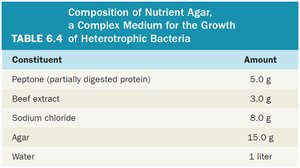
Complex media are composed of extracts or digested proteins, with variable composition.
Constituent | Amount |
|---|---|
Peptone (partially digested protein) | 5.0 g |
Beef extract | 3.0 g |
Sodium chloride | 8.0 g |
Agar | 15.0 g |
Water | 1 liter |
Anaerobic Growth Media and Methods
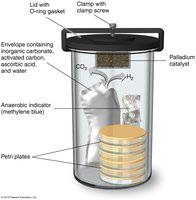
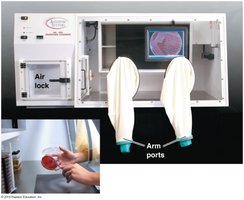
Anaerobic media and specialized equipment are used to grow bacteria that cannot tolerate oxygen.
Methods include anaerobic jars and chambers.
Biosafety Levels
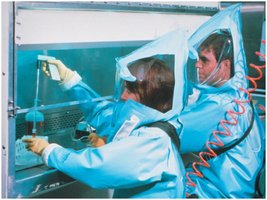
Laboratories are classified by biosafety levels (BSL) based on the risk posed by the microbes handled.
BSL-1: No special precautions; basic teaching labs.
BSL-2: Lab coat, gloves, eye protection.
BSL-3: Biosafety cabinets to prevent airborne transmission.
BSL-4: Sealed, negative pressure; "hot zone"; exhaust air filtered twice through HEPA filters.
Selective and Differential Media
Selective media: Suppress growth of unwanted bacteria, encourage growth of desired bacteria (e.g., bismuth sulfite agar selects for Salmonella typhi).
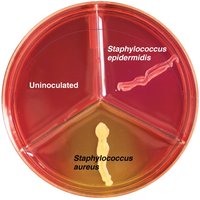
Differential media: Distinguish desired organisms from others (e.g., blood agar distinguishes hemolytic from nonhemolytic bacteria).
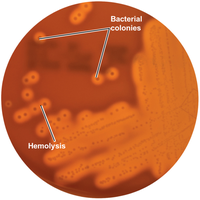
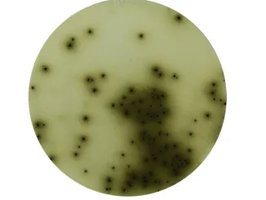
Some media are both selective and differential, such as mannitol salt agar (selective for Staphylococcus, differential for mannitol fermenters).
Enrichment Culture
Enrichment cultures provide nutrients and conditions to support the growth of specific bacteria, often used to increase the number of desired organisms to detectable levels.
Pure Cultures and Isolation Methods
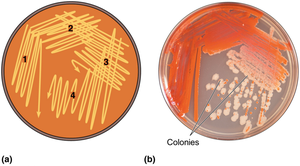
A pure culture consists of a population of cells derived from a single cell, spore, or group of attached cells. The streak plate method is commonly used to isolate pure cultures.
Works well for bacteria present in large numbers.
Preserving Bacterial Cultures
Refrigeration: Short-term storage.
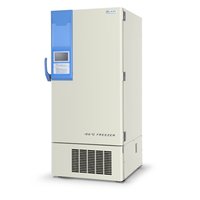
Deep-freezing: Long-term storage at ~ -80°C; cultures can be revived years later.
Lyophilization (freeze-drying): Long-term storage; cultures are frozen and water is removed by vacuum.
Bacterial Division and Growth Curve
Binary Fission
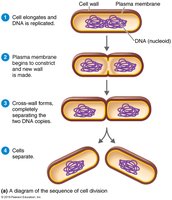
Bacteria reproduce by binary fission, a process involving cell elongation, DNA replication, and division into two cells.
Sequence: Cell elongates and DNA replicates → Plasma membrane constricts → Cross-wall forms → Cells separate.
Bacterial Growth Curve
Bacterial populations exhibit four basic phases of growth:
Lag phase: Adaptation, no increase in cell number.
Log (exponential) phase: Rapid cell division.
Stationary phase: Growth rate slows, nutrients deplete.
Death phase: Cell death exceeds cell division.
Measurement of Microbial Growth
Direct Measurement Methods
Plate count: Most common method; colonies counted as CFUs after serial dilution.
Filtration: Used when bacterial quantity is very small.
Most Probable Number (MPN): Statistical estimation for microbes that cannot grow on solid media.
Direct microscopic count: Uses a cell counter (e.g., Petroff-Hausser).
Indirect Measurement Methods
Turbidity: Measures cloudiness using a spectrophotometer.
Metabolic activity: Assumes metabolic product is proportional to cell number.
Dry weight: Used for fungi and filamentous bacteria; microbes are filtered, dried, and weighed.
Key Equations
Microbial population growth (exponential): Where = final cell number, = initial cell number, = number of generations.
Serial dilution calculation:
Additional info: Academic context was added to clarify definitions, examples, and methods, and to ensure completeness for exam preparation.
