 뒤로
Microbial Metabolism: Catabolism, Anabolism, and Energy Production
스터디 가이드 - 스마트 노트
 자료에 맞춘 맞춤형 노트, 핵심 정의, 예시, 맥락을 확장해 제공합니다.
Microbial Metabolism
Overview of Metabolism
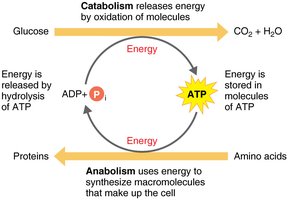
Metabolism encompasses all chemical reactions occurring within a microorganism, divided into two main types: catabolism and anabolism. Catabolic reactions break down complex molecules to release energy, while anabolic reactions build complex molecules using energy.
Catabolism: Breakdown of large molecules into smaller ones; typically exergonic (energy-releasing).
Anabolism: Synthesis of large molecules from smaller ones; typically endergonic (energy-consuming).
Hydrolysis: Catabolic reactions often involve hydrolysis (addition of water to break bonds).
Dehydration synthesis: Anabolic reactions often involve dehydration synthesis (removal of water to form bonds).
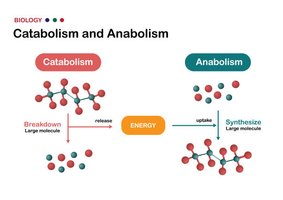
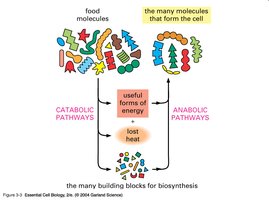
Example: Glucose breakdown in catabolism provides energy for biosynthesis of proteins in anabolism.
Metabolic Pathways
Metabolic pathways are sequences of enzymatically catalyzed reactions within a cell. Each step is facilitated by a specific enzyme, ensuring efficient transformation of substrates to products.
Pathways: Linear, branched, or cyclic sequences of reactions.
Regulation: Pathways are tightly regulated to meet cellular needs.
Microbial Energy Source Diversity
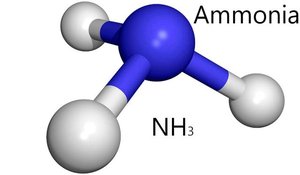
Microorganisms utilize diverse energy sources, including organic compounds (e.g., glucose), inorganic compounds (e.g., ammonia, CO2), and light.
Chemoheterotrophs: Use organic compounds for energy and carbon.
Chemoautotrophs: Use inorganic compounds for energy, CO2 for carbon.
Photoautotrophs: Use light for energy, CO2 for carbon.
Adenosine Triphosphate (ATP)
ATP is the primary energy carrier in cells. Energy is stored in its phosphate bonds and released upon hydrolysis.
ATP Hydrolysis:
ATP Synthesis: Energy from catabolic reactions is used to synthesize ATP.
Enzymes and Chemical Reactions
Collision Theory and Activation Energy
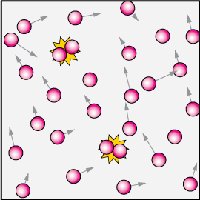
Collision theory explains how chemical reactions occur and why rates differ. Atoms, ions, and molecules must collide with sufficient energy and proper orientation to react.
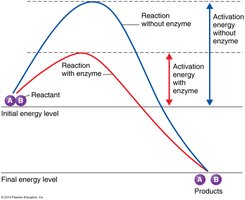
Activation Energy: Minimum energy required for a reaction to occur.
Factors: Velocity, energy, and orientation of colliding particles.
Enzymes as Biological Catalysts
Enzymes are proteins that act as biological catalysts, speeding up reactions by lowering activation energy without being consumed.
Specificity: Enzymes are highly specific for their substrates.
Efficiency: Enzymes can increase reaction rates by 108–1010 times.
Mechanism of Enzymatic Action
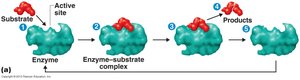
Enzymatic reactions proceed through a series of steps:
Substrate binds to the enzyme's active site.
Enzyme-substrate complex forms.
Substrate is transformed (bonds are made/broken).
Product is released.
Enzyme is free to catalyze another reaction.
Enzyme Components
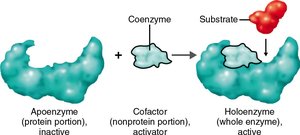
Most enzymes consist of an apoenzyme (protein portion) and a cofactor (non-protein component). The holoenzyme is the active form.
Apoenzyme: Inactive protein portion.
Cofactor: Non-protein component (can be inorganic or organic).
Coenzyme: Organic cofactor, often derived from vitamins.
Holoenzyme: Apoenzyme + cofactor (active enzyme).
Coenzymes
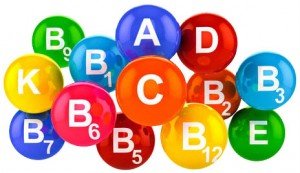
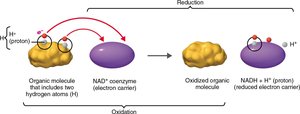
Coenzymes are organic molecules that assist enzymes by transferring atoms or electrons. Many are derived from vitamins.
NAD+: Catabolic reactions, electron carrier.
NADP+: Anabolic reactions, electron carrier.
FAD: Electron carrier in cellular respiration.
Coenzyme A: Involved in the Krebs cycle.
Factors Influencing Enzymatic Activity
Enzyme activity is affected by temperature, pH, substrate concentration, and inhibitors.
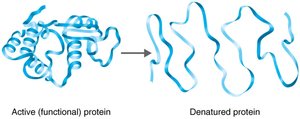
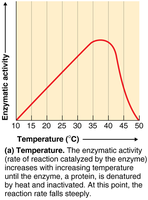
Temperature: Activity increases with temperature until denaturation occurs.
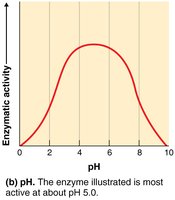
pH: Each enzyme has an optimal pH; extreme pH causes denaturation.
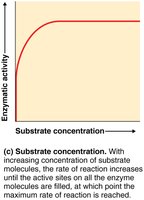
Substrate Concentration: Activity increases with substrate concentration until saturation is reached.
Inhibitors: Competitive and noncompetitive inhibitors reduce enzyme activity.
Enzyme Inhibition
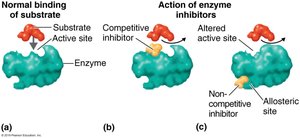
Enzyme inhibitors can be competitive (bind to active site) or noncompetitive (bind elsewhere, causing allosteric inhibition).
Competitive Inhibitors: Compete with substrate for active site.
Noncompetitive Inhibitors: Bind to allosteric site, altering enzyme shape.
Feedback Inhibition
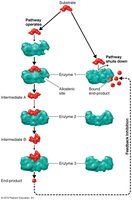
Feedback inhibition occurs when the end-product of a pathway inhibits an enzyme early in the pathway, preventing overproduction.
Allosteric inhibition: End-product binds to allosteric site.
Regulation: Maintains metabolic balance.
Energy Production in Microorganisms
Oxidation-Reduction (Redox) Reactions
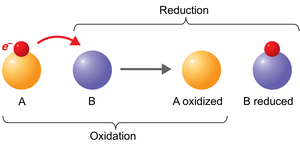
Energy production involves redox reactions, where electrons are transferred between molecules.
Oxidation: Loss of electrons or hydrogen atoms.
Reduction: Gain of electrons or hydrogen atoms.
Redox Pair: Oxidation and reduction occur together.
ATP Generation Mechanisms
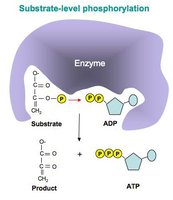
ATP is generated by three main mechanisms:
Substrate-level phosphorylation: Direct transfer of phosphate to ADP.
Oxidative phosphorylation: Electron transport chain generates energy for ATP synthesis.
Photophosphorylation: Light energy is used to generate ATP (photosynthetic organisms).
Carbohydrate Catabolism: Glycolysis
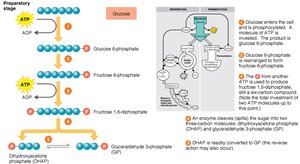
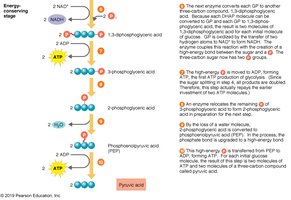
Glycolysis is the breakdown of glucose to pyruvic acid, generating ATP and NADH.
Preparatory Stage: 2 ATPs used, 2 G3Ps produced.
Energy-Conserving Stage: 4 ATPs produced, 2 NADHs produced, 2 pyruvic acids formed.
Cellular Respiration
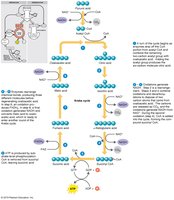
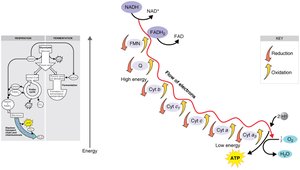
Cellular respiration further oxidizes pyruvic acid to produce ATP, using an electron transport chain. The final electron acceptor is an inorganic molecule.
Aerobic Respiration: Oxygen is the final electron acceptor.
Anaerobic Respiration: Other inorganic molecules (e.g., NO3-, SO42-) are final electron acceptors.
Chemiosmosis
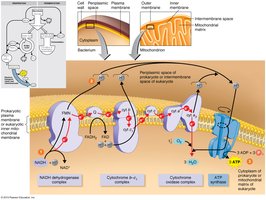
Chemiosmosis is the process by which ATP is synthesized as protons diffuse through ATP synthase, driven by a proton gradient established by the electron transport chain.
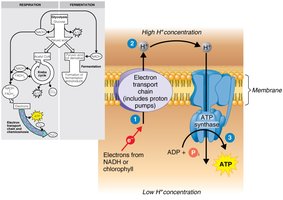
ATP Yield from Glucose
The complete oxidation of one glucose molecule yields up to 38 ATP molecules in prokaryotes.
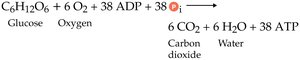
Source | Electron Carrier | ATP Yield (Method) |
|---|---|---|
Glycolysis | Produces 2 NADH | 2 ATP (substrate-level phosphorylation) |
Transition Step | Produces 2 NADH | 0 ATP |
Krebs Cycle | Produces 6 NADH, 2 FADH2 | 2 ATP (substrate-level phosphorylation) |
Electron Transport Chain | Oxidation-reduction | 34 ATP (oxidative phosphorylation) |
Total: 38 ATP | ||
Anaerobic Respiration
In anaerobic respiration, the final electron acceptor is not oxygen, resulting in lower ATP yield and slower growth rates for anaerobes.
Fermentation
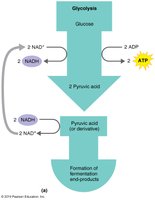
Fermentation is an anaerobic process that releases energy from the oxidation of organic molecules. It does not require oxygen, the Krebs cycle, or the electron transport chain, and uses an organic molecule as the final electron acceptor.
ATP Yield: 1 glucose yields 2 ATP.
End-products: Lactic acid, ethanol, CO2, and other compounds.
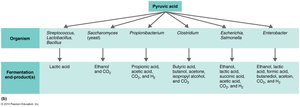
Organism | Fermentation End-Products |
|---|---|
Streptococcus, Lactobacillus, Bacillus | Lactic acid |
Saccharomyces (yeast) | Ethanol and CO2 |
Propionibacterium | Propionic acid, acetic acid, CO2 |
Clostridium | Butyric acid, butanol, acetone, isopropyl alcohol, CO2 |
Escherichia, Salmonella | Ethanol, lactic acid, acetic acid, CO2, H2 |
Enterobacter | Ethanol, lactic acid, formic acid, butanediol, acetoin, CO2, H2 |
Lipid and Protein Catabolism
Microbes can catabolize lipids and proteins for energy. Lipids are broken down by lipases, and proteins by proteases and peptidases.
Lipid Catabolism: Fatty acids and glycerol are converted to intermediates of glycolysis and the Krebs cycle.
Protein Catabolism: Amino acids are deaminated, decarboxylated, and desulfurized before entering metabolic pathways.
Biochemical Tests for Bacterial Identification
Biochemical tests detect the presence of specific enzymes and metabolic capabilities, aiding in bacterial identification.
Fermentation Test: Detects acid and gas production from carbohydrate metabolism.
Enzyme Tests: Identify ability to metabolize certain sugars or proteins.
Photosynthesis and Metabolic Diversity
Photosynthesis
Photosynthesis converts light energy to chemical energy, fixing carbon dioxide into carbohydrates. Different organisms use different hydrogen donors.
Plants, algae, cyanobacteria: Use H2O as hydrogen donor.
Purple and green sulfur bacteria: Use H2S as hydrogen donor.
Photosynthesis equation (plants, algae, cyanobacteria):
Photosynthesis equation (sulfur bacteria):
Metabolic Diversity Among Organisms
Microorganisms exhibit diverse metabolic strategies, allowing them to thrive in various environments and utilize a wide range of substrates.
Metabolic diversity: Enables adaptation to environmental changes and resource availability.
Additional info: Academic context was added to clarify mechanisms, pathways, and regulatory principles for completeness.
