 뒤로
Microbial Metabolism, Growth, and Control: Study Notes for Microbiology Students
스터디 가이드 - 스마트 노트
 자료에 맞춘 맞춤형 노트, 핵심 정의, 예시, 맥락을 확장해 제공합니다.
Microbial Metabolism
Definition and Importance of Metabolism
Metabolism encompasses all chemical reactions occurring within a cell, enabling microbes to fuel their growth, break down molecules for energy, and build essential cell structures. - Metabolism: The sum of all chemical reactions in the cell. - Catabolism: Breakdown of larger molecules (e.g., glucose) into smaller products (e.g., CO2), releasing energy. - Anabolism: Synthesis of macromolecules from smaller molecules, requiring energy. - Essential for life: Provides energy and building blocks for cellular functions.
Catabolic vs. Anabolic Pathways
Catabolic and anabolic pathways are fundamental to microbial metabolism. - Catabolic pathways: Start with larger molecules, end with smaller products, release energy. - Anabolic pathways: Start with smaller molecules, end with larger products, require energy input. 
Metabolic Pathways Structure
Metabolic pathways are series of chemical reactions converting substrates to products, often through intermediates. - Linear pathways: Substrate is converted stepwise to product. - Cyclic pathways: Intermediates are regenerated in a cycle. - Essential components: ATP (energy), electron carriers, enzymes, precursor metabolites.
ATP: The Energy Currency
ATP (Adenosine Triphosphate) is a nucleotide that stores energy in its phosphate bonds. - ATP → ADP: Releases energy for anabolic reactions. - ADP → ATP: Stores energy during catabolic reactions. - Equation: 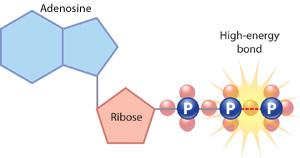
Energy Sources in Microbes
Microbes harvest energy from sunlight (phototrophs) or chemical compounds (chemotrophs). - Phototrophs: Convert photons of light to ATP.  - Chemotrophs: Convert macromolecules to ATP.
Electron Carriers and Redox Reactions
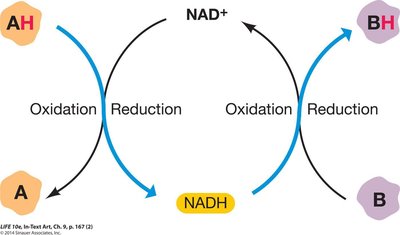
Electron carriers (e.g., NAD+, NADH) facilitate energy transfer via redox reactions. - Oxidation: Loss of electrons (and often protons). - Reduction: Gain of electrons (and often protons). - Redox reactions: Always occur together; electrons move from donor to acceptor. 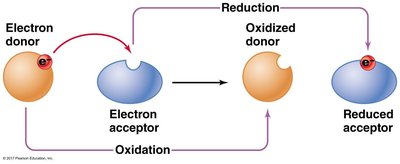
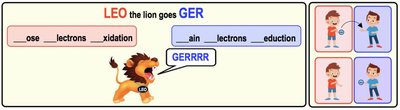 - NAD+ + H+ + 2e- → NADH: NAD+ is reduced to NADH.
Enzymes in Metabolic Pathways
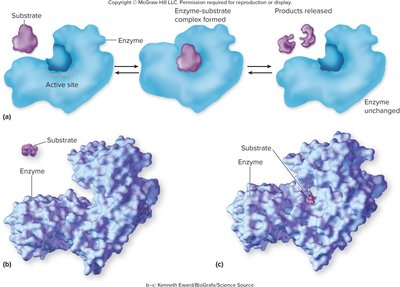
Enzymes are biological catalysts that accelerate chemical reactions by lowering activation energy. - Specificity: Each enzyme acts on a specific substrate. - Activation energy: Lowered by enzyme action. 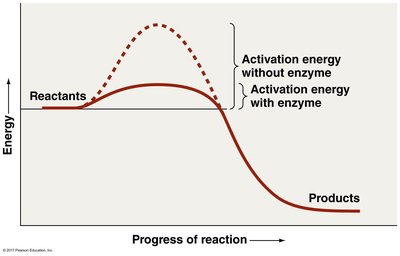 - Active site: Region where substrate binds. - Cofactor: Non-protein component aiding enzyme function.
Factors Influencing Enzyme Activity
Enzyme activity is affected by temperature, pH, and substrate concentration. - Temperature: Optimal range for activity; extremes denature enzymes. - pH: Each enzyme has an optimal pH. - Substrate concentration: Activity increases with concentration until saturation. 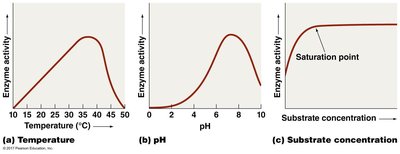
Precursor Metabolites
Precursor metabolites are intermediates in metabolic pathways that can be converted into macromolecule subunits. - Examples: Glyceraldehyde-3-phosphate (G3P), pyruvate, acetyl-CoA.
Major Metabolic Pathways
Central Metabolic Pathways
Microbes utilize glycolysis, TCA cycle, and cellular respiration to break down glucose and generate ATP. - Glycolysis: Splits glucose into pyruvate, yields 2 ATP and 2 NADH. - TCA Cycle: Oxidizes acetyl-CoA to CO2, yields NADH, FADH2, and ATP. - Cellular Respiration: Electron transport chain creates proton motive force, driving ATP synthesis.
Alternative Pathways
- Pentose Phosphate Pathway: Produces precursor metabolites for nucleic acid and amino acid biosynthesis; yields NADPH. - Fermentation: Occurs when no terminal electron acceptor is available; regenerates NAD+ and produces end products (e.g., lactic acid, ethanol).
Bacterial Growth and Control
Bacterial Growth Cycle
Bacteria reproduce via asexual binary fission, progressing through distinct growth phases. - Lag phase: Slow growth, adaptation. - Log phase: Rapid, constant growth; most susceptible to antimicrobials. - Stationary phase: Nutrient depletion, waste accumulation, stable population. - Death phase: Decline in population. - Prolonged decline phase: Adaptation to harsh conditions.
Estimating Bacterial Growth
Generation time is the period required for a population to double. - Formula: where = initial cell number, = number of generations.
Factors Influencing Microbial Growth
Environmental Factors: - Temperature: Mesophiles thrive at 25–45°C (human body temp: 37°C). - Oxygen: Obligate aerobes, facultative anaerobes, obligate anaerobes. - pH: Acidophiles (0–5.5), neutrophiles (5–8), alkaliphiles (8–11.5). - Water: Essential for growth; microbes adapt to hypertonic/hypotonic environments. Nutritional Factors: - Carbon source: CO2 (autotrophs) or macromolecules (heterotrophs). - Energy source: Sunlight (phototrophs) or chemical compounds (chemotrophs). - Growth factors: Vitamins, amino acids; fastidious microbes require specific factors.
Levels of Microbial Control
Microbial control methods reduce or eliminate microbes using physical or chemical approaches.
Level | Description |
|---|---|
Sanitization | Reduces microbes to safe levels; some survive |
Disinfection | Destroys most microbes; some endospores may survive |
Sterilization | Destroys all viable microbes and endospores |
- Physical methods: Temperature, filtration, irradiation. - Chemical methods: Disinfectants, sterilants; denature proteins, dissolve membranes, damage DNA.
Antibiotics and Resistance
Antimicrobials vs. Antibiotics
- Antimicrobial: Any chemical that inhibits or kills microbes (e.g., bleach). - Antibiotic: Naturally produced by microbes (fungi, bacteria) to inhibit or kill other microbes (e.g., penicillin from Penicillium).
Selective Toxicity and Therapeutic Index
- Selective toxicity: Antibiotics target bacterial structures/processes without harming human cells. - Therapeutic Index (TI): (TD50: toxic dose for 50% of population; ED50: effective dose for 50%). - High TI: Safer antibiotic.
Mechanisms of Action
Antibiotics are classified by their effects and targets.
Type | Description |
|---|---|
Bacteriostatic | Inhibit bacterial growth |
Bactericidal | Kill bacteria |
Broad-spectrum | Affect wide range of bacteria |
Narrow-spectrum | Affect specific bacteria |
- Targets: Cell wall synthesis, protein synthesis, nucleic acid synthesis, metabolic pathways, plasma membrane integrity.
Antibiotic Resistance
Resistance is the ability of bacteria to survive antibiotic treatment. - Intrinsic resistance: Due to structural features (e.g., lack of cell wall). - Acquired resistance: Via mutation or horizontal gene transfer (R plasmids).
Mechanism | Example |
|---|---|
Alter target | Change ribosomal rRNA |
Inactivate antibiotic | Produce penicillinase |
Efflux pumps | Pump out antibiotics |
Block uptake | Alter porin proteins |
Viruses and Prions
Structure and Function of Viruses
Viruses are acellular infectious agents with unique structures. - DORA mnemonic: DNA/RNA, Outer covering, Reproduction, Average size. - Genome: DNA or RNA, single or double stranded. - Capsid: Protein shell; may have lipid envelope. - Attachment proteins: Bind specific host cell receptors.
Viral Life Cycle
Viruses require host cells for replication.
Attachment to host cell
Entry (endocytosis or fusion)
Uncoating and genome replication
Assembly of new virions
Release (cell lysis or budding)
Viral Genetic Change
- Antigenic drift: Minor changes due to replication errors. - Antigenic shift: Major changes from reassortment of viral genomes.
Outcomes of Viral Infection
- Acute infection: Rapid onset, cell death, virus disappears. - Persistent infection: Latent (no symptoms until reactivation) or chronic (continuous low-level production). - Cancer: Virus activates oncogenes, leading to tumor formation.
Prions
Prions are infectious proteins causing neural degeneration. - Structure: Misfolded protein (PrPSC) induces misfolding of normal proteins (PrPC). - Function: Infect neural tissue, highly resistant, always fatal.
Summary Table: Central Metabolic Pathways
Pathway | Location | Key Products | ATP Yield |
|---|---|---|---|
Glycolysis | Cytoplasm | Pyruvate, NADH | 2 ATP |
TCA Cycle | Cytoplasm (prokaryotes), mitochondria (eukaryotes) | CO2, NADH, FADH2 | 2 ATP |
Respiration | Plasma membrane (prokaryotes), mitochondria (eukaryotes) | ATP | Lots (NADH = 3 ATP, FADH2 = 2 ATP) |
Pentose Phosphate | Cytoplasm | G3P, NADPH | None |
Fermentation | Cytoplasm | NAD+, end products | None |
Key Equations
- ATP hydrolysis: - Bacterial growth: - Therapeutic Index:
Conclusion
These notes summarize essential concepts in microbial metabolism, growth, control, antibiotics, resistance, viruses, and prions, providing a comprehensive foundation for college-level microbiology study.
