 뒤로
Slides #5 - Microbial Metabolism: Pathways, Energy Production, and the Human Microbiome
스터디 가이드 - 스마트 노트
 자료에 맞춘 맞춤형 노트, 핵심 정의, 예시, 맥락을 확장해 제공합니다.
slides 5 - Microbial Metabolism: Overview
Introduction to Microbial Metabolism
Microbial metabolism encompasses the chemical reactions that allow microorganisms to acquire energy and carbon for growth. These reactions are essential for cellular processes and survival, and they vary depending on the organism's environment and genetic makeup. Microbes can metabolize a wide range of substances, including carbohydrates, lipids, proteins, and even artificial chemicals.
Energy and Carbon Sources in Microorganisms
Classification by Energy and Carbon Source
Phototrophs: Obtain energy from light.
Chemotrophs: Obtain energy from chemical compounds via redox reactions.
Chemoorganotrophs: Use organic molecules as electron donors.
Chemolithotrophs: Use inorganic molecules as electron donors.
Autotrophs: Use CO2 as their carbon source, fixing it into organic molecules.
Heterotrophs: Use pre-formed organic carbon compounds.
Microbes are classified based on combinations of these traits, such as chemoorganoheterotrophs (most pathogens) or photolithoautotrophs (cyanobacteria).
ATP: The Energy Currency of the Cell
ATP Synthesis and Phosphorylation Mechanisms
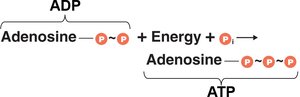
ATP (adenosine triphosphate) is the primary energy storage molecule in cells. It is synthesized by adding a phosphate group to ADP (adenosine diphosphate) in a process called phosphorylation. There are three main mechanisms for ATP production:
Substrate-level phosphorylation: Direct transfer of a phosphate group from a high-energy intermediate to ADP.
Oxidative phosphorylation: ATP synthase uses the proton motive force (PMF) generated by the electron transport chain (ETC) to synthesize ATP.
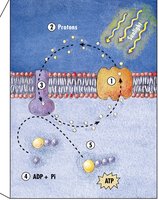
Photophosphorylation: Light energy drives electron flow, generating PMF and ATP via ATP synthase.
Metabolic Pathways for Energy Production
Overview of Catabolic Pathways
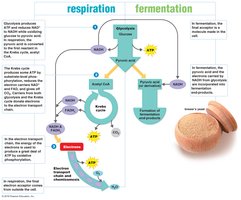
Microorganisms primarily oxidize carbohydrates, especially glucose, for energy. The two main processes for energy production from glucose are cellular respiration and fermentation. Both begin with glycolysis but diverge in subsequent steps.
Glycolysis
Glycolysis is the breakdown of one glucose molecule into two pyruvate molecules, yielding a net gain of 2 ATP (via substrate-level phosphorylation) and 2 NADH. This process occurs in the cytoplasm and is the first step in both respiration and fermentation.
Cellular Respiration
Cellular respiration involves the complete oxidation of pyruvate through the Krebs cycle and the electron transport system (ETS/ETC). It can be aerobic (using O2 as the final electron acceptor) or anaerobic (using other inorganic acceptors such as NO3- or SO42-).
Aerobic respiration: High ATP yield (up to 38 ATP per glucose in eukaryotes).
Anaerobic respiration: Lower ATP yield due to less efficient electron acceptors.
Fermentation
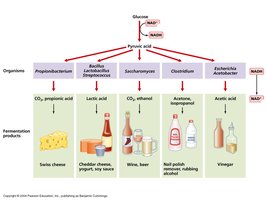
Fermentation is an anaerobic process where pyruvate or its derivatives serve as the final electron acceptor. It regenerates NAD+ from NADH, allowing glycolysis to continue. ATP yield is low (2 ATP per glucose), and end products vary by organism (e.g., lactic acid, ethanol, propionic acid).
Electron Transport System and Proton Motive Force
Mechanism of the Electron Transport System (ETS/ETC)
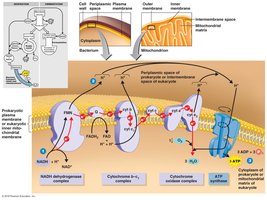
The ETS is a series of membrane-bound proteins that transfer electrons from NADH and FADH2 to a terminal electron acceptor. As electrons move through the chain, protons (H+) are pumped across the membrane, creating a proton gradient (PMF). ATP synthase uses this gradient to generate ATP via oxidative phosphorylation.
ATP Yield from Respiration
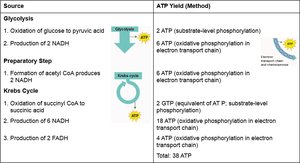
The total ATP yield from aerobic respiration is summarized below:
Source | ATP Yield (Method) |
|---|---|
Glycolysis | 2 ATP (substrate-level), 6 ATP (oxidative from 2 NADH) |
Preparatory Step (Acetyl-CoA formation) | 6 ATP (oxidative from 2 NADH) |
Krebs Cycle | 2 GTP (substrate-level), 18 ATP (oxidative from 6 NADH), 4 ATP (oxidative from 2 FADH2) |
Total | 38 ATP |
Fermentation Pathways and Products
Types of Fermentation and Their Products
The fate of pyruvate in fermentation depends on the organism's genetics. Common fermentation products include lactic acid, ethanol, propionic acid, and acetic acid. These products are important in food production and industrial microbiology.
Alternative Pathways for Glucose Metabolism
Pentose Phosphate and Entner-Doudoroff Pathways
Pentose phosphate pathway (PPP): Generates NADPH and ribose-5-phosphate for biosynthesis.
Entner-Doudoroff pathway: Found in some gram-negative bacteria and produces NADPH, NADH, and ATP from glucose. It is used for identification of certain bacteria in clinical labs.
Microbial Metabolism and Human Health
The Human Gut Microbiome
The human gut microbiome consists of over 1,000 microbial species and plays a crucial role in health. Gut microbes:
Protect against pathogens
Ferment dietary fiber to produce short-chain fatty acids (SCFAs) that nourish colon cells and modulate immunity
Influence drug metabolism and host physiology
Can be altered by diet, medications, and lifestyle
Microbes and Disease
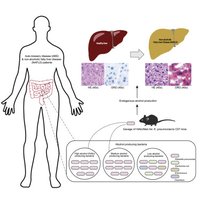
High-alcohol-producing Klebsiella pneumoniae strains are linked to nonalcoholic fatty liver disease (NAFLD).
Fecal transplants can treat Clostridium difficile infections and may reverse some age-related cognitive decline in animal models.
Microbial Interactions and Metabolic Byproducts
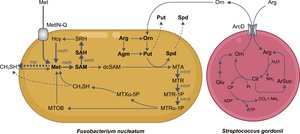
Microbial communities interact to produce metabolites that affect human health. For example, Streptococcus gordonii can activate Fusobacterium nucleatum to produce methyl mercaptan, contributing to halitosis (bad breath).
Phototrophy and Chemolithotrophy
Phototrophy
Phototrophs use light energy to drive electron flow and generate ATP via photophosphorylation. Cyanobacteria perform oxygenic photosynthesis, while some bacteria use bacteriochlorophyll or bacteriorhodopsin for anoxygenic photosynthesis.
Chemolithotrophy
Chemolithoautotrophs oxidize inorganic compounds (e.g., H2, NH3, H2S) for energy and use CO2 as a carbon source. They are important primary producers in many environments and play roles in biogeochemical cycles.
Applied Microbial Metabolism
Bioremediation
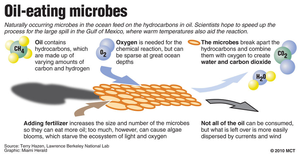
Bioremediation uses microbial metabolism to degrade or transform pollutants. Strategies include stimulating native microbes, adding specific strains, or using genetically engineered organisms.
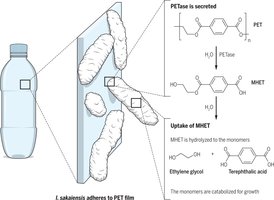
Microbial Degradation of Plastics
Ideonella sakaiensis is a bacterium capable of degrading PET plastic using enzymes PETase and MHETase. The resulting monomers are used as carbon sources, offering potential for environmental cleanup.
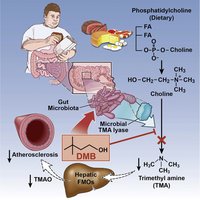
Microbial Influence on Drug Metabolism
Gut microbes can affect drug efficacy and toxicity. For example, microbial TMA lyase converts dietary choline to trimethylamine (TMA), which is linked to atherosclerosis. Compounds like DMB can inhibit this pathway, reducing disease risk.
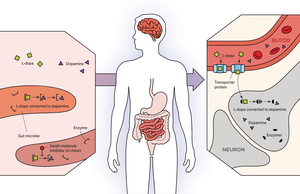
Some gut bacteria can convert L-dopa (used in Parkinson's disease treatment) to dopamine in the intestine, preventing it from reaching the brain and reducing drug effectiveness.
Summary Table: Key Metabolic Pathways in Microbes
Pathway | Main Features | ATP Yield | Final Electron Acceptor |
|---|---|---|---|
Glycolysis | Breakdown of glucose to pyruvate | 2 ATP (net) | N/A |
Aerobic Respiration | Complete oxidation of pyruvate, ETS, PMF | ~38 ATP | O2 |
Anaerobic Respiration | ETS with non-oxygen acceptor | <38 ATP | NO3-, SO42-, etc. |
Fermentation | Partial oxidation, organic acceptor | 2 ATP | Pyruvate or derivative |
Pentose Phosphate Pathway | NADPH, ribose-5-phosphate production | Varies | N/A |
Entner-Doudoroff Pathway | NADPH, NADH, ATP production | 1 ATP | N/A |
Key Terms and Concepts
Enzyme: Biological catalyst that speeds up reactions.
Coenzyme: Non-protein molecule required for enzyme function (e.g., NAD, FAD).
Proton Motive Force (PMF): Electrochemical gradient used to drive ATP synthesis.
Facultative Anaerobe: Organism that can switch between aerobic and anaerobic metabolism.
Short-chain fatty acids (SCFAs): Fermentation products that influence host health.
Bioremediation: Use of microbes to clean up environmental pollutants.
